Leverage is one of the defining features of modern online trading. It is also one of the most frequently misunderstood. For many traders, leverage represents opportunity — the ability to gain broader market exposure without committing the full value of a position upfront. For others, it is a source of confusion or unintended risk, particularly when market conditions change rapidly.
The reality is that leverage itself is neither beneficial nor harmful. It is a structural feature of trading that affects the scale of exposure relative to available capital. Understanding how leverage works, why it exists, and how it interacts with market volatility is essential for anyone participating in leveraged trading environments.
This article explores leverage from a foundational perspective. It explains its mechanics, its relationship to margin, and its impact on risk and capital management. Rather than encouraging any particular level of leverage, the goal is to provide clarity — enabling traders to make informed decisions and to approach leveraged trading with awareness and discipline.
What Leverage Actually Represents
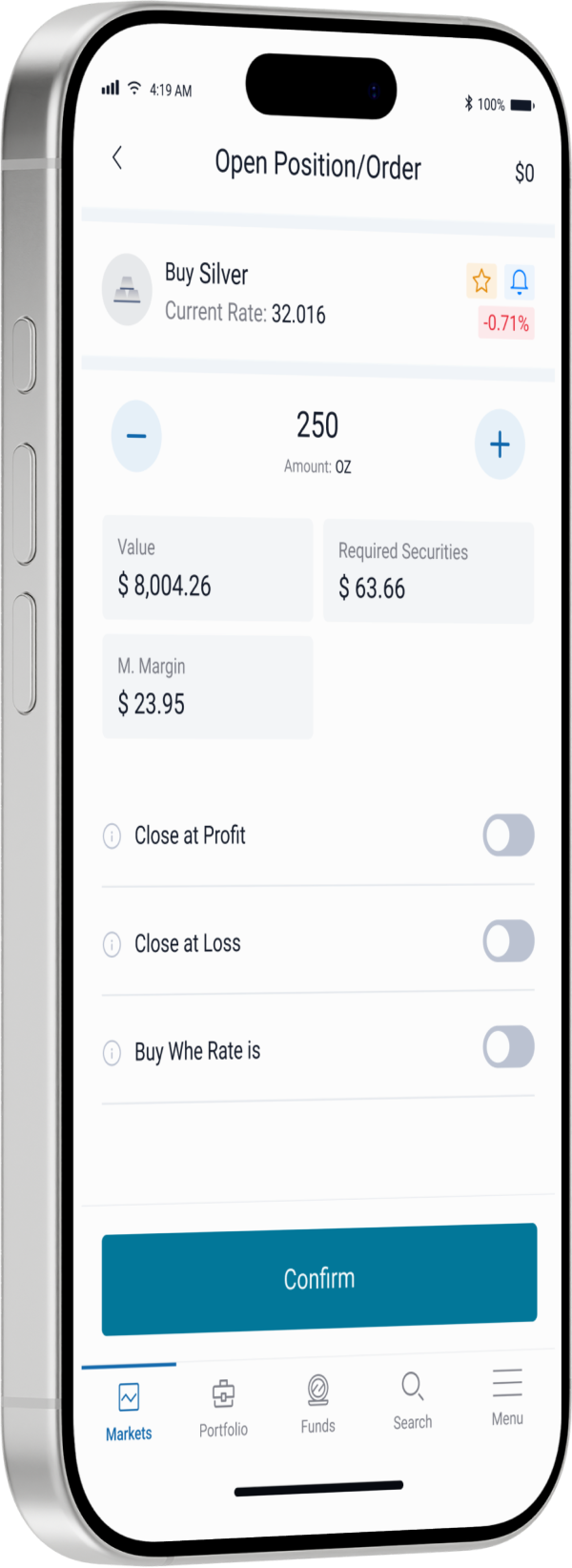
Leverage allows a trader to control a position that is larger than the amount of capital committed to open it. This is achieved through margin, which represents the portion of the position’s value that the trader must provide upfront. The remainder is effectively made available through the trading framework.
For example, if a market requires a margin of 10%, a trader can open a position with a total value ten times greater than the capital allocated to it. The leverage ratio in this case is commonly described as 1:10. Importantly, this ratio does not alter how the market itself moves; it alters how those movements affect the trader’s account.
A small change in price may result in a relatively larger change in account equity when leverage is involved. This scaling effect is the central characteristic of leverage and the primary reason it requires careful consideration.
Why Leverage Exists in Financial Markets
Leverage exists to improve capital efficiency. In many markets, particularly those with high liquidity such as foreign exchange or major indices, price movements are often measured in small increments. Without leverage, participating meaningfully in these markets would require substantial capital, placing them beyond the reach of many participants.
By allowing traders to allocate a fraction of the position’s value as margin, leverage lowers the capital threshold for market participation. It also enables traders to allocate capital across multiple instruments rather than committing all resources to a single position.
From a structural standpoint, leverage supports market participation and liquidity. From a practical standpoint, it requires traders to understand how exposure, margin, and risk interact under different market conditions.
Margin: The Foundation of Leveraged Trading
Margin is the mechanism that makes leverage possible. When a leveraged position is opened, a portion of the account balance is set aside as margin. This amount serves as a form of collateral to support the open position and to absorb normal market fluctuations.
There are several margin-related concepts that traders must understand clearly. Initial margin refers to the amount required to open a position. Maintenance margin represents the minimum level of equity required to keep the position open. As market prices move, account equity changes accordingly, affecting margin levels.
If losses reduce equity below required thresholds, risk management mechanisms such as margin calls or stop-outs may be triggered. These mechanisms are designed to limit exposure and prevent losses from exceeding available capital. Understanding how margin levels are calculated and monitored is therefore essential for managing leveraged positions responsibly.
Leverage Does Not Change Market Direction
One of the most important points to understand about leverage is that it does not influence whether a market rises or falls. It does not improve accuracy, timing, or analysis. It simply magnifies the financial impact of price movements relative to account size.
This distinction is critical. Leverage does not compensate for insufficient analysis or lack of preparation. Markets remain unpredictable, and price movements can occur rapidly in response to economic data, geopolitical developments, or shifts in sentiment.
Viewing leverage as a tool rather than an advantage helps maintain realistic expectations and encourages disciplined use.
The Relationship Between Leverage and Volatility
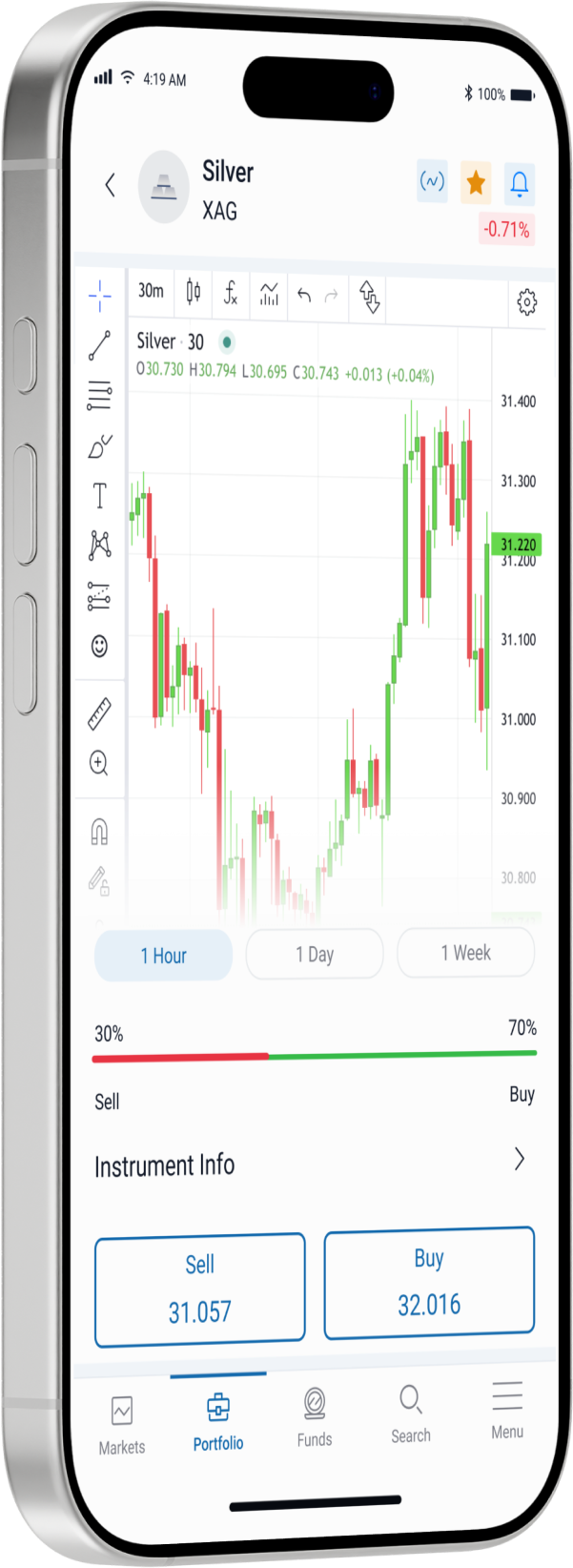
Volatility refers to the degree of price fluctuation within a market. In highly volatile conditions, prices may move significantly within short periods of time. When leverage is applied in such environments, the impact on account equity can be amplified.
This interaction means that leverage must be considered in the context of prevailing market conditions. Instruments with historically higher volatility may require more conservative exposure than those that typically move within narrower ranges.
Understanding volatility helps traders contextualize risk, rather than relying solely on leverage ratios. It encourages a more nuanced approach to position sizing and exposure management.
Position Sizing as a Risk Management Tool
Position size determines how much exposure a trader takes in a given market. In leveraged trading, position size often has a greater impact on risk than leverage ratios alone.
A trader using lower leverage but larger position sizes may still be exposed to significant risk. Conversely, conservative position sizing can help manage exposure even when leverage is available. This relationship highlights the importance of considering leverage, position size, and account equity together rather than in isolation.
Responsible position sizing aligns exposure with risk tolerance and market conditions, supporting sustainability over time.
Emotional Discipline and Leverage
Leverage can influence not only financial outcomes but also emotional responses. Larger fluctuations in account equity may intensify psychological pressure, particularly during periods of market volatility.
Emotional decision-making can lead to premature exits, excessive risk-taking, or deviation from predefined plans. Recognizing this psychological dimension is an important part of using leverage wisely.
Many experienced traders emphasize the importance of maintaining consistency in approach, regardless of short-term market movements. This discipline supports clearer decision-making and helps reduce the impact of emotional bias.
Regulatory Considerations and Leverage Limits
Leverage levels are often subject to regulatory frameworks designed to protect retail participants. These frameworks may impose limits on maximum leverage depending on the asset class and jurisdiction.
Such measures reflect the recognition that leverage increases risk exposure. Traders should be aware of applicable regulations and understand how leverage limits are applied within their trading environment.
Regulatory oversight does not remove risk, but it establishes parameters intended to promote responsible market participation.
A Measured Approach to Leveraged Trading
Using leverage wisely does not mean avoiding it entirely, nor does it mean maximizing exposure. It involves understanding how leverage interacts with market behavior, account equity, and personal risk tolerance.
A measured approach emphasizes preparation, ongoing monitoring, and the use of risk controls. It recognizes that trading is a process rather than a series of isolated outcomes and that longevity depends on managing exposure thoughtfully.
Final Perspective
Leverage is an integral component of modern online trading, shaping how traders interact with global markets. Its value lies in flexibility and capital efficiency, but its impact depends entirely on how it is applied.
By understanding the mechanics of leverage, the role of margin, and the relationship between exposure and volatility, traders can approach leveraged trading with greater awareness. Education, discipline, and realistic expectations remain central to responsible participation in the markets.
Leverage does not determine results; decisions do. And informed decisions begin with understanding.
Trading CFDs involves significant risk and may not be suitable for all investors.