Financial markets generate vast amounts of information. Prices fluctuate continuously, economic data is released on a regular schedule, corporate earnings reports reshape expectations, and geopolitical developments influence sentiment across asset classes. For traders seeking structure within this constant flow of information, analytical frameworks become essential.
Two of the most widely used approaches to market analysis are technical analysis and fundamental analysis. These methods differ in focus, tools, and interpretation, yet both aim to answer the same underlying question: how should current market conditions be understood within a broader context?
The debate over which approach is superior has persisted for decades. In practice, the answer is rarely absolute. Technical and fundamental analysis represent different lenses through which markets can be viewed. Understanding their principles, strengths, and limitations allows traders to determine which approach aligns more naturally with their objectives, time horizon, and decision making style.
The Foundations of Fundamental Analysis
Fundamental analysis seeks to evaluate the intrinsic drivers of market value. It focuses on economic, financial, and structural factors that influence asset prices over time. In currency markets, this includes interest rates, inflation, employment data, and monetary policy. In equity markets, it involves corporate earnings, revenue growth, competitive positioning, and industry conditions. In commodities, it incorporates supply and demand dynamics, production capacity, and geopolitical factors.
At its core, fundamental analysis asks why a market should move in a particular direction. It examines underlying conditions to determine whether current prices reflect economic reality or diverge from it.
For example, if a central bank signals tightening monetary policy while inflation remains elevated, currency markets may respond to expectations of higher interest rates. Similarly, if a company demonstrates sustained earnings growth and strong balance sheet management, equity valuations may adjust accordingly.
Fundamental analysis emphasizes context and long term structural forces. It is often associated with broader time horizons, though it can also influence shorter term price movement when new data alters expectations.
The Foundations of Technical Analysis
Technical analysis focuses on price behavior itself. Rather than evaluating underlying economic factors, it studies patterns, trends, and historical price movement to interpret market psychology. Technical analysts operate on the principle that price reflects all available information and that recurring behavioral tendencies may create identifiable structures.
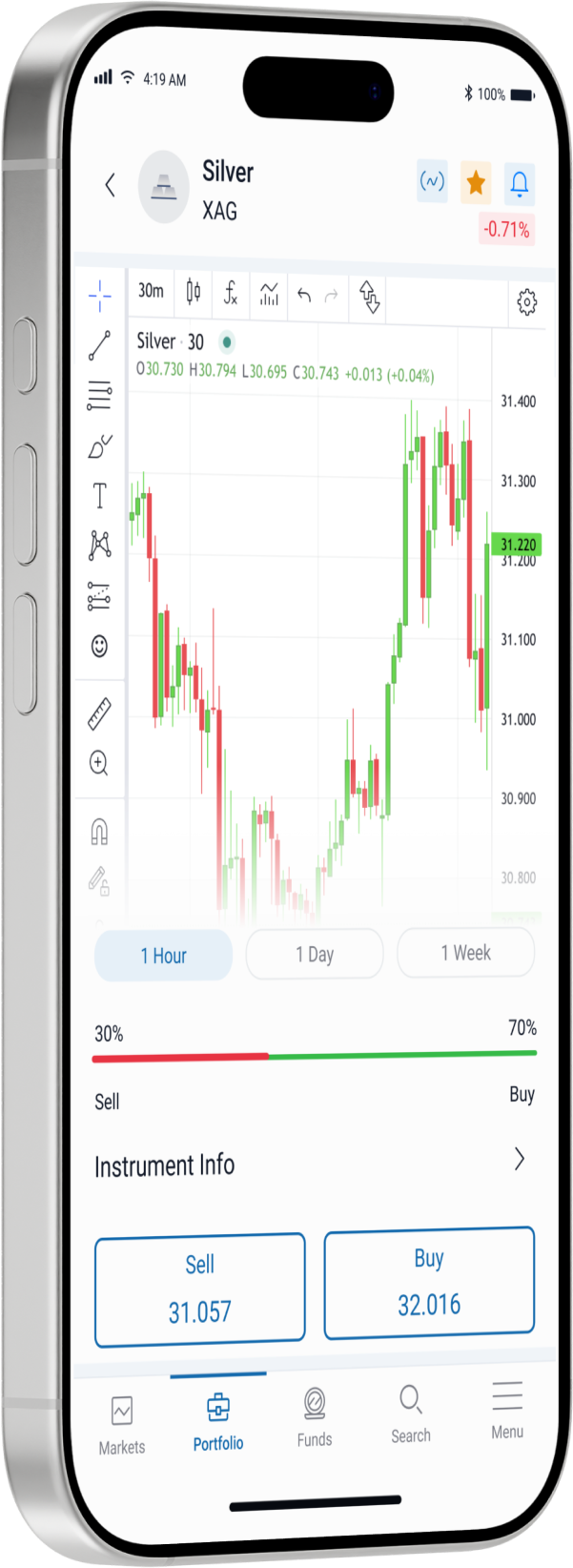
Charts form the core of technical analysis. Traders observe trends, support and resistance zones, momentum shifts, and volatility changes. Indicators derived from price data help highlight potential changes in direction or strength.
The emphasis is not on why a market moves, but on how it moves. Technical analysis assumes that market participants respond in somewhat consistent ways to fear, optimism, and uncertainty. These behavioral patterns may repeat across timeframes and asset classes.
Because technical analysis relies on observable price behavior, it is frequently associated with shorter time horizons. However, it can also be applied to longer term trends depending on the timeframe selected.
Information Flow and Market Timing
One of the most significant differences between technical and fundamental analysis lies in timing. Fundamental developments often unfold gradually. Interest rate cycles, corporate growth trajectories, and supply shifts develop over months or years. Markets may begin pricing these developments well before data confirms them.
Technical analysis, by contrast, reacts directly to price movement. It identifies shifts in momentum or structure as they occur. In this sense, technical analysis often captures how markets respond to fundamental information rather than predicting that information itself.
For example, a stronger than expected employment report may cause an immediate currency movement. A technical analyst might focus on how price breaks through established resistance levels, while a fundamental analyst interprets the data’s implications for policy expectations.
Both approaches are observing the same event through different frameworks.
Strengths and Limitations of Fundamental Analysis
Fundamental analysis provides depth and macro context. It helps traders understand structural forces driving markets and assess whether longer term trends align with economic conditions. It is particularly useful in multi asset environments where interest rates, inflation, and growth influence currencies, equities, and commodities simultaneously.
However, fundamental analysis does not always provide precise timing. Markets often move ahead of data releases or respond in ways that diverge from theoretical expectations. Sentiment and positioning can temporarily override economic logic.
Fundamental analysis also requires continuous monitoring of economic developments, which may not align with all trading styles or time availability.
Strengths and Limitations of Technical Analysis
Technical analysis offers clarity of structure. It provides visual frameworks for identifying trends, ranges, and potential turning points. It supports disciplined risk management by defining levels that may signal invalidation of a trade idea.
Because it is rooted in price, technical analysis adapts quickly to changing conditions. It does not require interpretation of macroeconomic narratives.
However, technical analysis is not immune to false signals or structural shifts. Patterns that appear reliable in one market environment may behave differently in another. In periods of low liquidity or major news events, price behavior may deviate from historical tendencies.
Technical tools interpret behavior but do not explain underlying causes.
Multi Asset Perspectives
In a multi asset environment, both approaches provide complementary insight. A fundamental analyst might observe that rising inflation expectations could influence currencies, bond yields, and commodity prices simultaneously. A technical analyst might then examine how each asset class is reacting at key price levels.
For example, a commodity such as gold may respond to shifts in real interest rates. A fundamental perspective highlights the macro driver. A technical perspective reveals how market participants are positioning around that driver.
Viewing asset classes through both lenses often produces a more comprehensive understanding than relying on a single framework.
Matching Analysis to Trading Style
Determining which approach works best depends largely on individual preference and objectives. Traders with a macroeconomic focus may gravitate toward fundamental analysis, particularly if they prefer longer term positioning. Those who prioritize structure, chart interpretation, and shorter time horizons may find technical analysis more aligned with their approach.
Some traders combine both methods. They use fundamental analysis to identify broader directional bias and technical analysis to refine entry and exit levels. Others prefer to specialize deeply in one discipline.
There is no universal answer. The effectiveness of an analytical method depends on consistency, understanding, and alignment with personal decision making processes.
The Role of Discipline and Risk Management
Regardless of analytical preference, discipline and risk management remain constant. No method eliminates uncertainty. Both technical and fundamental analysis operate within probabilistic frameworks rather than certainty.
Markets can deviate from expected patterns or react unpredictably to new information. A structured approach to exposure, position sizing, and review is therefore essential irrespective of analytical style.
Understanding which framework resonates most naturally with your thinking can support clarity and consistency, but it does not replace the need for careful risk awareness.
Technical and fundamental analysis represent different approaches to interpreting financial markets. One focuses on underlying economic and structural drivers. The other focuses on observable price behavior and market psychology. Both provide valuable insight when applied with understanding and discipline.
Rather than asking which method is universally superior, the more constructive question is which approach aligns best with your objectives, timeframe, and decision making style. In many cases, integrating elements of both can enhance perspective and support more informed observation.
Markets reflect both economic reality and collective behavior. Recognizing the value in each perspective allows traders to navigate complexity with greater balance and clarity.
Trading CFDs involves significant risk and may not be suitable for all investors.