

Share on:
Beginner

Risk Management Essentials: How to Protect Your Trading Capital

xt_blog_5.jpg

Every form of market participation involves uncertainty. Prices move in response to information, expectations, and events that cannot be fully anticipated or controlled. In this environment, risk is not an exception; it is a constant. For traders, the question is not whether risk exists, but how it is understood and managed.

Risk management is often discussed as a technical discipline involving stop-loss orders, position sizing, or exposure limits. While these tools are important, they represent only part of a broader framework. At its core, risk management is about preserving the ability to continue participating in the markets over time. It is the foundation upon which all trading activity rests, regardless of market conditions or asset class.

This article explores the essential principles of risk management in trading. Rather than focusing on formulas or prescriptive rules, it examines how risk arises, how it interacts with capital and psychology, and why a structured approach to risk is central to responsible market engagement.

Understanding Risk in the Context of Trading

Risk in trading arises from uncertainty about future price movements. Markets respond to economic data, corporate developments, policy decisions, geopolitical events, and shifts in sentiment — often simultaneously. Even well-researched positions can be affected by unexpected developments.

Importantly, risk is not limited to adverse market movement. It also includes the risk of excessive exposure, poor timing, emotional decision-making, and lack of preparation. These internal factors can be just as influential as external market forces.

Recognizing the multifaceted nature of risk helps traders move beyond a narrow focus on individual trades and toward a more comprehensive view of exposure and capital preservation.

Trading Capital as a Finite Resource

Trading capital is not simply a number on an account statement; it represents the trader’s capacity to engage with the markets. Once capital is depleted, participation becomes limited or impossible. For this reason, protecting capital is a primary objective, independent of market direction or strategy.

Capital preservation does not imply avoiding risk altogether. Rather, it involves allocating capital in a way that accounts for uncertainty and allows for normal market fluctuations without jeopardizing the overall account. This perspective shifts the focus from individual outcomes to sustainability.

Traders who approach capital as a finite resource tend to prioritize consistency, moderation, and planning over short-term intensity.

Position Sizing and Exposure Control

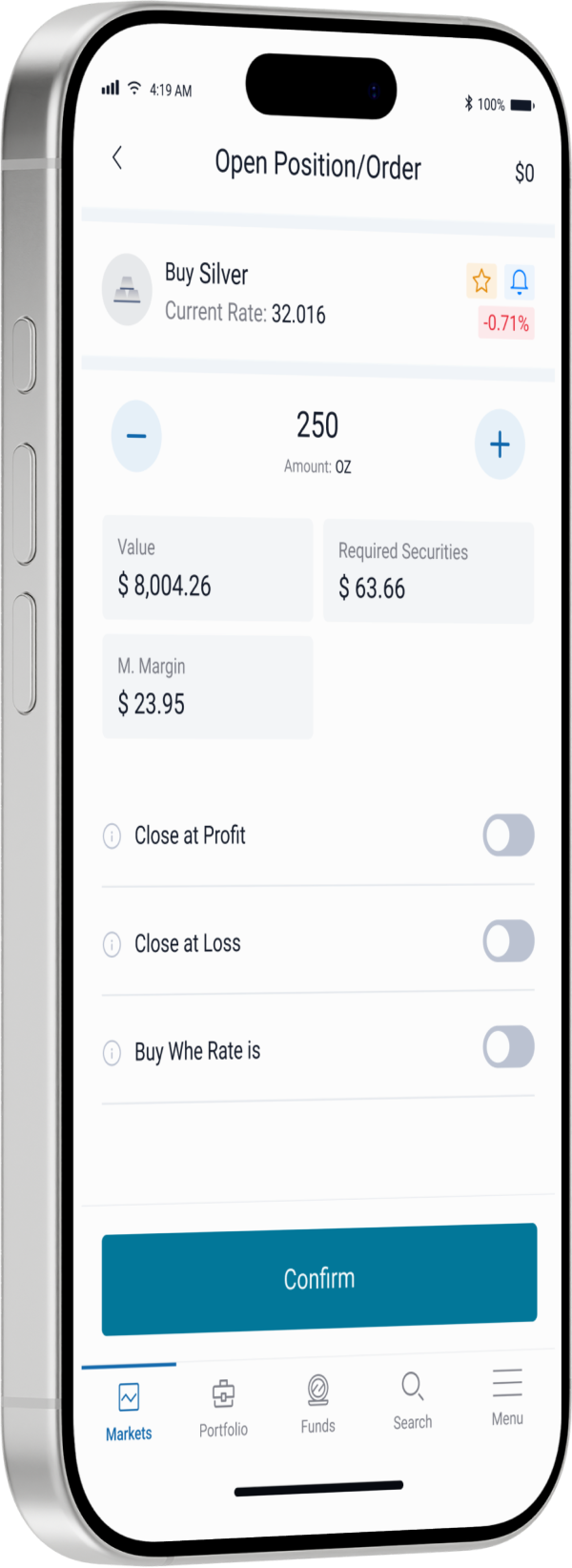
Position sizing is one of the most influential variables in risk management. It determines how much exposure a trader takes in a given market relative to available capital. Even small changes in position size can significantly alter risk dynamics, particularly in leveraged environments.

Appropriate position sizing takes into account factors such as market volatility, instrument characteristics, and overall portfolio exposure. It also reflects personal risk tolerance and time horizon. Rather than viewing position size as an expression of conviction, experienced traders often treat it as a tool for controlling downside risk.

By managing position size carefully, traders can reduce the likelihood that any single market movement will have an outsized impact on their account.

The Role of Protective Orders

Protective orders, such as stop-loss and take-profit levels, are commonly used to define risk parameters in advance. These tools help translate abstract risk considerations into concrete execution rules.

A stop-loss order establishes a predefined exit point if the market moves against a position. This does not eliminate losses, but it helps limit their scale relative to account size. Take-profit orders, while not risk tools in the same sense, support discipline by defining exit conditions in advance.

The effectiveness of protective orders depends on how they are integrated into a broader risk framework. They are most useful when aligned with position sizing, market structure, and volatility conditions.

Risk Across Multiple Asset Classes

Different asset classes exhibit different risk characteristics. Currency markets often feature high liquidity and relatively narrow price movements, while commodities may experience sharp moves driven by supply disruptions or geopolitical events. Equity markets reflect both company-specific and macroeconomic influences, while digital assets may display heightened volatility and sensitivity to sentiment.

A multi-asset trading environment encourages awareness of these distinctions. Applying identical risk assumptions across all markets can lead to misaligned exposure. Understanding how risk manifests differently across asset classes supports more informed capital allocation.

Diversification across markets does not remove risk, but it can influence how risk is distributed within a portfolio.

Psychological Risk and Decision-Making

Risk management is not purely mechanical. Emotional responses to market movement — such as fear, frustration, or overconfidence — can significantly affect decision-making. These psychological factors often emerge most strongly during periods of volatility or drawdown.

Maintaining discipline under pressure is one of the most challenging aspects of trading. Predefined rules, consistent processes, and regular review help reduce the influence of emotional bias. Awareness of psychological risk allows traders to anticipate and manage their responses rather than reacting impulsively.

Over time, psychological resilience becomes an integral part of effective risk management.

Consistency Over Outcomes

One of the defining characteristics of a risk-aware approach is a focus on consistency rather than individual results. Markets produce a range of outcomes, even when the same process is applied repeatedly. Measuring success solely by isolated outcomes can obscure whether risk is being managed appropriately.

A consistent approach emphasizes adherence to predefined exposure limits, risk parameters, and review practices. This perspective encourages learning and adjustment while maintaining structural discipline.

Risk management, in this sense, supports longevity rather than certainty.

Protecting trading capital is not about avoiding uncertainty; it is about acknowledging it and responding with structure. Risk management provides the framework through which traders can engage with the markets responsibly, regardless of asset class or market condition.

By treating capital as a resource to be preserved, by controlling exposure deliberately, and by maintaining discipline in both execution and review, traders establish conditions that support continued participation. In an environment defined by uncertainty, structured risk management remains one of the most important foundations a trader can build.


Trading CFDs involves significant risk and may not be suitable for all investors.

Latest Articles

How to Use Economic Calendars and News Events to Your Advantage
Experience

How to Use Economic Calendars and News Events to Your Advantage

Financial markets do not move in isolation. Behind every price movement lies a complex interaction of expectations, information, and collective response. Among the most influential sources of market information are economic data releases and scheduled news events, which provide insight into the health, direction, and priorities of global economies. For traders, understanding when these events occur and how markets tend to respond to them is an essential part of informed market participation.Economic calendars exist to organize this flow of information. They provide a structured overview of upcoming data releases, central bank announcements, and other scheduled events that may influence market behavior. Used correctly, an economic calendar does not serve as a forecasting tool or a signal generator. Instead, it functions as a contextual framework that helps traders anticipate periods of heightened activity, understand market sensitivity, and manage exposure more thoughtfully.This article explores how economic calendars and news events fit into the broader trading process. Rather than focusing on short-term reactions or tactical execution, it explains how traders can use scheduled information to improve awareness, preparation, and risk management across multiple asset classes.What an Economic Calendar RepresentsAn economic calendar is a schedule of upcoming economic events and data releases that are considered relevant to financial markets. These events typically include indicators related to economic growth, inflation, employment, manufacturing activity, consumer confidence, and monetary policy. Each release reflects information that market participants use to reassess economic conditions and future expectations.The importance of an economic calendar lies not in the numbers themselves, but in how those numbers compare to expectations. Markets are forward looking. Prices often adjust based on what participants believe will happen, rather than what has already occurred. When new data confirms, contradicts, or reshapes those expectations, price movement can follow.By consulting an economic calendar, traders gain visibility into when these moments of reassessment are likely to occur. This visibility supports preparation and awareness rather than reaction.Scheduled Information and Market SensitivityNot all economic events influence markets equally. Some releases consistently attract attention due to their relevance to monetary policy, economic stability, or corporate performance. Employment data, inflation indicators, and central bank decisions are often closely watched because they influence interest rate expectations and capital flows.Market sensitivity to data can also vary over time. During periods of economic uncertainty, markets may react strongly to indicators that provide insight into growth or inflation trends. In more stable environments, the same data may produce limited response. Understanding this shifting sensitivity helps traders interpret market reactions more realistically.Economic calendars typically provide additional context, such as previous readings and consensus expectations. This information helps traders understand whether a release is likely to be perceived as surprising or broadly in line with expectations.News Events and Price MovementWhen a scheduled news event occurs, markets respond not only to the data itself, but to how that data alters the prevailing narrative. A single release rarely changes the broader economic picture on its own. Instead, it contributes to an ongoing process of interpretation and adjustment.Price movement around news events can take several forms. Markets may move sharply if data deviates significantly from expectations. They may remain relatively stable if the outcome is broadly anticipated. In some cases, initial reactions may be reversed as participants reassess the information in a wider context.It is important to recognize that price reactions are not guarantees or rules. They reflect collective behavior in real time, influenced by positioning, liquidity, and sentiment as much as by the data itself.Economic Calendars Across Asset ClassesWhile economic calendars are often associated with currency markets, their relevance extends across asset classes. Interest rate decisions influence currency valuations, but they also affect equity indices, bond markets, and commodities. Inflation data can shape expectations around monetary policy while also influencing energy prices and consumer focused equities.Equity markets respond to economic data through the lens of corporate earnings and growth expectations. Commodities may react to data that influences demand projections or currency strength. Digital assets may respond indirectly to changes in risk sentiment and liquidity conditions.A multi asset perspective allows traders to see how a single economic event may influence different markets in different ways. This broader view helps avoid narrow interpretations based on one instrument alone.Preparation Rather Than PredictionOne of the most important principles when using economic calendars is the distinction between preparation and prediction. Calendars do not indicate how markets will move. They indicate when new information will become available.Preparation involves understanding which markets may be affected, recognizing potential changes in volatility, and adjusting exposure accordingly. This may include reviewing open positions, reassessing risk parameters, or choosing to observe rather than engage during periods of uncertainty.Using an economic calendar in this way supports deliberate decision making. It shifts focus away from reacting to headlines and toward managing exposure in anticipation of changing conditions.Volatility and Liquidity ConsiderationsNews events often coincide with changes in volatility and liquidity. Price movements may become faster and less predictable as participants respond simultaneously to new information. Spreads may widen temporarily, and execution conditions can differ from those observed during calmer periods.Understanding this dynamic is particularly important for risk management. Traders who are aware of upcoming events can consider how increased volatility may affect open positions and whether current exposure aligns with their tolerance for uncertainty.Economic calendars provide the timing needed to make these assessments in advance rather than in response to sudden movement.Integrating News Awareness Into a Trading ProcessEconomic calendars are most effective when integrated into a broader analytical and operational framework. They complement technical analysis by providing context for sudden movements or changes in market behavior. They complement fundamental analysis by organizing the flow of information that shapes economic narratives.Rather than treating each data release as a standalone event, many traders track themes over time. This approach emphasizes consistency and context, allowing individual releases to be interpreted as part of an evolving picture rather than isolated triggers.Over time, this integration supports a more measured and informed approach to market participation.Avoiding Common MisconceptionsOne common misconception is that news events create predictable opportunities. In reality, markets often price in expectations well before data is released. Another misconception is that avoiding news entirely removes risk. Markets can remain volatile even outside scheduled events, particularly during periods of uncertainty.Economic calendars do not reduce risk or simplify markets. They improve awareness. This awareness helps traders align decisions with their understanding of market conditions rather than reacting under pressure. Economic calendars and news events provide structure to the flow of information that shapes financial markets. They help traders anticipate when new data will enter the market and understand why prices may behave differently at certain times. Used thoughtfully, they support preparation, context, and risk awareness rather than prediction or certainty.To support this process, XTrade provides traders with access to an integrated economic calendar. This allows market participants to track upcoming data releases and scheduled events alongside price charts and other market information, helping them stay informed and organized as conditions evolve.In a market environment defined by constant information flow, the ability to observe, contextualize, and respond deliberately remains one of the most valuable skills a trader can develop. Tools such as economic calendars do not remove uncertainty, but they can help traders approach it with greater awareness and structure. Trading CFDs involves significant risk and may not be suitable for all investors.
Understanding Trading Costs: Spreads, Swaps, and Commissions Explained
Experience

Understanding Trading Costs: Spreads, Swaps, and Commissions Explained

Every financial market operates within a structure that includes costs. These costs are not incidental. They are embedded in how markets function and how trading infrastructure is maintained. For traders, understanding these costs is not a secondary detail but a fundamental part of responsible participation.While price movement receives most of the attention in trading discussions, the mechanics of trading costs often receive less scrutiny. Yet spreads, financing charges, and commissions directly influence trade execution, position management, and long term account sustainability. A clear understanding of how these costs arise and how they affect different types of trading activity helps create more realistic expectations and supports better planning.This article examines the primary forms of trading costs commonly encountered in leveraged and multi asset trading environments. Rather than focusing on comparison or optimization, the goal is to explain structure. When traders understand how costs work, they are better positioned to interpret their impact within the broader context of market participation.The Spread as the Core Transaction CostThe spread is the difference between the bid price and the ask price of an instrument. The bid represents the price at which the market is willing to buy, while the ask represents the price at which it is willing to sell. The spread reflects the cost of executing a transaction immediately at current market conditions.Spreads exist because financial markets are based on continuous matching of buyers and sellers. Market makers, liquidity providers, and exchanges facilitate this process by quoting prices that allow transactions to occur smoothly. The spread compensates for providing this liquidity and maintaining orderly pricing.In highly liquid markets such as major currency pairs or widely traded indices, spreads tend to be narrower because large volumes of buyers and sellers participate actively. In less liquid markets, spreads may widen due to reduced participation or increased uncertainty.Importantly, the spread is not a fixed value. It can fluctuate depending on market conditions. During periods of low liquidity or heightened volatility, spreads may temporarily expand as pricing adjusts to new information. Understanding this dynamic helps traders interpret execution costs more accurately, especially during economic releases or major news events.How Spreads Affect Trade Entry and ExitBecause trades are executed at either the bid or ask price, the spread effectively represents the initial cost of entering a position. When a trader opens a position, it begins slightly negative relative to the midpoint price, reflecting the spread difference. For the position to move into positive territory, price must first move enough to offset that initial transaction cost.This does not imply disadvantage. It reflects the operational reality of participating in a live market. Recognizing this mechanism encourages traders to consider trade duration, volatility, and execution timing more carefully.Short term traders may experience the impact of spreads more frequently due to higher transaction volume. Longer term traders may be less sensitive to minor spread variations but more attentive to other cost components, such as overnight financing.Commissions and Structured Pricing ModelsIn some trading environments, commissions are charged in addition to or instead of wider spreads. A commission is a transparent fee applied per transaction, often calculated as a percentage of trade value or as a fixed cost per lot or contract.Commission based models are common in certain asset classes, particularly equities or exchange linked products. They provide a clear and explicit pricing structure, separating execution cost from quoted pricing.Understanding whether a trading environment incorporates cost primarily through spreads, commissions, or a combination of both is important for evaluating total transaction cost. Transparency in cost structure supports informed participation and realistic trade evaluation.Commissions do not change market direction or probability. They represent a structural cost of accessing execution infrastructure.Swaps and Overnight FinancingWhen positions are held beyond the trading day, additional costs may apply in the form of swaps or overnight financing charges. These charges reflect the cost of maintaining leveraged exposure over time and are influenced by prevailing interest rates and the characteristics of the instrument being traded.In forex markets, swaps are typically linked to the interest rate differential between the two currencies in a pair. Holding a currency with a higher interest rate against one with a lower interest rate may result in a credit or a debit, depending on position direction. In other asset classes, financing costs may reflect borrowing expenses associated with maintaining leveraged exposure.Overnight charges highlight the distinction between short term trading and longer holding periods. While spreads primarily affect entry and exit, swaps accumulate over time. For traders who maintain positions across multiple days or weeks, understanding how these costs accrue becomes particularly relevant.Swaps are not penalties. They reflect the financial reality of borrowing capital to maintain leveraged exposure in global markets.Cost Differences Across Asset ClassesTrading costs vary depending on the asset class involved. Forex markets often feature competitive spreads due to deep liquidity. Equity CFDs may include commissions alongside spreads. Commodity instruments may reflect both liquidity conditions and financing components. Digital assets may display wider spreads during periods of heightened volatility.These differences arise from market structure, liquidity depth, regulatory environment, and instrument design. Recognizing that costs are not uniform across markets supports more informed comparison and planning.Multi asset traders benefit from understanding how cost structures differ between instruments rather than assuming consistency across all markets.The Relationship Between Costs and Trading StyleDifferent trading approaches interact with costs in different ways. Higher frequency strategies encounter spreads and commissions more frequently. Longer term strategies may experience greater sensitivity to financing charges. Active intraday participants may focus more on execution conditions during volatile periods, while swing traders may monitor cumulative swap exposure.There is no universally optimal structure. What matters is alignment between approach and understanding. Costs should be factored into planning rather than treated as afterthoughts.This perspective encourages realism and transparency in evaluating performance, ensuring that gross movement and net outcome are clearly distinguished.Transparency and Platform AwarenessModern trading platforms typically display spread information in real time and provide visibility into overnight financing rates. Reviewing this information before entering a position helps traders incorporate cost considerations into decision making.Awareness does not eliminate cost. It integrates cost into the overall trading framework. This integration supports clearer evaluation of exposure, time horizon, and capital allocation.Informed participation requires understanding not only how markets move, but how participation itself is structured. Trading costs are an inherent part of accessing global financial markets. Spreads compensate liquidity provision. Commissions support execution infrastructure. Swaps reflect the cost of maintaining leveraged exposure over time. None of these elements are arbitrary. They form part of the structural foundation upon which modern trading operates.By understanding how spreads, swaps, and commissions function, traders gain greater clarity about the mechanics of market participation. This clarity supports realistic planning, disciplined evaluation, and more transparent engagement with the markets.In a complex financial environment, knowledge of structure is as important as knowledge of direction. Trading CFDs involves significant risk and may not be suitable for all investors.

Trading During the Holidays: How to Manage Risk and Stay Focused
Experience

Trading During the Holidays: How to Manage Risk and Stay Focused

Financial markets operate within global economic systems that do not pause entirely during holiday periods. However, participation patterns change significantly when major financial centers observe public holidays. Institutional desks operate with reduced staffing, trading volumes decline, and liquidity conditions can shift in subtle but meaningful ways. For traders, these seasonal adjustments create an environment that differs from typical market conditions.Holiday trading periods often include the final weeks of December, early January, and other major global holidays observed across Europe, North America, and Asia. During these times, market behavior can diverge from established patterns. Volatility may contract due to lower participation, or it may increase temporarily if thinner liquidity amplifies price movement. Understanding these structural changes is essential for maintaining discipline and managing exposure responsibly.This article explores how holiday conditions affect different asset classes, why liquidity dynamics matter, and how traders can remain focused and risk aware during periods when market participation is uneven.Reduced Liquidity and Its ImplicationsLiquidity refers to the ability to enter and exit positions efficiently without causing significant price disruption. During standard trading periods, deep liquidity in major markets allows for relatively stable pricing and tighter spreads. When participation declines during holiday sessions, liquidity can decrease.Reduced liquidity does not automatically mean heightened risk, but it does alter market mechanics. In thinner markets, individual transactions can have a greater impact on price. Order books may be less dense, and price gaps may occur more easily in response to modest order flow.For forex markets, reduced liquidity can lead to narrower trading ranges punctuated by sudden moves. For equity indices and commodities, lower institutional participation may result in quieter sessions, though isolated volatility can still occur. Understanding that price behavior may be less representative of broader sentiment helps traders interpret movement more cautiously.Volatility in Holiday ConditionsHoliday periods are often associated with lower overall volatility, particularly in major currency pairs and large indices. However, this is not a universal rule. In some cases, thin liquidity can exaggerate reactions to economic data or geopolitical developments.A key distinction lies between structured volatility and reactive volatility. Structured volatility reflects sustained shifts in sentiment or macroeconomic reassessment. Reactive volatility may occur when limited liquidity amplifies short term price swings without underlying structural change.Recognizing this difference helps traders avoid overinterpreting isolated movements during quieter market sessions. It encourages context based observation rather than impulsive reaction.Year End Positioning and Portfolio AdjustmentsThe final weeks of the calendar year often involve portfolio rebalancing by institutional investors. Funds may adjust exposure to align with reporting periods, tax considerations, or risk mandates. These adjustments can create temporary flows that influence indices, sectors, or currencies without signaling longer term direction.Commodity markets may reflect adjustments in hedging positions, while equity indices may experience sector rotation as managers rebalance holdings. Currency markets may respond to capital repatriation flows.For traders, recognizing that certain movements may reflect accounting or positioning adjustments rather than fresh macro developments supports more measured interpretation.Psychological Factors During Holiday TradingHoliday periods also introduce psychological variables. Traders may experience reduced focus due to seasonal commitments or travel. Distraction, fatigue, or emotional shifts associated with year end reflection can influence decision making.Maintaining discipline during these periods requires acknowledging that mental clarity may not always be at its peak. Some traders choose to reduce activity during holiday sessions, not because markets are untradeable, but because personal focus may be divided.Risk management during holidays therefore extends beyond market structure. It includes self awareness and realistic assessment of attention and availability.Adjusting Risk Parameters in Seasonal ConditionsRisk management during holiday periods often involves reviewing position size, exposure concentration, and time horizon. Lower liquidity environments may justify more conservative exposure levels, particularly for short term trading approaches.Overnight positions held across extended holiday closures require particular attention. When major exchanges close, gaps may occur upon reopening if new information has emerged during the break. Awareness of market calendars and trading hours supports more deliberate exposure management.This does not require complete disengagement from markets. It requires conscious alignment between market conditions and risk tolerance.Multi Asset ConsiderationsHoliday effects do not influence all asset classes equally. Forex markets remain open for most of the week but may experience thinner conditions when major financial centers are closed. Equity markets observe specific exchange holidays, which can affect index liquidity. Commodity markets may be influenced by both exchange closures and seasonal demand shifts.Digital asset markets, which operate continuously, may experience different liquidity patterns as traditional financial institutions reduce activity. This can alter cross market correlations temporarily.Viewing these differences through a multi asset lens reinforces the importance of context. Seasonal participation patterns influence markets differently depending on structure and trading hours.Staying Focused and StructuredRemaining focused during holiday periods involves preparation rather than reaction. Reviewing economic calendars, understanding exchange schedules, and planning exposure in advance helps reduce impulsive decision making.Structured review of open positions, clear risk parameters, and deliberate pacing contribute to discipline. Some traders use holiday periods as an opportunity to evaluate past performance, refine strategy, or engage with educational material rather than increasing activity.Focus during holidays is less about intensity and more about clarity. A calm and measured approach often aligns better with seasonal market conditions than aggressive positioning.Holiday trading periods present a different market environment shaped by reduced participation, shifting liquidity, and year end adjustments. These structural changes do not eliminate opportunity or risk. They alter the conditions under which markets operate.By recognizing how liquidity, volatility, and psychology interact during seasonal periods, traders can approach the markets with greater awareness. Managing exposure thoughtfully and maintaining focus amid external distractions supports disciplined engagement.Markets may slow during holidays, but risk awareness and preparation remain constant. In every season, structure and perspective provide the foundation for responsible participation. Trading CFDs involves significant risk and may not be suitable for all investors.
How Artificial Intelligence and Automation Are Shaping Modern Trading
Experience

How Artificial Intelligence and Automation Are Shaping Modern Trading

Financial markets have always evolved alongside technological progress. Each major innovation has altered not only how trades are executed, but how information is processed and how risk is understood. The shift from manual trading floors to electronic platforms redefined access and efficiency. The subsequent rise of algorithmic execution reshaped liquidity and market speed. Today, artificial intelligence and automation represent the next structural transformation in global trading.Artificial intelligence refers to systems capable of analyzing large volumes of data, identifying relationships, and adapting to changing inputs. Automation refers to the implementation of rule based systems that execute predefined instructions without continuous human intervention. While often discussed together, they serve distinct but interconnected roles within modern market infrastructure.These technologies are no longer experimental or peripheral. They are deeply embedded in forex markets, equity exchanges, commodity trading, and digital asset platforms. For traders, understanding how artificial intelligence and automation influence market behavior is increasingly important. The objective is not to compete with machines, but to understand the environment in which market activity now unfolds.The Structural Shift Toward Machine Driven MarketsModern financial markets operate at speeds that exceed human reaction time. Large portions of daily trading volume are executed by algorithmic systems designed to respond instantly to price changes, order flow, and news dissemination. These systems contribute to liquidity by continuously quoting bid and ask prices, narrowing spreads, and facilitating transactions across global exchanges.Artificial intelligence enhances this infrastructure by allowing systems to analyze complex relationships within data. Rather than relying solely on static rules, machine learning models can adjust parameters based on evolving patterns. This adaptability improves efficiency in some contexts, but it also increases the speed at which markets incorporate new information.The result is a trading environment where price discovery occurs rapidly and often simultaneously across asset classes. A macroeconomic announcement may trigger algorithmic responses in currencies, equity indices, commodities, and bonds within seconds. Understanding this interconnected reaction mechanism provides insight into why markets sometimes move quickly and cohesively.Alternative Data and Expanded Information SourcesOne of the most significant developments in artificial intelligence driven trading is the use of alternative data. Traditional market analysis relies on price history, economic releases, and corporate reports. AI systems, however, can incorporate broader data sets including satellite imagery, shipping activity, consumer transaction trends, and digital sentiment analysis.By processing unstructured data at scale, machine learning models can attempt to identify relationships that may not be immediately visible through conventional analysis. For example, shifts in transportation volume may correlate with industrial demand, or social media trends may influence sentiment around specific sectors.It is important to recognize that these correlations do not imply certainty. They reflect statistical relationships within historical data. When structural conditions change, previously observed relationships may weaken or reverse. This highlights the distinction between data processing capability and predictive certainty.Automation and Market MicrostructureMarket microstructure refers to the mechanics of how orders are matched, priced, and executed. Automation has fundamentally reshaped this layer of the financial system. High frequency trading firms deploy automated strategies to capture small pricing discrepancies, provide liquidity, and manage inventory risk.These systems operate continuously, adjusting quotes based on order flow and volatility. During stable conditions, they contribute to smoother execution and tighter spreads. During periods of stress, however, automated systems may reduce participation simultaneously, leading to temporary liquidity gaps.This dual effect illustrates the complexity of automated infrastructure. It enhances efficiency under normal conditions while introducing new dynamics during abnormal ones. Traders observing rapid price adjustments should understand that these movements may reflect automated recalibration rather than sustained directional shifts.Artificial Intelligence in Portfolio Construction and Risk ModelingInstitutional investors increasingly rely on artificial intelligence to manage portfolio exposure and risk. Machine learning models evaluate correlations across asset classes, simulate stress scenarios, and assess how different macroeconomic variables interact.These systems can adjust exposure dynamically based on volatility conditions or changing relationships between markets. For example, if correlations between equities and commodities shift unexpectedly, risk models may prompt reallocation or hedging adjustments.While individual traders may not have access to institutional scale modeling systems, the broader impact remains relevant. When large portfolios adjust exposure in response to AI driven signals, cross asset price movement may occur rapidly and simultaneously.This reinforces the importance of understanding macro context and correlation risk when trading multiple asset classes.Quantitative Strategies and Adaptive ModelsQuantitative trading strategies are built upon mathematical frameworks that identify statistical patterns within price behavior. Artificial intelligence enhances these strategies by enabling models to refine parameters based on incoming data. Instead of static assumptions, adaptive systems recalibrate continuously.Momentum based models, mean reversion systems, and arbitrage strategies may all incorporate machine learning elements. These strategies do not operate on intuition or narrative. They operate on probability distributions derived from historical data.However, models are inherently limited by the data on which they are trained. Structural changes in monetary policy, regulation, or global trade patterns can alter relationships in ways that historical data cannot fully anticipate. When such shifts occur, models require adjustment or recalibration.This underscores a central reality of artificial intelligence in trading. It enhances analytical capacity but does not eliminate uncertainty or structural risk.The Human Element in an Automated EnvironmentDespite the rise of automation, human judgment remains central to financial markets. Institutions design models, interpret macroeconomic context, and decide how much discretion to apply within automated frameworks. Retail traders interpret price behavior, evaluate news, and manage personal risk tolerance.Artificial intelligence can process data, but it does not possess contextual awareness in the human sense. It cannot fully account for unprecedented geopolitical events or behavioral shifts that have not previously occurred.In practice, modern markets represent a hybrid environment in which human and machine decision making coexist. Machines execute and analyze at scale, while humans interpret, supervise, and adjust broader strategic direction.Recognizing this balance helps avoid exaggerated perceptions of technological dominance. AI shapes markets, but it does not replace the need for informed participation.Regulatory and Ethical ConsiderationsAs artificial intelligence becomes more integrated into financial systems, regulatory frameworks continue to evolve. Authorities monitor algorithmic trading to ensure market stability, prevent manipulation, and maintain fair access.Transparency requirements, reporting standards, and oversight mechanisms aim to balance innovation with systemic stability. Ethical considerations also arise regarding data usage, model transparency, and potential bias within automated systems.These regulatory developments influence how AI is deployed within markets and contribute to ongoing adaptation in trading infrastructure.Implications for Individual TradersFor individual traders, the presence of artificial intelligence and automation has several practical implications. Market reactions may occur more quickly following economic releases. Correlations between asset classes may adjust rapidly as institutional systems rebalance. Volatility patterns may reflect automated liquidity responses.This does not require technological competition. It requires awareness. Understanding that markets incorporate information quickly encourages realistic expectations about speed and execution.Automation tools available at the retail level, such as alerts and predefined order structures, can support disciplined engagement. Used responsibly, they enhance structure without replacing judgment.Education remains central. Technology changes the mechanics of markets, but it does not change the need for preparation, context, and risk awareness.Artificial intelligence and automation are now foundational components of the global financial system. They enhance efficiency, accelerate data processing, and influence liquidity dynamics across asset classes. At the same time, they introduce complexity and reinforce the speed at which markets adjust to new information.For traders, understanding this technological landscape supports clearer interpretation of price behavior. Artificial intelligence does not remove uncertainty or guarantee outcomes. It reshapes the structure within which uncertainty unfolds.In a market environment increasingly influenced by advanced systems, informed perspective remains the most valuable asset. Technology evolves. Risk, discipline, and education remain constant. Trading CFDs involves significant risk and may not be suitable for all investors.

Technical vs Fundamental Analysis: Which Works Best for You?
Experience

Technical vs Fundamental Analysis: Which Works Best for You?

Financial markets generate vast amounts of information. Prices fluctuate continuously, economic data is released on a regular schedule, corporate earnings reports reshape expectations, and geopolitical developments influence sentiment across asset classes. For traders seeking structure within this constant flow of information, analytical frameworks become essential.Two of the most widely used approaches to market analysis are technical analysis and fundamental analysis. These methods differ in focus, tools, and interpretation, yet both aim to answer the same underlying question: how should current market conditions be understood within a broader context?The debate over which approach is superior has persisted for decades. In practice, the answer is rarely absolute. Technical and fundamental analysis represent different lenses through which markets can be viewed. Understanding their principles, strengths, and limitations allows traders to determine which approach aligns more naturally with their objectives, time horizon, and decision making style.The Foundations of Fundamental AnalysisFundamental analysis seeks to evaluate the intrinsic drivers of market value. It focuses on economic, financial, and structural factors that influence asset prices over time. In currency markets, this includes interest rates, inflation, employment data, and monetary policy. In equity markets, it involves corporate earnings, revenue growth, competitive positioning, and industry conditions. In commodities, it incorporates supply and demand dynamics, production capacity, and geopolitical factors.At its core, fundamental analysis asks why a market should move in a particular direction. It examines underlying conditions to determine whether current prices reflect economic reality or diverge from it.For example, if a central bank signals tightening monetary policy while inflation remains elevated, currency markets may respond to expectations of higher interest rates. Similarly, if a company demonstrates sustained earnings growth and strong balance sheet management, equity valuations may adjust accordingly.Fundamental analysis emphasizes context and long term structural forces. It is often associated with broader time horizons, though it can also influence shorter term price movement when new data alters expectations.The Foundations of Technical AnalysisTechnical analysis focuses on price behavior itself. Rather than evaluating underlying economic factors, it studies patterns, trends, and historical price movement to interpret market psychology. Technical analysts operate on the principle that price reflects all available information and that recurring behavioral tendencies may create identifiable structures.Charts form the core of technical analysis. Traders observe trends, support and resistance zones, momentum shifts, and volatility changes. Indicators derived from price data help highlight potential changes in direction or strength.The emphasis is not on why a market moves, but on how it moves. Technical analysis assumes that market participants respond in somewhat consistent ways to fear, optimism, and uncertainty. These behavioral patterns may repeat across timeframes and asset classes.Because technical analysis relies on observable price behavior, it is frequently associated with shorter time horizons. However, it can also be applied to longer term trends depending on the timeframe selected.Information Flow and Market TimingOne of the most significant differences between technical and fundamental analysis lies in timing. Fundamental developments often unfold gradually. Interest rate cycles, corporate growth trajectories, and supply shifts develop over months or years. Markets may begin pricing these developments well before data confirms them.Technical analysis, by contrast, reacts directly to price movement. It identifies shifts in momentum or structure as they occur. In this sense, technical analysis often captures how markets respond to fundamental information rather than predicting that information itself.For example, a stronger than expected employment report may cause an immediate currency movement. A technical analyst might focus on how price breaks through established resistance levels, while a fundamental analyst interprets the data’s implications for policy expectations.Both approaches are observing the same event through different frameworks.Strengths and Limitations of Fundamental AnalysisFundamental analysis provides depth and macro context. It helps traders understand structural forces driving markets and assess whether longer term trends align with economic conditions. It is particularly useful in multi asset environments where interest rates, inflation, and growth influence currencies, equities, and commodities simultaneously.However, fundamental analysis does not always provide precise timing. Markets often move ahead of data releases or respond in ways that diverge from theoretical expectations. Sentiment and positioning can temporarily override economic logic.Fundamental analysis also requires continuous monitoring of economic developments, which may not align with all trading styles or time availability.Strengths and Limitations of Technical AnalysisTechnical analysis offers clarity of structure. It provides visual frameworks for identifying trends, ranges, and potential turning points. It supports disciplined risk management by defining levels that may signal invalidation of a trade idea.Because it is rooted in price, technical analysis adapts quickly to changing conditions. It does not require interpretation of macroeconomic narratives.However, technical analysis is not immune to false signals or structural shifts. Patterns that appear reliable in one market environment may behave differently in another. In periods of low liquidity or major news events, price behavior may deviate from historical tendencies.Technical tools interpret behavior but do not explain underlying causes.Multi Asset PerspectivesIn a multi asset environment, both approaches provide complementary insight. A fundamental analyst might observe that rising inflation expectations could influence currencies, bond yields, and commodity prices simultaneously. A technical analyst might then examine how each asset class is reacting at key price levels.For example, a commodity such as gold may respond to shifts in real interest rates. A fundamental perspective highlights the macro driver. A technical perspective reveals how market participants are positioning around that driver.Viewing asset classes through both lenses often produces a more comprehensive understanding than relying on a single framework.Matching Analysis to Trading StyleDetermining which approach works best depends largely on individual preference and objectives. Traders with a macroeconomic focus may gravitate toward fundamental analysis, particularly if they prefer longer term positioning. Those who prioritize structure, chart interpretation, and shorter time horizons may find technical analysis more aligned with their approach.Some traders combine both methods. They use fundamental analysis to identify broader directional bias and technical analysis to refine entry and exit levels. Others prefer to specialize deeply in one discipline.There is no universal answer. The effectiveness of an analytical method depends on consistency, understanding, and alignment with personal decision making processes.The Role of Discipline and Risk ManagementRegardless of analytical preference, discipline and risk management remain constant. No method eliminates uncertainty. Both technical and fundamental analysis operate within probabilistic frameworks rather than certainty.Markets can deviate from expected patterns or react unpredictably to new information. A structured approach to exposure, position sizing, and review is therefore essential irrespective of analytical style.Understanding which framework resonates most naturally with your thinking can support clarity and consistency, but it does not replace the need for careful risk awareness. Technical and fundamental analysis represent different approaches to interpreting financial markets. One focuses on underlying economic and structural drivers. The other focuses on observable price behavior and market psychology. Both provide valuable insight when applied with understanding and discipline.Rather than asking which method is universally superior, the more constructive question is which approach aligns best with your objectives, timeframe, and decision making style. In many cases, integrating elements of both can enhance perspective and support more informed observation.Markets reflect both economic reality and collective behavior. Recognizing the value in each perspective allows traders to navigate complexity with greater balance and clarity. Trading CFDs involves significant risk and may not be suitable for all investors.
Technical vs Fundamental Analysis: Which Works Best for You?
Experience

Technical vs Fundamental Analysis: Which Works Best for You?

Financial markets generate vast amounts of information. Prices fluctuate continuously, economic data is released on a regular schedule, corporate earnings reports reshape expectations, and geopolitical developments influence sentiment across asset classes. For traders seeking structure within this constant flow of information, analytical frameworks become essential.Two of the most widely used approaches to market analysis are technical analysis and fundamental analysis. These methods differ in focus, tools, and interpretation, yet both aim to answer the same underlying question: how should current market conditions be understood within a broader context?The debate over which approach is superior has persisted for decades. In practice, the answer is rarely absolute. Technical and fundamental analysis represent different lenses through which markets can be viewed. Understanding their principles, strengths, and limitations allows traders to determine which approach aligns more naturally with their objectives, time horizon, and decision making style.The Foundations of Fundamental AnalysisFundamental analysis seeks to evaluate the intrinsic drivers of market value. It focuses on economic, financial, and structural factors that influence asset prices over time. In currency markets, this includes interest rates, inflation, employment data, and monetary policy. In equity markets, it involves corporate earnings, revenue growth, competitive positioning, and industry conditions. In commodities, it incorporates supply and demand dynamics, production capacity, and geopolitical factors.At its core, fundamental analysis asks why a market should move in a particular direction. It examines underlying conditions to determine whether current prices reflect economic reality or diverge from it.For example, if a central bank signals tightening monetary policy while inflation remains elevated, currency markets may respond to expectations of higher interest rates. Similarly, if a company demonstrates sustained earnings growth and strong balance sheet management, equity valuations may adjust accordingly.Fundamental analysis emphasizes context and long term structural forces. It is often associated with broader time horizons, though it can also influence shorter term price movement when new data alters expectations.The Foundations of Technical AnalysisTechnical analysis focuses on price behavior itself. Rather than evaluating underlying economic factors, it studies patterns, trends, and historical price movement to interpret market psychology. Technical analysts operate on the principle that price reflects all available information and that recurring behavioral tendencies may create identifiable structures.Charts form the core of technical analysis. Traders observe trends, support and resistance zones, momentum shifts, and volatility changes. Indicators derived from price data help highlight potential changes in direction or strength.The emphasis is not on why a market moves, but on how it moves. Technical analysis assumes that market participants respond in somewhat consistent ways to fear, optimism, and uncertainty. These behavioral patterns may repeat across timeframes and asset classes.Because technical analysis relies on observable price behavior, it is frequently associated with shorter time horizons. However, it can also be applied to longer term trends depending on the timeframe selected.Information Flow and Market TimingOne of the most significant differences between technical and fundamental analysis lies in timing. Fundamental developments often unfold gradually. Interest rate cycles, corporate growth trajectories, and supply shifts develop over months or years. Markets may begin pricing these developments well before data confirms them.Technical analysis, by contrast, reacts directly to price movement. It identifies shifts in momentum or structure as they occur. In this sense, technical analysis often captures how markets respond to fundamental information rather than predicting that information itself.For example, a stronger than expected employment report may cause an immediate currency movement. A technical analyst might focus on how price breaks through established resistance levels, while a fundamental analyst interprets the data’s implications for policy expectations.Both approaches are observing the same event through different frameworks.Strengths and Limitations of Fundamental AnalysisFundamental analysis provides depth and macro context. It helps traders understand structural forces driving markets and assess whether longer term trends align with economic conditions. It is particularly useful in multi asset environments where interest rates, inflation, and growth influence currencies, equities, and commodities simultaneously.However, fundamental analysis does not always provide precise timing. Markets often move ahead of data releases or respond in ways that diverge from theoretical expectations. Sentiment and positioning can temporarily override economic logic.Fundamental analysis also requires continuous monitoring of economic developments, which may not align with all trading styles or time availability.Strengths and Limitations of Technical AnalysisTechnical analysis offers clarity of structure. It provides visual frameworks for identifying trends, ranges, and potential turning points. It supports disciplined risk management by defining levels that may signal invalidation of a trade idea.Because it is rooted in price, technical analysis adapts quickly to changing conditions. It does not require interpretation of macroeconomic narratives.However, technical analysis is not immune to false signals or structural shifts. Patterns that appear reliable in one market environment may behave differently in another. In periods of low liquidity or major news events, price behavior may deviate from historical tendencies.Technical tools interpret behavior but do not explain underlying causes.Multi Asset PerspectivesIn a multi asset environment, both approaches provide complementary insight. A fundamental analyst might observe that rising inflation expectations could influence currencies, bond yields, and commodity prices simultaneously. A technical analyst might then examine how each asset class is reacting at key price levels.For example, a commodity such as gold may respond to shifts in real interest rates. A fundamental perspective highlights the macro driver. A technical perspective reveals how market participants are positioning around that driver.Viewing asset classes through both lenses often produces a more comprehensive understanding than relying on a single framework.Matching Analysis to Trading StyleDetermining which approach works best depends largely on individual preference and objectives. Traders with a macroeconomic focus may gravitate toward fundamental analysis, particularly if they prefer longer term positioning. Those who prioritize structure, chart interpretation, and shorter time horizons may find technical analysis more aligned with their approach.Some traders combine both methods. They use fundamental analysis to identify broader directional bias and technical analysis to refine entry and exit levels. Others prefer to specialize deeply in one discipline.There is no universal answer. The effectiveness of an analytical method depends on consistency, understanding, and alignment with personal decision making processes.The Role of Discipline and Risk ManagementRegardless of analytical preference, discipline and risk management remain constant. No method eliminates uncertainty. Both technical and fundamental analysis operate within probabilistic frameworks rather than certainty.Markets can deviate from expected patterns or react unpredictably to new information. A structured approach to exposure, position sizing, and review is therefore essential irrespective of analytical style.Understanding which framework resonates most naturally with your thinking can support clarity and consistency, but it does not replace the need for careful risk awareness. Technical and fundamental analysis represent different approaches to interpreting financial markets. One focuses on underlying economic and structural drivers. The other focuses on observable price behavior and market psychology. Both provide valuable insight when applied with understanding and discipline.Rather than asking which method is universally superior, the more constructive question is which approach aligns best with your objectives, timeframe, and decision making style. In many cases, integrating elements of both can enhance perspective and support more informed observation.Markets reflect both economic reality and collective behavior. Recognizing the value in each perspective allows traders to navigate complexity with greater balance and clarity. Trading CFDs involves significant risk and may not be suitable for all investors.
How Artificial Intelligence and Automation Are Shaping Modern Trading
Experience

How Artificial Intelligence and Automation Are Shaping Modern Trading

Financial markets have always evolved alongside technological progress. Each major innovation has altered not only how trades are executed, but how information is processed and how risk is understood. The shift from manual trading floors to electronic platforms redefined access and efficiency. The subsequent rise of algorithmic execution reshaped liquidity and market speed. Today, artificial intelligence and automation represent the next structural transformation in global trading.Artificial intelligence refers to systems capable of analyzing large volumes of data, identifying relationships, and adapting to changing inputs. Automation refers to the implementation of rule based systems that execute predefined instructions without continuous human intervention. While often discussed together, they serve distinct but interconnected roles within modern market infrastructure.These technologies are no longer experimental or peripheral. They are deeply embedded in forex markets, equity exchanges, commodity trading, and digital asset platforms. For traders, understanding how artificial intelligence and automation influence market behavior is increasingly important. The objective is not to compete with machines, but to understand the environment in which market activity now unfolds.The Structural Shift Toward Machine Driven MarketsModern financial markets operate at speeds that exceed human reaction time. Large portions of daily trading volume are executed by algorithmic systems designed to respond instantly to price changes, order flow, and news dissemination. These systems contribute to liquidity by continuously quoting bid and ask prices, narrowing spreads, and facilitating transactions across global exchanges.Artificial intelligence enhances this infrastructure by allowing systems to analyze complex relationships within data. Rather than relying solely on static rules, machine learning models can adjust parameters based on evolving patterns. This adaptability improves efficiency in some contexts, but it also increases the speed at which markets incorporate new information.The result is a trading environment where price discovery occurs rapidly and often simultaneously across asset classes. A macroeconomic announcement may trigger algorithmic responses in currencies, equity indices, commodities, and bonds within seconds. Understanding this interconnected reaction mechanism provides insight into why markets sometimes move quickly and cohesively.Alternative Data and Expanded Information SourcesOne of the most significant developments in artificial intelligence driven trading is the use of alternative data. Traditional market analysis relies on price history, economic releases, and corporate reports. AI systems, however, can incorporate broader data sets including satellite imagery, shipping activity, consumer transaction trends, and digital sentiment analysis.By processing unstructured data at scale, machine learning models can attempt to identify relationships that may not be immediately visible through conventional analysis. For example, shifts in transportation volume may correlate with industrial demand, or social media trends may influence sentiment around specific sectors.It is important to recognize that these correlations do not imply certainty. They reflect statistical relationships within historical data. When structural conditions change, previously observed relationships may weaken or reverse. This highlights the distinction between data processing capability and predictive certainty.Automation and Market MicrostructureMarket microstructure refers to the mechanics of how orders are matched, priced, and executed. Automation has fundamentally reshaped this layer of the financial system. High frequency trading firms deploy automated strategies to capture small pricing discrepancies, provide liquidity, and manage inventory risk.These systems operate continuously, adjusting quotes based on order flow and volatility. During stable conditions, they contribute to smoother execution and tighter spreads. During periods of stress, however, automated systems may reduce participation simultaneously, leading to temporary liquidity gaps.This dual effect illustrates the complexity of automated infrastructure. It enhances efficiency under normal conditions while introducing new dynamics during abnormal ones. Traders observing rapid price adjustments should understand that these movements may reflect automated recalibration rather than sustained directional shifts.Artificial Intelligence in Portfolio Construction and Risk ModelingInstitutional investors increasingly rely on artificial intelligence to manage portfolio exposure and risk. Machine learning models evaluate correlations across asset classes, simulate stress scenarios, and assess how different macroeconomic variables interact.These systems can adjust exposure dynamically based on volatility conditions or changing relationships between markets. For example, if correlations between equities and commodities shift unexpectedly, risk models may prompt reallocation or hedging adjustments.While individual traders may not have access to institutional scale modeling systems, the broader impact remains relevant. When large portfolios adjust exposure in response to AI driven signals, cross asset price movement may occur rapidly and simultaneously.This reinforces the importance of understanding macro context and correlation risk when trading multiple asset classes.Quantitative Strategies and Adaptive ModelsQuantitative trading strategies are built upon mathematical frameworks that identify statistical patterns within price behavior. Artificial intelligence enhances these strategies by enabling models to refine parameters based on incoming data. Instead of static assumptions, adaptive systems recalibrate continuously.Momentum based models, mean reversion systems, and arbitrage strategies may all incorporate machine learning elements. These strategies do not operate on intuition or narrative. They operate on probability distributions derived from historical data.However, models are inherently limited by the data on which they are trained. Structural changes in monetary policy, regulation, or global trade patterns can alter relationships in ways that historical data cannot fully anticipate. When such shifts occur, models require adjustment or recalibration.This underscores a central reality of artificial intelligence in trading. It enhances analytical capacity but does not eliminate uncertainty or structural risk.The Human Element in an Automated EnvironmentDespite the rise of automation, human judgment remains central to financial markets. Institutions design models, interpret macroeconomic context, and decide how much discretion to apply within automated frameworks. Retail traders interpret price behavior, evaluate news, and manage personal risk tolerance.Artificial intelligence can process data, but it does not possess contextual awareness in the human sense. It cannot fully account for unprecedented geopolitical events or behavioral shifts that have not previously occurred.In practice, modern markets represent a hybrid environment in which human and machine decision making coexist. Machines execute and analyze at scale, while humans interpret, supervise, and adjust broader strategic direction.Recognizing this balance helps avoid exaggerated perceptions of technological dominance. AI shapes markets, but it does not replace the need for informed participation.Regulatory and Ethical ConsiderationsAs artificial intelligence becomes more integrated into financial systems, regulatory frameworks continue to evolve. Authorities monitor algorithmic trading to ensure market stability, prevent manipulation, and maintain fair access.Transparency requirements, reporting standards, and oversight mechanisms aim to balance innovation with systemic stability. Ethical considerations also arise regarding data usage, model transparency, and potential bias within automated systems.These regulatory developments influence how AI is deployed within markets and contribute to ongoing adaptation in trading infrastructure.Implications for Individual TradersFor individual traders, the presence of artificial intelligence and automation has several practical implications. Market reactions may occur more quickly following economic releases. Correlations between asset classes may adjust rapidly as institutional systems rebalance. Volatility patterns may reflect automated liquidity responses.This does not require technological competition. It requires awareness. Understanding that markets incorporate information quickly encourages realistic expectations about speed and execution.Automation tools available at the retail level, such as alerts and predefined order structures, can support disciplined engagement. Used responsibly, they enhance structure without replacing judgment.Education remains central. Technology changes the mechanics of markets, but it does not change the need for preparation, context, and risk awareness.Artificial intelligence and automation are now foundational components of the global financial system. They enhance efficiency, accelerate data processing, and influence liquidity dynamics across asset classes. At the same time, they introduce complexity and reinforce the speed at which markets adjust to new information.For traders, understanding this technological landscape supports clearer interpretation of price behavior. Artificial intelligence does not remove uncertainty or guarantee outcomes. It reshapes the structure within which uncertainty unfolds.In a market environment increasingly influenced by advanced systems, informed perspective remains the most valuable asset. Technology evolves. Risk, discipline, and education remain constant. Trading CFDs involves significant risk and may not be suitable for all investors.
Trading During the Holidays: How to Manage Risk and Stay Focused
Experience

Trading During the Holidays: How to Manage Risk and Stay Focused

Financial markets operate within global economic systems that do not pause entirely during holiday periods. However, participation patterns change significantly when major financial centers observe public holidays. Institutional desks operate with reduced staffing, trading volumes decline, and liquidity conditions can shift in subtle but meaningful ways. For traders, these seasonal adjustments create an environment that differs from typical market conditions.Holiday trading periods often include the final weeks of December, early January, and other major global holidays observed across Europe, North America, and Asia. During these times, market behavior can diverge from established patterns. Volatility may contract due to lower participation, or it may increase temporarily if thinner liquidity amplifies price movement. Understanding these structural changes is essential for maintaining discipline and managing exposure responsibly.This article explores how holiday conditions affect different asset classes, why liquidity dynamics matter, and how traders can remain focused and risk aware during periods when market participation is uneven.Reduced Liquidity and Its ImplicationsLiquidity refers to the ability to enter and exit positions efficiently without causing significant price disruption. During standard trading periods, deep liquidity in major markets allows for relatively stable pricing and tighter spreads. When participation declines during holiday sessions, liquidity can decrease.Reduced liquidity does not automatically mean heightened risk, but it does alter market mechanics. In thinner markets, individual transactions can have a greater impact on price. Order books may be less dense, and price gaps may occur more easily in response to modest order flow.For forex markets, reduced liquidity can lead to narrower trading ranges punctuated by sudden moves. For equity indices and commodities, lower institutional participation may result in quieter sessions, though isolated volatility can still occur. Understanding that price behavior may be less representative of broader sentiment helps traders interpret movement more cautiously.Volatility in Holiday ConditionsHoliday periods are often associated with lower overall volatility, particularly in major currency pairs and large indices. However, this is not a universal rule. In some cases, thin liquidity can exaggerate reactions to economic data or geopolitical developments.A key distinction lies between structured volatility and reactive volatility. Structured volatility reflects sustained shifts in sentiment or macroeconomic reassessment. Reactive volatility may occur when limited liquidity amplifies short term price swings without underlying structural change.Recognizing this difference helps traders avoid overinterpreting isolated movements during quieter market sessions. It encourages context based observation rather than impulsive reaction.Year End Positioning and Portfolio AdjustmentsThe final weeks of the calendar year often involve portfolio rebalancing by institutional investors. Funds may adjust exposure to align with reporting periods, tax considerations, or risk mandates. These adjustments can create temporary flows that influence indices, sectors, or currencies without signaling longer term direction.Commodity markets may reflect adjustments in hedging positions, while equity indices may experience sector rotation as managers rebalance holdings. Currency markets may respond to capital repatriation flows.For traders, recognizing that certain movements may reflect accounting or positioning adjustments rather than fresh macro developments supports more measured interpretation.Psychological Factors During Holiday TradingHoliday periods also introduce psychological variables. Traders may experience reduced focus due to seasonal commitments or travel. Distraction, fatigue, or emotional shifts associated with year end reflection can influence decision making.Maintaining discipline during these periods requires acknowledging that mental clarity may not always be at its peak. Some traders choose to reduce activity during holiday sessions, not because markets are untradeable, but because personal focus may be divided.Risk management during holidays therefore extends beyond market structure. It includes self awareness and realistic assessment of attention and availability.Adjusting Risk Parameters in Seasonal ConditionsRisk management during holiday periods often involves reviewing position size, exposure concentration, and time horizon. Lower liquidity environments may justify more conservative exposure levels, particularly for short term trading approaches.Overnight positions held across extended holiday closures require particular attention. When major exchanges close, gaps may occur upon reopening if new information has emerged during the break. Awareness of market calendars and trading hours supports more deliberate exposure management.This does not require complete disengagement from markets. It requires conscious alignment between market conditions and risk tolerance.Multi Asset ConsiderationsHoliday effects do not influence all asset classes equally. Forex markets remain open for most of the week but may experience thinner conditions when major financial centers are closed. Equity markets observe specific exchange holidays, which can affect index liquidity. Commodity markets may be influenced by both exchange closures and seasonal demand shifts.Digital asset markets, which operate continuously, may experience different liquidity patterns as traditional financial institutions reduce activity. This can alter cross market correlations temporarily.Viewing these differences through a multi asset lens reinforces the importance of context. Seasonal participation patterns influence markets differently depending on structure and trading hours.Staying Focused and StructuredRemaining focused during holiday periods involves preparation rather than reaction. Reviewing economic calendars, understanding exchange schedules, and planning exposure in advance helps reduce impulsive decision making.Structured review of open positions, clear risk parameters, and deliberate pacing contribute to discipline. Some traders use holiday periods as an opportunity to evaluate past performance, refine strategy, or engage with educational material rather than increasing activity.Focus during holidays is less about intensity and more about clarity. A calm and measured approach often aligns better with seasonal market conditions than aggressive positioning.Holiday trading periods present a different market environment shaped by reduced participation, shifting liquidity, and year end adjustments. These structural changes do not eliminate opportunity or risk. They alter the conditions under which markets operate.By recognizing how liquidity, volatility, and psychology interact during seasonal periods, traders can approach the markets with greater awareness. Managing exposure thoughtfully and maintaining focus amid external distractions supports disciplined engagement.Markets may slow during holidays, but risk awareness and preparation remain constant. In every season, structure and perspective provide the foundation for responsible participation. Trading CFDs involves significant risk and may not be suitable for all investors.

Understanding Trading Costs: Spreads, Swaps, and Commissions Explained
Experience

Understanding Trading Costs: Spreads, Swaps, and Commissions Explained

Every financial market operates within a structure that includes costs. These costs are not incidental. They are embedded in how markets function and how trading infrastructure is maintained. For traders, understanding these costs is not a secondary detail but a fundamental part of responsible participation.While price movement receives most of the attention in trading discussions, the mechanics of trading costs often receive less scrutiny. Yet spreads, financing charges, and commissions directly influence trade execution, position management, and long term account sustainability. A clear understanding of how these costs arise and how they affect different types of trading activity helps create more realistic expectations and supports better planning.This article examines the primary forms of trading costs commonly encountered in leveraged and multi asset trading environments. Rather than focusing on comparison or optimization, the goal is to explain structure. When traders understand how costs work, they are better positioned to interpret their impact within the broader context of market participation.The Spread as the Core Transaction CostThe spread is the difference between the bid price and the ask price of an instrument. The bid represents the price at which the market is willing to buy, while the ask represents the price at which it is willing to sell. The spread reflects the cost of executing a transaction immediately at current market conditions.Spreads exist because financial markets are based on continuous matching of buyers and sellers. Market makers, liquidity providers, and exchanges facilitate this process by quoting prices that allow transactions to occur smoothly. The spread compensates for providing this liquidity and maintaining orderly pricing.In highly liquid markets such as major currency pairs or widely traded indices, spreads tend to be narrower because large volumes of buyers and sellers participate actively. In less liquid markets, spreads may widen due to reduced participation or increased uncertainty.Importantly, the spread is not a fixed value. It can fluctuate depending on market conditions. During periods of low liquidity or heightened volatility, spreads may temporarily expand as pricing adjusts to new information. Understanding this dynamic helps traders interpret execution costs more accurately, especially during economic releases or major news events.How Spreads Affect Trade Entry and ExitBecause trades are executed at either the bid or ask price, the spread effectively represents the initial cost of entering a position. When a trader opens a position, it begins slightly negative relative to the midpoint price, reflecting the spread difference. For the position to move into positive territory, price must first move enough to offset that initial transaction cost.This does not imply disadvantage. It reflects the operational reality of participating in a live market. Recognizing this mechanism encourages traders to consider trade duration, volatility, and execution timing more carefully.Short term traders may experience the impact of spreads more frequently due to higher transaction volume. Longer term traders may be less sensitive to minor spread variations but more attentive to other cost components, such as overnight financing.Commissions and Structured Pricing ModelsIn some trading environments, commissions are charged in addition to or instead of wider spreads. A commission is a transparent fee applied per transaction, often calculated as a percentage of trade value or as a fixed cost per lot or contract.Commission based models are common in certain asset classes, particularly equities or exchange linked products. They provide a clear and explicit pricing structure, separating execution cost from quoted pricing.Understanding whether a trading environment incorporates cost primarily through spreads, commissions, or a combination of both is important for evaluating total transaction cost. Transparency in cost structure supports informed participation and realistic trade evaluation.Commissions do not change market direction or probability. They represent a structural cost of accessing execution infrastructure.Swaps and Overnight FinancingWhen positions are held beyond the trading day, additional costs may apply in the form of swaps or overnight financing charges. These charges reflect the cost of maintaining leveraged exposure over time and are influenced by prevailing interest rates and the characteristics of the instrument being traded.In forex markets, swaps are typically linked to the interest rate differential between the two currencies in a pair. Holding a currency with a higher interest rate against one with a lower interest rate may result in a credit or a debit, depending on position direction. In other asset classes, financing costs may reflect borrowing expenses associated with maintaining leveraged exposure.Overnight charges highlight the distinction between short term trading and longer holding periods. While spreads primarily affect entry and exit, swaps accumulate over time. For traders who maintain positions across multiple days or weeks, understanding how these costs accrue becomes particularly relevant.Swaps are not penalties. They reflect the financial reality of borrowing capital to maintain leveraged exposure in global markets.Cost Differences Across Asset ClassesTrading costs vary depending on the asset class involved. Forex markets often feature competitive spreads due to deep liquidity. Equity CFDs may include commissions alongside spreads. Commodity instruments may reflect both liquidity conditions and financing components. Digital assets may display wider spreads during periods of heightened volatility.These differences arise from market structure, liquidity depth, regulatory environment, and instrument design. Recognizing that costs are not uniform across markets supports more informed comparison and planning.Multi asset traders benefit from understanding how cost structures differ between instruments rather than assuming consistency across all markets.The Relationship Between Costs and Trading StyleDifferent trading approaches interact with costs in different ways. Higher frequency strategies encounter spreads and commissions more frequently. Longer term strategies may experience greater sensitivity to financing charges. Active intraday participants may focus more on execution conditions during volatile periods, while swing traders may monitor cumulative swap exposure.There is no universally optimal structure. What matters is alignment between approach and understanding. Costs should be factored into planning rather than treated as afterthoughts.This perspective encourages realism and transparency in evaluating performance, ensuring that gross movement and net outcome are clearly distinguished.Transparency and Platform AwarenessModern trading platforms typically display spread information in real time and provide visibility into overnight financing rates. Reviewing this information before entering a position helps traders incorporate cost considerations into decision making.Awareness does not eliminate cost. It integrates cost into the overall trading framework. This integration supports clearer evaluation of exposure, time horizon, and capital allocation.Informed participation requires understanding not only how markets move, but how participation itself is structured. Trading costs are an inherent part of accessing global financial markets. Spreads compensate liquidity provision. Commissions support execution infrastructure. Swaps reflect the cost of maintaining leveraged exposure over time. None of these elements are arbitrary. They form part of the structural foundation upon which modern trading operates.By understanding how spreads, swaps, and commissions function, traders gain greater clarity about the mechanics of market participation. This clarity supports realistic planning, disciplined evaluation, and more transparent engagement with the markets.In a complex financial environment, knowledge of structure is as important as knowledge of direction. Trading CFDs involves significant risk and may not be suitable for all investors.

#InstantInvest
Tap, Choose, Confirm & Invest
Trade effortlessly on our award-winning platform in 3 simple steps.
Tap on the instrument you want to buy
Choose the amount you want to invest
Confirm your order and you're all set!
⏳ Register in Minutes for Free ($0.00)
live-chat-icon