Every form of market participation involves uncertainty. Prices move in response to information, expectations, and events that cannot be fully anticipated or controlled. In this environment, risk is not an exception; it is a constant. For traders, the question is not whether risk exists, but how it is understood and managed.
Risk management is often discussed as a technical discipline involving stop-loss orders, position sizing, or exposure limits. While these tools are important, they represent only part of a broader framework. At its core, risk management is about preserving the ability to continue participating in the markets over time. It is the foundation upon which all trading activity rests, regardless of market conditions or asset class.
This article explores the essential principles of risk management in trading. Rather than focusing on formulas or prescriptive rules, it examines how risk arises, how it interacts with capital and psychology, and why a structured approach to risk is central to responsible market engagement.
Understanding Risk in the Context of Trading
Risk in trading arises from uncertainty about future price movements. Markets respond to economic data, corporate developments, policy decisions, geopolitical events, and shifts in sentiment — often simultaneously. Even well-researched positions can be affected by unexpected developments.
Importantly, risk is not limited to adverse market movement. It also includes the risk of excessive exposure, poor timing, emotional decision-making, and lack of preparation. These internal factors can be just as influential as external market forces.
Recognizing the multifaceted nature of risk helps traders move beyond a narrow focus on individual trades and toward a more comprehensive view of exposure and capital preservation.
Trading Capital as a Finite Resource
Trading capital is not simply a number on an account statement; it represents the trader’s capacity to engage with the markets. Once capital is depleted, participation becomes limited or impossible. For this reason, protecting capital is a primary objective, independent of market direction or strategy.
Capital preservation does not imply avoiding risk altogether. Rather, it involves allocating capital in a way that accounts for uncertainty and allows for normal market fluctuations without jeopardizing the overall account. This perspective shifts the focus from individual outcomes to sustainability.
Traders who approach capital as a finite resource tend to prioritize consistency, moderation, and planning over short-term intensity.
Position Sizing and Exposure Control
Position sizing is one of the most influential variables in risk management. It determines how much exposure a trader takes in a given market relative to available capital. Even small changes in position size can significantly alter risk dynamics, particularly in leveraged environments.
Appropriate position sizing takes into account factors such as market volatility, instrument characteristics, and overall portfolio exposure. It also reflects personal risk tolerance and time horizon. Rather than viewing position size as an expression of conviction, experienced traders often treat it as a tool for controlling downside risk.
By managing position size carefully, traders can reduce the likelihood that any single market movement will have an outsized impact on their account.
The Role of Protective Orders
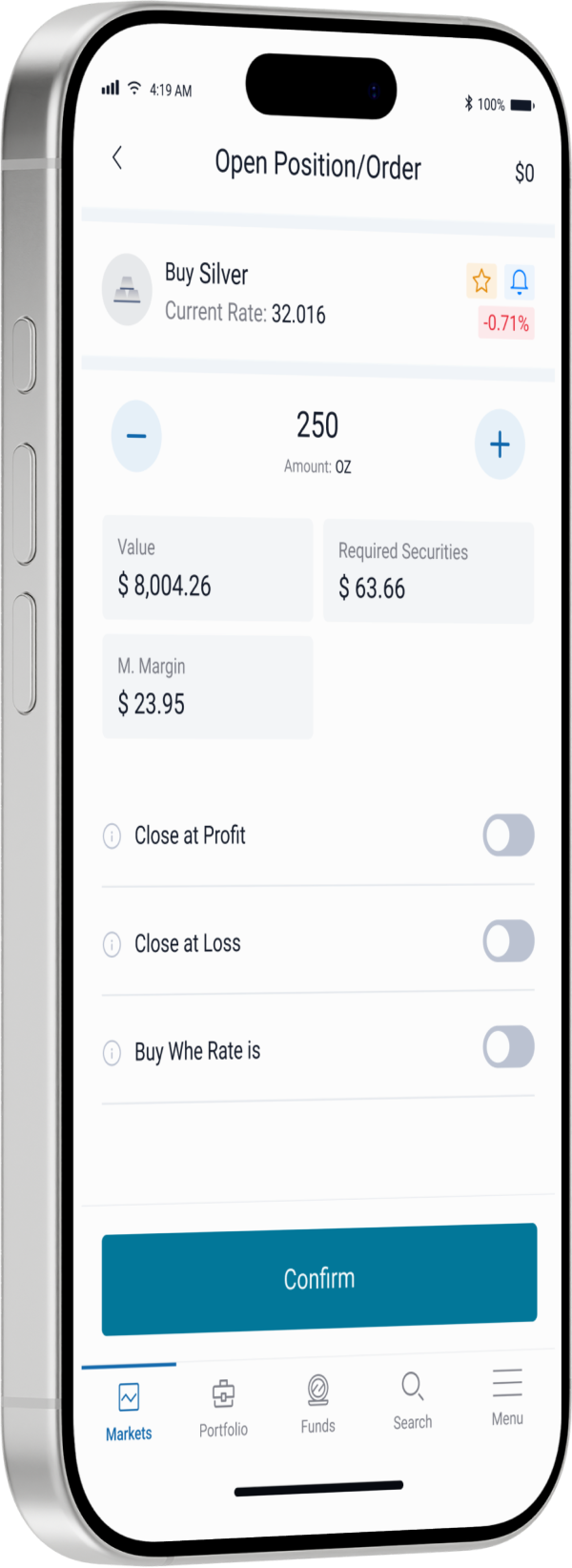
Protective orders, such as stop-loss and take-profit levels, are commonly used to define risk parameters in advance. These tools help translate abstract risk considerations into concrete execution rules.
A stop-loss order establishes a predefined exit point if the market moves against a position. This does not eliminate losses, but it helps limit their scale relative to account size. Take-profit orders, while not risk tools in the same sense, support discipline by defining exit conditions in advance.
The effectiveness of protective orders depends on how they are integrated into a broader risk framework. They are most useful when aligned with position sizing, market structure, and volatility conditions.
Risk Across Multiple Asset Classes
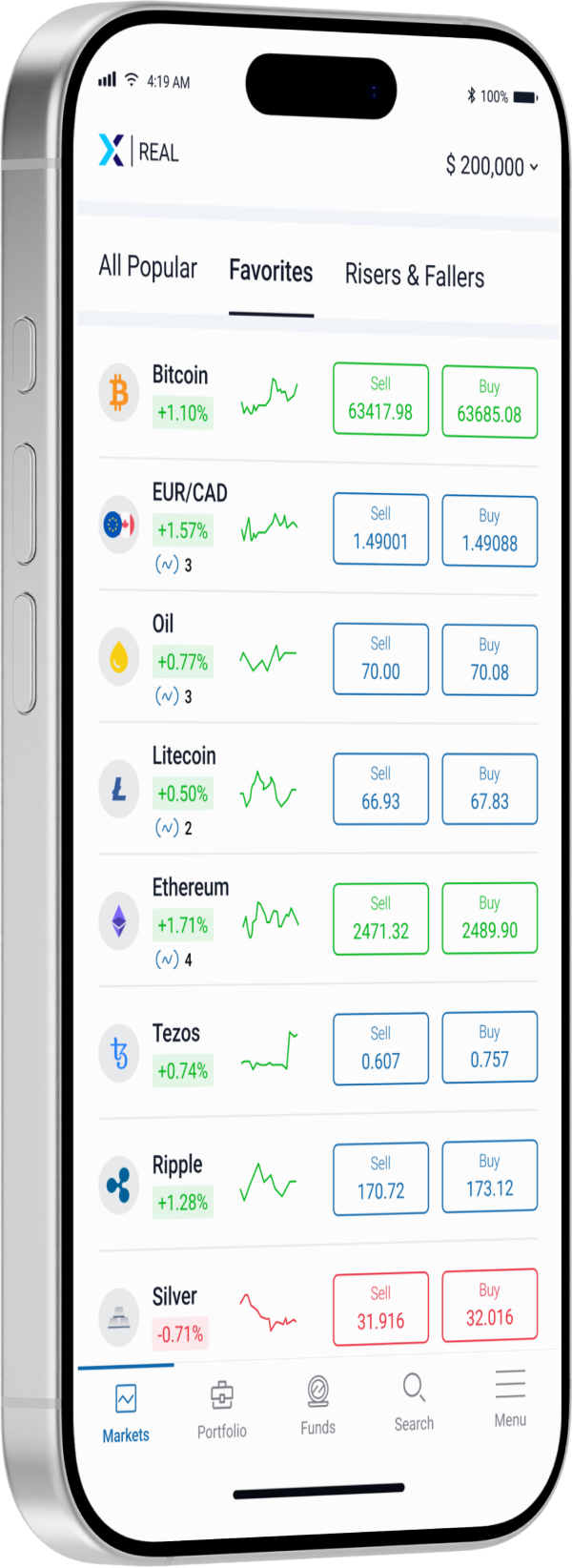
Different asset classes exhibit different risk characteristics. Currency markets often feature high liquidity and relatively narrow price movements, while commodities may experience sharp moves driven by supply disruptions or geopolitical events. Equity markets reflect both company-specific and macroeconomic influences, while digital assets may display heightened volatility and sensitivity to sentiment.
A multi-asset trading environment encourages awareness of these distinctions. Applying identical risk assumptions across all markets can lead to misaligned exposure. Understanding how risk manifests differently across asset classes supports more informed capital allocation.
Diversification across markets does not remove risk, but it can influence how risk is distributed within a portfolio.
Psychological Risk and Decision-Making
Risk management is not purely mechanical. Emotional responses to market movement — such as fear, frustration, or overconfidence — can significantly affect decision-making. These psychological factors often emerge most strongly during periods of volatility or drawdown.
Maintaining discipline under pressure is one of the most challenging aspects of trading. Predefined rules, consistent processes, and regular review help reduce the influence of emotional bias. Awareness of psychological risk allows traders to anticipate and manage their responses rather than reacting impulsively.
Over time, psychological resilience becomes an integral part of effective risk management.
Consistency Over Outcomes
One of the defining characteristics of a risk-aware approach is a focus on consistency rather than individual results. Markets produce a range of outcomes, even when the same process is applied repeatedly. Measuring success solely by isolated outcomes can obscure whether risk is being managed appropriately.
A consistent approach emphasizes adherence to predefined exposure limits, risk parameters, and review practices. This perspective encourages learning and adjustment while maintaining structural discipline.
Risk management, in this sense, supports longevity rather than certainty.
Protecting trading capital is not about avoiding uncertainty; it is about acknowledging it and responding with structure. Risk management provides the framework through which traders can engage with the markets responsibly, regardless of asset class or market condition.
By treating capital as a resource to be preserved, by controlling exposure deliberately, and by maintaining discipline in both execution and review, traders establish conditions that support continued participation. In an environment defined by uncertainty, structured risk management remains one of the most important foundations a trader can build.
Trading CFDs involves significant risk and may not be suitable for all investors.