Trading Articles

Risk Management Essentials: How to Protect Your Trading Capital
Every form of market participation involves uncertainty. Prices move in response to information, expectations, and events that cannot be fully anticipated or controlled. In this environment, risk is not an exception; it is a constant. For traders, the question is not whether risk exists, but how it is understood and managed.Risk management is often discussed as a technical discipline involving stop-loss orders, position sizing, or exposure limits. While these tools are important, they represent only part of a broader framework. At its core, risk management is about preserving the ability to continue participating in the markets over time. It is the foundation upon which all trading activity rests, regardless of market conditions or asset class.This article explores the essential principles of risk management in trading. Rather than focusing on formulas or prescriptive rules, it examines how risk arises, how it interacts with capital and psychology, and why a structured approach to risk is central to responsible market engagement.Understanding Risk in the Context of TradingRisk in trading arises from uncertainty about future price movements. Markets respond to economic data, corporate developments, policy decisions, geopolitical events, and shifts in sentiment — often simultaneously. Even well-researched positions can be affected by unexpected developments.Importantly, risk is not limited to adverse market movement. It also includes the risk of excessive exposure, poor timing, emotional decision-making, and lack of preparation. These internal factors can be just as influential as external market forces.Recognizing the multifaceted nature of risk helps traders move beyond a narrow focus on individual trades and toward a more comprehensive view of exposure and capital preservation.Trading Capital as a Finite ResourceTrading capital is not simply a number on an account statement; it represents the trader’s capacity to engage with the markets. Once capital is depleted, participation becomes limited or impossible. For this reason, protecting capital is a primary objective, independent of market direction or strategy.Capital preservation does not imply avoiding risk altogether. Rather, it involves allocating capital in a way that accounts for uncertainty and allows for normal market fluctuations without jeopardizing the overall account. This perspective shifts the focus from individual outcomes to sustainability.Traders who approach capital as a finite resource tend to prioritize consistency, moderation, and planning over short-term intensity.Position Sizing and Exposure ControlPosition sizing is one of the most influential variables in risk management. It determines how much exposure a trader takes in a given market relative to available capital. Even small changes in position size can significantly alter risk dynamics, particularly in leveraged environments.Appropriate position sizing takes into account factors such as market volatility, instrument characteristics, and overall portfolio exposure. It also reflects personal risk tolerance and time horizon. Rather than viewing position size as an expression of conviction, experienced traders often treat it as a tool for controlling downside risk.By managing position size carefully, traders can reduce the likelihood that any single market movement will have an outsized impact on their account.The Role of Protective OrdersProtective orders, such as stop-loss and take-profit levels, are commonly used to define risk parameters in advance. These tools help translate abstract risk considerations into concrete execution rules.A stop-loss order establishes a predefined exit point if the market moves against a position. This does not eliminate losses, but it helps limit their scale relative to account size. Take-profit orders, while not risk tools in the same sense, support discipline by defining exit conditions in advance.The effectiveness of protective orders depends on how they are integrated into a broader risk framework. They are most useful when aligned with position sizing, market structure, and volatility conditions.Risk Across Multiple Asset ClassesDifferent asset classes exhibit different risk characteristics. Currency markets often feature high liquidity and relatively narrow price movements, while commodities may experience sharp moves driven by supply disruptions or geopolitical events. Equity markets reflect both company-specific and macroeconomic influences, while digital assets may display heightened volatility and sensitivity to sentiment.A multi-asset trading environment encourages awareness of these distinctions. Applying identical risk assumptions across all markets can lead to misaligned exposure. Understanding how risk manifests differently across asset classes supports more informed capital allocation.Diversification across markets does not remove risk, but it can influence how risk is distributed within a portfolio.Psychological Risk and Decision-MakingRisk management is not purely mechanical. Emotional responses to market movement — such as fear, frustration, or overconfidence — can significantly affect decision-making. These psychological factors often emerge most strongly during periods of volatility or drawdown.Maintaining discipline under pressure is one of the most challenging aspects of trading. Predefined rules, consistent processes, and regular review help reduce the influence of emotional bias. Awareness of psychological risk allows traders to anticipate and manage their responses rather than reacting impulsively.Over time, psychological resilience becomes an integral part of effective risk management.Consistency Over OutcomesOne of the defining characteristics of a risk-aware approach is a focus on consistency rather than individual results. Markets produce a range of outcomes, even when the same process is applied repeatedly. Measuring success solely by isolated outcomes can obscure whether risk is being managed appropriately.A consistent approach emphasizes adherence to predefined exposure limits, risk parameters, and review practices. This perspective encourages learning and adjustment while maintaining structural discipline.Risk management, in this sense, supports longevity rather than certainty.Protecting trading capital is not about avoiding uncertainty; it is about acknowledging it and responding with structure. Risk management provides the framework through which traders can engage with the markets responsibly, regardless of asset class or market condition.By treating capital as a resource to be preserved, by controlling exposure deliberately, and by maintaining discipline in both execution and review, traders establish conditions that support continued participation. In an environment defined by uncertainty, structured risk management remains one of the most important foundations a trader can build. Trading CFDs involves significant risk and may not be suitable for all investors.

How Leverage Works and How to Use It Wisely
Leverage is one of the defining features of modern online trading. It is also one of the most frequently misunderstood. For many traders, leverage represents opportunity — the ability to gain broader market exposure without committing the full value of a position upfront. For others, it is a source of confusion or unintended risk, particularly when market conditions change rapidly.The reality is that leverage itself is neither beneficial nor harmful. It is a structural feature of trading that affects the scale of exposure relative to available capital. Understanding how leverage works, why it exists, and how it interacts with market volatility is essential for anyone participating in leveraged trading environments.This article explores leverage from a foundational perspective. It explains its mechanics, its relationship to margin, and its impact on risk and capital management. Rather than encouraging any particular level of leverage, the goal is to provide clarity — enabling traders to make informed decisions and to approach leveraged trading with awareness and discipline.What Leverage Actually RepresentsLeverage allows a trader to control a position that is larger than the amount of capital committed to open it. This is achieved through margin, which represents the portion of the position’s value that the trader must provide upfront. The remainder is effectively made available through the trading framework.For example, if a market requires a margin of 10%, a trader can open a position with a total value ten times greater than the capital allocated to it. The leverage ratio in this case is commonly described as 1:10. Importantly, this ratio does not alter how the market itself moves; it alters how those movements affect the trader’s account.A small change in price may result in a relatively larger change in account equity when leverage is involved. This scaling effect is the central characteristic of leverage and the primary reason it requires careful consideration.Why Leverage Exists in Financial MarketsLeverage exists to improve capital efficiency. In many markets, particularly those with high liquidity such as foreign exchange or major indices, price movements are often measured in small increments. Without leverage, participating meaningfully in these markets would require substantial capital, placing them beyond the reach of many participants.By allowing traders to allocate a fraction of the position’s value as margin, leverage lowers the capital threshold for market participation. It also enables traders to allocate capital across multiple instruments rather than committing all resources to a single position.From a structural standpoint, leverage supports market participation and liquidity. From a practical standpoint, it requires traders to understand how exposure, margin, and risk interact under different market conditions.Margin: The Foundation of Leveraged TradingMargin is the mechanism that makes leverage possible. When a leveraged position is opened, a portion of the account balance is set aside as margin. This amount serves as a form of collateral to support the open position and to absorb normal market fluctuations.There are several margin-related concepts that traders must understand clearly. Initial margin refers to the amount required to open a position. Maintenance margin represents the minimum level of equity required to keep the position open. As market prices move, account equity changes accordingly, affecting margin levels.If losses reduce equity below required thresholds, risk management mechanisms such as margin calls or stop-outs may be triggered. These mechanisms are designed to limit exposure and prevent losses from exceeding available capital. Understanding how margin levels are calculated and monitored is therefore essential for managing leveraged positions responsibly.Leverage Does Not Change Market DirectionOne of the most important points to understand about leverage is that it does not influence whether a market rises or falls. It does not improve accuracy, timing, or analysis. It simply magnifies the financial impact of price movements relative to account size.This distinction is critical. Leverage does not compensate for insufficient analysis or lack of preparation. Markets remain unpredictable, and price movements can occur rapidly in response to economic data, geopolitical developments, or shifts in sentiment.Viewing leverage as a tool rather than an advantage helps maintain realistic expectations and encourages disciplined use.The Relationship Between Leverage and VolatilityVolatility refers to the degree of price fluctuation within a market. In highly volatile conditions, prices may move significantly within short periods of time. When leverage is applied in such environments, the impact on account equity can be amplified.This interaction means that leverage must be considered in the context of prevailing market conditions. Instruments with historically higher volatility may require more conservative exposure than those that typically move within narrower ranges.Understanding volatility helps traders contextualize risk, rather than relying solely on leverage ratios. It encourages a more nuanced approach to position sizing and exposure management.Position Sizing as a Risk Management ToolPosition size determines how much exposure a trader takes in a given market. In leveraged trading, position size often has a greater impact on risk than leverage ratios alone.A trader using lower leverage but larger position sizes may still be exposed to significant risk. Conversely, conservative position sizing can help manage exposure even when leverage is available. This relationship highlights the importance of considering leverage, position size, and account equity together rather than in isolation.Responsible position sizing aligns exposure with risk tolerance and market conditions, supporting sustainability over time.Emotional Discipline and LeverageLeverage can influence not only financial outcomes but also emotional responses. Larger fluctuations in account equity may intensify psychological pressure, particularly during periods of market volatility.Emotional decision-making can lead to premature exits, excessive risk-taking, or deviation from predefined plans. Recognizing this psychological dimension is an important part of using leverage wisely.Many experienced traders emphasize the importance of maintaining consistency in approach, regardless of short-term market movements. This discipline supports clearer decision-making and helps reduce the impact of emotional bias.Regulatory Considerations and Leverage LimitsLeverage levels are often subject to regulatory frameworks designed to protect retail participants. These frameworks may impose limits on maximum leverage depending on the asset class and jurisdiction.Such measures reflect the recognition that leverage increases risk exposure. Traders should be aware of applicable regulations and understand how leverage limits are applied within their trading environment.Regulatory oversight does not remove risk, but it establishes parameters intended to promote responsible market participation.A Measured Approach to Leveraged TradingUsing leverage wisely does not mean avoiding it entirely, nor does it mean maximizing exposure. It involves understanding how leverage interacts with market behavior, account equity, and personal risk tolerance.A measured approach emphasizes preparation, ongoing monitoring, and the use of risk controls. It recognizes that trading is a process rather than a series of isolated outcomes and that longevity depends on managing exposure thoughtfully.Final PerspectiveLeverage is an integral component of modern online trading, shaping how traders interact with global markets. Its value lies in flexibility and capital efficiency, but its impact depends entirely on how it is applied.By understanding the mechanics of leverage, the role of margin, and the relationship between exposure and volatility, traders can approach leveraged trading with greater awareness. Education, discipline, and realistic expectations remain central to responsible participation in the markets.Leverage does not determine results; decisions do. And informed decisions begin with understanding. Trading CFDs involves significant risk and may not be suitable for all investors.
Understanding CFDs: Trading Opportunities Across Multiple Asset Classes
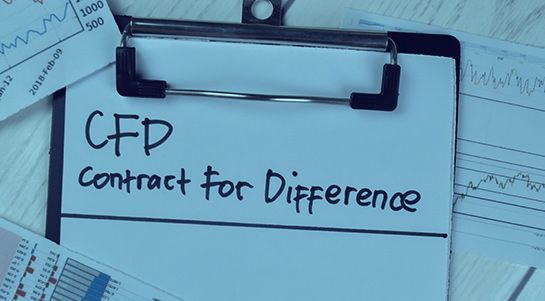
As online trading has evolved, so too have the instruments that enable individuals to access global markets efficiently. Among the most widely used of these instruments are Contracts for Difference, commonly known as CFDs. For many traders, CFDs form the backbone of their market participation, offering flexibility, accessibility, and exposure to a broad range of asset classes from a single trading environment.Despite their popularity, CFDs are often misunderstood. Some traders encounter them early in their trading journey without fully appreciating how they work, what they represent, or why they behave differently from traditional asset ownership. This lack of clarity can lead to unrealistic expectations or misinterpretation of risk, particularly in volatile market conditions.This article provides a comprehensive explanation of CFDs, focusing on their structure, purpose, and role in modern trading. Rather than promoting outcomes or strategies, it aims to clarify how CFDs function, why they allow access to multiple markets, and what traders should understand before engaging with them. A clear conceptual foundation is essential for anyone seeking to use CFDs responsibly and effectively.What a Contract for Difference RepresentsA Contract for Difference is a financial agreement between a trader and a broker that reflects the price movement of an underlying asset. The contract is settled based on the difference between the price at which the position is opened and the price at which it is closed. The trader does not take ownership of the underlying asset; instead, they gain exposure to its price fluctuations.This distinction is fundamental. When trading CFDs, there is no transfer of ownership, no physical delivery, and no shareholder rights in the case of equities. The value of the position is derived entirely from market price movement. If the price moves in the direction anticipated by the trader, the difference results in a gain; if it moves in the opposite direction, the difference results in a loss.This structure allows CFDs to mirror the behavior of the underlying market closely, while remaining purely contractual in nature. Understanding this separation between price exposure and ownership is key to understanding both the advantages and responsibilities associated with CFD trading. Why CFDs Play a Central Role in Online TradingCFDs have become a cornerstone of online trading largely because of their versatility. Through a single account, traders can access a wide array of global markets that would otherwise require multiple platforms, exchanges, or custodians.CFDs allow exposure to foreign exchange markets, global equities, major stock indices, commodities such as gold and oil, cryptocurrencies, and exchange-traded funds. This breadth enables traders to observe and participate in different market environments without the operational complexity of managing multiple instruments in different formats.Another defining feature of CFDs is the ability to trade both rising and falling markets. Traders can open positions that reflect expectations of price increases or price declines, allowing participation regardless of broader market direction. This flexibility is particularly relevant in periods of heightened volatility or economic uncertainty, when markets may not move uniformly upward or downward.Accessing Multiple Asset Classes Through CFDsOne of the most significant advantages of CFD trading is the ability to diversify exposure across asset classes within a unified trading environment. Each asset class responds to different economic forces, and understanding these dynamics helps traders interpret price behavior more effectively.Currency markets, for example, are heavily influenced by interest rates, inflation expectations, and monetary policy decisions. Equity markets respond to corporate earnings, innovation, and economic growth. Commodities are shaped by supply and demand imbalances, geopolitical developments, and environmental factors. Cryptocurrencies often reflect technological adoption, regulatory sentiment, and broader risk appetite.By trading CFDs, individuals can move between these markets without altering the fundamental mechanics of how trades are placed or managed. This consistency simplifies execution while still requiring traders to adapt their analysis to the specific characteristics of each market.Long and Short Positions: Directional FlexibilityCFDs are inherently directional instruments, meaning traders can express both positive and negative market views. Opening a “buy” position reflects an expectation that prices may rise, while opening a “sell” position reflects an expectation that prices may fall.This directional flexibility does not imply predictability or reduced risk. Rather, it provides structural neutrality. Traders are not constrained by market direction; instead, they must assess conditions and determine whether price movements align with their analysis.In practice, this flexibility encourages a more analytical approach to market participation. Traders must consider not only whether a market is strong or weak, but why it is behaving that way and how broader forces may influence future movement.Understanding Costs in CFD TradingLike all financial instruments, CFDs involve costs that should be understood clearly before trading. These costs are embedded in the trading process and vary depending on the market and instrument.The most common cost is the spread, which represents the difference between the buy and sell price. This reflects market liquidity and execution conditions. Some instruments may also involve commissions, depending on their structure and pricing model.For positions held overnight, financing charges, often referred to as swaps, may apply. These reflect the cost of maintaining leveraged exposure over time and are influenced by prevailing interest rates. While these costs are typically transparent within the trading platform, understanding how they accumulate over time is essential, particularly for longer-term positions.Clear awareness of trading costs contributes to more informed decision-making and realistic expectations.Leverage and Its Relationship to CFDsCFDs are often traded using leverage, which allows traders to control larger positions with a smaller initial outlay. While leverage can increase market exposure, it also magnifies both gains and losses. This dual effect makes leverage one of the most important concepts for CFD traders to understand.Leverage does not change the underlying behavior of the market. It changes the scale of exposure relative to available capital. As a result, small price movements can have a proportionally larger impact on account equity. This characteristic underscores the importance of position sizing, margin awareness, and risk controls.Used thoughtfully, leverage can support efficient capital allocation. Used without sufficient understanding, it can increase vulnerability to rapid market movements.Risk Management as a Core PrincipleBecause CFDs respond directly to market price movements, risk management is not optional; it is central to responsible trading. Every position carries the potential for loss, and markets can move quickly in response to unexpected events.Risk management practices include defining exposure limits, using protective orders to manage downside risk, and maintaining sufficient margin to absorb normal price fluctuations. Equally important is psychological discipline — the ability to adhere to predefined rules rather than reacting emotionally to short-term market movements.Experienced traders often view risk management not as a defensive measure, but as an enabling framework that allows them to participate consistently over time.The Importance of Education and ContextCFDs are neither inherently simple nor inherently complex. Their effectiveness depends on the trader’s understanding of how they function and how they fit within a broader market context. Education plays a critical role in bridging this gap.Learning how different asset classes behave, how economic data influences prices, and how volatility affects exposure allows traders to interpret CFD price movements more accurately. Over time, this contextual understanding supports more structured and deliberate engagement with the markets.Rather than focusing on isolated trades, knowledgeable traders develop a broader perspective that connects individual positions to overall market conditions.A Broader Perspective on CFD TradingContracts for Difference have become integral to modern online trading because they align with how markets are accessed today: digitally, globally, and dynamically. They provide a framework through which traders can engage with multiple asset classes, adapt to changing market conditions, and express a wide range of market views.At the same time, CFDs demand a clear understanding of structure, cost, leverage, and risk. They reward preparation and discipline, and they highlight the importance of continuous learning. As with all market participation, success is less about the instrument itself and more about how it is used.Approached with education, realistic expectations, and respect for risk, CFDs offer a flexible way to engage with the global markets while maintaining a structured and informed perspective. Trading CFDs involves significant risk and may not be suitable for all investors.
New Year Market Trends: What Traders Should Watch in 2026
The transition into a new year often brings renewed attention to the global financial markets. As economic cycles evolve, policy priorities shift, and technological change accelerates, traders and investors alike reassess the forces shaping price behavior across asset classes. While the calendar itself does not alter market dynamics, the start of a new year provides a natural moment to step back, review structural developments, and consider how different markets may be influenced by the environment ahead.For traders, this process is not about predicting outcomes or identifying guaranteed opportunities. Markets are shaped by a wide range of variables, many of which evolve gradually and interact in complex ways. Instead, understanding broad themes — such as monetary policy direction, economic growth patterns, geopolitical dynamics, and sector-specific developments — helps provide context for market movements as they unfold.This article explores key multi-asset themes that are likely to remain relevant as 2026 begins. Rather than focusing on short-term scenarios, it examines the structural and macroeconomic factors that influence currencies, equities, indices, commodities, and digital assets, offering a framework for informed market observation in the year ahead.Monetary Policy and Interest Rates Across Major EconomiesCentral bank policy remains one of the most influential forces across global markets. Interest rate decisions, balance-sheet policies, and forward guidance continue to shape currency valuations, equity market sentiment, and capital flows between regions.As economies adjust to evolving inflation dynamics and growth conditions, monetary authorities face the challenge of balancing price stability with economic resilience. Even subtle changes in policy expectations can influence market pricing well in advance of actual decisions. Currency markets, in particular, tend to respond quickly to shifts in interest rate differentials between economies, while equity indices often reflect broader expectations around growth and financial conditions.For traders observing multiple asset classes, understanding how monetary policy expectations differ across regions provides valuable context. A policy shift in one major economy can have ripple effects across currencies, global indices, and commodity markets, reinforcing the interconnected nature of modern financial systems. Economic Growth, Inflation, and Key Data IndicatorsMacroeconomic data continues to play a central role in shaping market narratives. Inflation trends, employment figures, consumer spending, and gross domestic product data all contribute to how markets interpret economic momentum and risk.In 2026, traders are likely to remain focused on whether growth patterns show signs of acceleration, stabilization, or moderation across major economies. Inflation dynamics, in particular, influence both policy decisions and investor sentiment, affecting everything from bond yields to equity valuations and currency strength.Rather than reacting to individual data releases in isolation, experienced market participants tend to assess how data fits into broader trends. Consistency, divergence, and unexpected shifts often carry more significance than headline figures alone, especially when viewed across asset classes.Equity Markets and Sector-Level DynamicsGlobal equity markets reflect a combination of corporate performance, economic conditions, and investor expectations. As 2026 begins, attention is likely to remain focused on how companies adapt to changing financial conditions, technological innovation, and evolving consumer behavior.Sector dynamics play an increasingly important role within equity indices. Technology, energy, healthcare, financial services, and consumer sectors each respond differently to interest rates, regulation, and economic cycles. Understanding these distinctions helps contextualize index movements and individual stock performance.For traders engaging with equity CFDs or indices, awareness of sector rotation and thematic leadership provides a broader lens through which to interpret price action, rather than relying solely on short-term fluctuations.Commodities: Supply, Demand, and Geopolitical InfluenceCommodity markets continue to be shaped by a combination of physical supply and demand factors, geopolitical developments, and macroeconomic trends. Energy markets respond to production decisions, geopolitical tensions, and shifts in consumption patterns. Precious metals often reflect broader sentiment around inflation expectations, currency movements, and risk perception. Agricultural commodities are influenced by weather conditions, trade flows, and seasonal cycles.In a multi-asset context, commodities often behave differently from equities or currencies, sometimes serving as indicators of broader economic pressures. Changes in commodity prices can also influence inflation expectations, feeding back into monetary policy considerations and currency markets.Observing commodities alongside other asset classes helps traders build a more complete picture of global economic conditions.Foreign Exchange and Cross-Market RelationshipsThe foreign exchange market remains central to global capital flows. Currency valuations are influenced by interest rate differentials, economic growth expectations, trade balances, and political stability. In a multi-asset environment, currency movements often intersect with developments in equities and commodities.For example, changes in risk sentiment can drive flows toward or away from certain currencies, while commodity-exporting economies may see currency movements linked to changes in commodity prices. Understanding these relationships enhances a trader’s ability to interpret currency behavior within a broader market framework.Rather than viewing forex in isolation, many traders analyze it as part of a larger system influenced by global macro forces.Digital Assets and Evolving Market StructureDigital assets continue to mature as a market segment, shaped by technological development, regulatory frameworks, and evolving adoption patterns. While volatility remains a defining characteristic, digital asset markets increasingly interact with broader financial conditions, particularly in relation to liquidity and risk appetite.As infrastructure improves and regulatory clarity develops in some regions, digital assets may continue to evolve alongside traditional markets. Observing how these assets respond to macroeconomic shifts, rather than treating them as standalone instruments, provides additional insight into their role within the wider financial ecosystem.Geopolitical Developments and Structural RiskGeopolitical events remain a persistent source of market uncertainty. Trade relations, regional conflicts, elections, and policy shifts can all influence market sentiment and volatility across asset classes. These developments are often difficult to quantify in advance but can have immediate and widespread effects once they occur.Structural risks, such as supply chain adjustments, demographic changes, and technological disruption, also continue to influence long-term market behavior. While these forces unfold gradually, their cumulative impact can reshape economic relationships and investment flows over time.For traders, staying informed about geopolitical and structural developments supports contextual awareness, even when direct market reactions are not immediately apparent.The Importance of a Multi-Asset PerspectiveOne of the defining characteristics of modern trading is the ability to observe and engage with multiple asset classes simultaneously. This access encourages a more holistic understanding of markets, where movements in one asset class are viewed in relation to others.A multi-asset perspective helps traders avoid narrow interpretations of price action. It highlights correlations, divergences, and broader trends that may not be visible when focusing on a single market in isolation. Over time, this broader view supports more informed observation and analysis.As 2026 begins, global markets continue to reflect a complex interaction of economic forces, policy decisions, technological change, and human behavior. While uncertainty remains an inherent feature of financial markets, understanding the structural themes that influence different asset classes provides a valuable foundation for engagement.Rather than seeking certainty, traders benefit from focusing on context, adaptability, and education. By observing how currencies, equities, commodities, indices, and digital assets respond to shared macroeconomic forces, it becomes possible to interpret market developments with greater clarity.In an environment shaped by constant change, informed perspective remains one of the most important tools a trader can develop. Trading CFDs involves significant risk and may not be suitable for all investors.

Getting Started with Online Trading: How to Navigate the Global Markets
Online trading has reshaped access to global financial markets in ways that would have been difficult to imagine just a few decades ago. Markets that were once the exclusive domain of banks, hedge funds, and institutional desks are now accessible to individuals across the world through advanced digital platforms. With a single account, traders can monitor currencies, stock indices, commodities, shares, and other financial instruments in real time, responding instantly to developments that unfold across continents.This unprecedented access, however, does not automatically translate into understanding. While technology has lowered barriers to entry, it has not reduced the complexity of the markets themselves. Prices continue to be driven by economic forces, corporate performance, political developments, investor psychology, and global capital flows. For those new to trading, the challenge lies not in finding opportunities, but in learning how to interpret market information, manage risk, and approach trading with discipline and structure.This article is designed as a foundational guide for those beginning their journey into online trading. Rather than focusing on short-term outcomes or market predictions, it explores how global markets function, what it means to participate in them as a trader, and how modern trading platforms help individuals engage with these markets in an informed and responsible way. Understanding these fundamentals is an essential first step toward navigating the global markets with clarity and confidence.Understanding What Online Trading Really MeansAt its core, online trading involves taking positions in financial markets through a digital platform, with the objective of benefiting from price movements. These movements may occur over minutes, hours, days, or longer periods, depending on a trader’s approach and strategy. Unlike traditional investing, which often focuses on long-term ownership of assets, trading is typically centered on price dynamics and market behavior.When a trader opens a position, they are expressing a view on the future direction of a market. This view might be based on economic data, company news, technical patterns, or broader market sentiment. The trader does not need to physically own the underlying asset; instead, they gain exposure to its price movement through financial instruments that reflect changes in value.What distinguishes online trading from older forms of market participation is the immediacy of information and execution. Prices update continuously, orders can be placed within seconds, and positions can be monitored in real time. While this creates flexibility and responsiveness, it also demands a higher level of engagement and understanding from the trader.The Structure of the Global Financial MarketsThe global financial markets are not a single, unified entity. They are a network of interconnected markets operating across different regions, time zones, and regulatory environments. Together, they form a continuous cycle of activity that spans nearly 24 hours a day during the trading week.Among the most prominent markets are the foreign exchange market, equity markets, commodity markets, and derivatives markets. Each has its own characteristics, participants, and drivers. Currency markets are influenced heavily by interest rates, economic growth, and monetary policy. Equity markets respond to corporate earnings, innovation, and broader economic conditions. Commodities are shaped by supply and demand dynamics, geopolitical developments, and environmental factors.These markets do not operate in isolation. A change in interest rate expectations in one major economy can influence currency valuations, stock indices, and commodity prices simultaneously. Similarly, geopolitical events or shifts in investor sentiment can ripple across asset classes, creating periods of heightened volatility or rapid price adjustment.For traders, understanding this interconnectedness is crucial. Even when focusing on a single instrument, it is important to recognize the broader context in which price movements occur.How Trades Are Executed in the Modern Trading EnvironmentWhen a trade is placed through an online platform, several processes occur almost instantaneously. The platform displays live prices sourced from the market, allows the trader to select position size and order type, and executes the trade once the order conditions are met. Behind the scenes, technology ensures that pricing, execution, and account balances are updated accurately and efficiently.Modern trading platforms are designed to consolidate multiple functions into a single interface. Traders can analyze charts, follow news, manage open positions, and review account performance without switching tools. This integration is a defining feature of contemporary online trading and has significantly changed how individuals interact with markets.However, the speed and convenience of execution do not remove the need for careful decision-making. Each trade carries risk, and every position reflects a deliberate choice. The platform provides access and tools, but responsibility remains with the trader.The Role of Analysis in Trading DecisionsMarket analysis plays a central role in online trading. While approaches vary, most traders rely on a combination of analytical frameworks to interpret price behavior and market conditions.Technical analysis focuses on price patterns, trends, and historical data. It seeks to identify recurring behaviors and potential turning points based on how markets have behaved in the past. Fundamental analysis, by contrast, examines economic indicators, corporate performance, and macroeconomic trends to assess underlying value and market direction.Neither approach operates in isolation. Many traders blend elements of both, using economic data to understand the broader environment and technical tools to refine timing and execution. Over time, traders often develop a preferred analytical style that aligns with their objectives, time horizon, and risk tolerance.What matters most is not the specific method chosen, but the consistency and discipline with which it is applied.Risk, Responsibility, and Capital ManagementOne of the most important concepts for new traders to understand is that trading is inseparable from risk. Market prices can move unpredictably, influenced by events that are difficult to anticipate or quantify. Successful participation in the markets therefore depends not on eliminating risk, but on managing it thoughtfully.Risk management begins with understanding position size and exposure. It extends to the use of protective tools such as stop-loss orders, as well as ongoing monitoring of open positions. Equally important is emotional discipline — the ability to remain objective during periods of volatility and to avoid impulsive decisions driven by fear or overconfidence.Capital management is closely linked to risk control. Traders who allocate their resources carefully and avoid excessive exposure are better positioned to navigate market fluctuations over time. This approach emphasizes sustainability rather than short-term outcomes.Technology as an Enabler, Not a ShortcutAdvanced trading platforms have made market participation more accessible than ever, but they are not substitutes for knowledge or experience. Charting tools, indicators, alerts, and analytics are powerful resources, yet their effectiveness depends on how they are used.Technology enables traders to organize information, respond quickly to market changes, and track performance over time. It supports learning by providing data and feedback. However, it does not remove uncertainty, nor does it guarantee favorable outcomes.Approaching trading technology with realistic expectations helps ensure it is used as an educational and operational tool, rather than as a source of false confidence.Developing a Long-Term PerspectiveAlthough trading often focuses on short-term price movements, long-term development as a trader requires patience and reflection. Markets evolve, conditions change, and strategies that work in one environment may need adjustment in another.Continuous learning, regular review of past trades, and openness to adapting one’s approach are essential elements of growth. Rather than measuring success solely by individual outcomes, experienced traders focus on consistency, process, and adherence to predefined rules.This perspective encourages resilience and helps traders remain engaged through both favorable and challenging market conditions.Getting started with online trading is as much an educational journey as it is a technical one. Understanding how global markets operate, how trades are executed, and how risk is managed provides a solid foundation for responsible participation. While modern platforms offer unprecedented access and sophisticated tools, meaningful engagement with the markets ultimately depends on preparation, discipline, and ongoing learning.By approaching trading with a structured mindset and a commitment to understanding the forces that drive price movements, traders place themselves in a stronger position to navigate the global markets with clarity and confidence. Education remains the most valuable asset at every stage of the trading journey. Trading CFDs involves significant risk and may not be suitable for all investors.