New Articles
How to Use Economic Calendars and News Events to Your Advantage
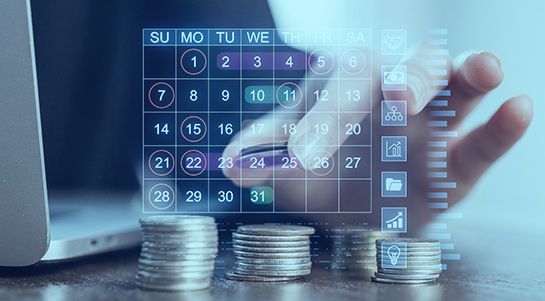
Financial markets do not move in isolation. Behind every price movement lies a complex interaction of expectations, information, and collective response. Among the most influential sources of market information are economic data releases and scheduled news events, which provide insight into the health, direction, and priorities of global economies. For traders, understanding when these events occur and how markets tend to respond to them is an essential part of informed market participation.Economic calendars exist to organize this flow of information. They provide a structured overview of upcoming data releases, central bank announcements, and other scheduled events that may influence market behavior. Used correctly, an economic calendar does not serve as a forecasting tool or a signal generator. Instead, it functions as a contextual framework that helps traders anticipate periods of heightened activity, understand market sensitivity, and manage exposure more thoughtfully.This article explores how economic calendars and news events fit into the broader trading process. Rather than focusing on short-term reactions or tactical execution, it explains how traders can use scheduled information to improve awareness, preparation, and risk management across multiple asset classes.What an Economic Calendar RepresentsAn economic calendar is a schedule of upcoming economic events and data releases that are considered relevant to financial markets. These events typically include indicators related to economic growth, inflation, employment, manufacturing activity, consumer confidence, and monetary policy. Each release reflects information that market participants use to reassess economic conditions and future expectations.The importance of an economic calendar lies not in the numbers themselves, but in how those numbers compare to expectations. Markets are forward looking. Prices often adjust based on what participants believe will happen, rather than what has already occurred. When new data confirms, contradicts, or reshapes those expectations, price movement can follow.By consulting an economic calendar, traders gain visibility into when these moments of reassessment are likely to occur. This visibility supports preparation and awareness rather than reaction.Scheduled Information and Market SensitivityNot all economic events influence markets equally. Some releases consistently attract attention due to their relevance to monetary policy, economic stability, or corporate performance. Employment data, inflation indicators, and central bank decisions are often closely watched because they influence interest rate expectations and capital flows.Market sensitivity to data can also vary over time. During periods of economic uncertainty, markets may react strongly to indicators that provide insight into growth or inflation trends. In more stable environments, the same data may produce limited response. Understanding this shifting sensitivity helps traders interpret market reactions more realistically.Economic calendars typically provide additional context, such as previous readings and consensus expectations. This information helps traders understand whether a release is likely to be perceived as surprising or broadly in line with expectations.News Events and Price MovementWhen a scheduled news event occurs, markets respond not only to the data itself, but to how that data alters the prevailing narrative. A single release rarely changes the broader economic picture on its own. Instead, it contributes to an ongoing process of interpretation and adjustment.Price movement around news events can take several forms. Markets may move sharply if data deviates significantly from expectations. They may remain relatively stable if the outcome is broadly anticipated. In some cases, initial reactions may be reversed as participants reassess the information in a wider context.It is important to recognize that price reactions are not guarantees or rules. They reflect collective behavior in real time, influenced by positioning, liquidity, and sentiment as much as by the data itself.Economic Calendars Across Asset ClassesWhile economic calendars are often associated with currency markets, their relevance extends across asset classes. Interest rate decisions influence currency valuations, but they also affect equity indices, bond markets, and commodities. Inflation data can shape expectations around monetary policy while also influencing energy prices and consumer focused equities.Equity markets respond to economic data through the lens of corporate earnings and growth expectations. Commodities may react to data that influences demand projections or currency strength. Digital assets may respond indirectly to changes in risk sentiment and liquidity conditions.A multi asset perspective allows traders to see how a single economic event may influence different markets in different ways. This broader view helps avoid narrow interpretations based on one instrument alone.Preparation Rather Than PredictionOne of the most important principles when using economic calendars is the distinction between preparation and prediction. Calendars do not indicate how markets will move. They indicate when new information will become available.Preparation involves understanding which markets may be affected, recognizing potential changes in volatility, and adjusting exposure accordingly. This may include reviewing open positions, reassessing risk parameters, or choosing to observe rather than engage during periods of uncertainty.Using an economic calendar in this way supports deliberate decision making. It shifts focus away from reacting to headlines and toward managing exposure in anticipation of changing conditions.Volatility and Liquidity ConsiderationsNews events often coincide with changes in volatility and liquidity. Price movements may become faster and less predictable as participants respond simultaneously to new information. Spreads may widen temporarily, and execution conditions can differ from those observed during calmer periods.Understanding this dynamic is particularly important for risk management. Traders who are aware of upcoming events can consider how increased volatility may affect open positions and whether current exposure aligns with their tolerance for uncertainty.Economic calendars provide the timing needed to make these assessments in advance rather than in response to sudden movement.Integrating News Awareness Into a Trading ProcessEconomic calendars are most effective when integrated into a broader analytical and operational framework. They complement technical analysis by providing context for sudden movements or changes in market behavior. They complement fundamental analysis by organizing the flow of information that shapes economic narratives.Rather than treating each data release as a standalone event, many traders track themes over time. This approach emphasizes consistency and context, allowing individual releases to be interpreted as part of an evolving picture rather than isolated triggers.Over time, this integration supports a more measured and informed approach to market participation.Avoiding Common MisconceptionsOne common misconception is that news events create predictable opportunities. In reality, markets often price in expectations well before data is released. Another misconception is that avoiding news entirely removes risk. Markets can remain volatile even outside scheduled events, particularly during periods of uncertainty.Economic calendars do not reduce risk or simplify markets. They improve awareness. This awareness helps traders align decisions with their understanding of market conditions rather than reacting under pressure. Economic calendars and news events provide structure to the flow of information that shapes financial markets. They help traders anticipate when new data will enter the market and understand why prices may behave differently at certain times. Used thoughtfully, they support preparation, context, and risk awareness rather than prediction or certainty.To support this process, XTrade provides traders with access to an integrated economic calendar. This allows market participants to track upcoming data releases and scheduled events alongside price charts and other market information, helping them stay informed and organized as conditions evolve.In a market environment defined by constant information flow, the ability to observe, contextualize, and respond deliberately remains one of the most valuable skills a trader can develop. Tools such as economic calendars do not remove uncertainty, but they can help traders approach it with greater awareness and structure. Trading CFDs involves significant risk and may not be suitable for all investors.
Understanding Trading Costs: Spreads, Swaps, and Commissions Explained
Every financial market operates within a structure that includes costs. These costs are not incidental. They are embedded in how markets function and how trading infrastructure is maintained. For traders, understanding these costs is not a secondary detail but a fundamental part of responsible participation.While price movement receives most of the attention in trading discussions, the mechanics of trading costs often receive less scrutiny. Yet spreads, financing charges, and commissions directly influence trade execution, position management, and long term account sustainability. A clear understanding of how these costs arise and how they affect different types of trading activity helps create more realistic expectations and supports better planning.This article examines the primary forms of trading costs commonly encountered in leveraged and multi asset trading environments. Rather than focusing on comparison or optimization, the goal is to explain structure. When traders understand how costs work, they are better positioned to interpret their impact within the broader context of market participation.The Spread as the Core Transaction CostThe spread is the difference between the bid price and the ask price of an instrument. The bid represents the price at which the market is willing to buy, while the ask represents the price at which it is willing to sell. The spread reflects the cost of executing a transaction immediately at current market conditions.Spreads exist because financial markets are based on continuous matching of buyers and sellers. Market makers, liquidity providers, and exchanges facilitate this process by quoting prices that allow transactions to occur smoothly. The spread compensates for providing this liquidity and maintaining orderly pricing.In highly liquid markets such as major currency pairs or widely traded indices, spreads tend to be narrower because large volumes of buyers and sellers participate actively. In less liquid markets, spreads may widen due to reduced participation or increased uncertainty.Importantly, the spread is not a fixed value. It can fluctuate depending on market conditions. During periods of low liquidity or heightened volatility, spreads may temporarily expand as pricing adjusts to new information. Understanding this dynamic helps traders interpret execution costs more accurately, especially during economic releases or major news events.How Spreads Affect Trade Entry and ExitBecause trades are executed at either the bid or ask price, the spread effectively represents the initial cost of entering a position. When a trader opens a position, it begins slightly negative relative to the midpoint price, reflecting the spread difference. For the position to move into positive territory, price must first move enough to offset that initial transaction cost.This does not imply disadvantage. It reflects the operational reality of participating in a live market. Recognizing this mechanism encourages traders to consider trade duration, volatility, and execution timing more carefully.Short term traders may experience the impact of spreads more frequently due to higher transaction volume. Longer term traders may be less sensitive to minor spread variations but more attentive to other cost components, such as overnight financing.Commissions and Structured Pricing ModelsIn some trading environments, commissions are charged in addition to or instead of wider spreads. A commission is a transparent fee applied per transaction, often calculated as a percentage of trade value or as a fixed cost per lot or contract.Commission based models are common in certain asset classes, particularly equities or exchange linked products. They provide a clear and explicit pricing structure, separating execution cost from quoted pricing.Understanding whether a trading environment incorporates cost primarily through spreads, commissions, or a combination of both is important for evaluating total transaction cost. Transparency in cost structure supports informed participation and realistic trade evaluation.Commissions do not change market direction or probability. They represent a structural cost of accessing execution infrastructure.Swaps and Overnight FinancingWhen positions are held beyond the trading day, additional costs may apply in the form of swaps or overnight financing charges. These charges reflect the cost of maintaining leveraged exposure over time and are influenced by prevailing interest rates and the characteristics of the instrument being traded.In forex markets, swaps are typically linked to the interest rate differential between the two currencies in a pair. Holding a currency with a higher interest rate against one with a lower interest rate may result in a credit or a debit, depending on position direction. In other asset classes, financing costs may reflect borrowing expenses associated with maintaining leveraged exposure.Overnight charges highlight the distinction between short term trading and longer holding periods. While spreads primarily affect entry and exit, swaps accumulate over time. For traders who maintain positions across multiple days or weeks, understanding how these costs accrue becomes particularly relevant.Swaps are not penalties. They reflect the financial reality of borrowing capital to maintain leveraged exposure in global markets.Cost Differences Across Asset ClassesTrading costs vary depending on the asset class involved. Forex markets often feature competitive spreads due to deep liquidity. Equity CFDs may include commissions alongside spreads. Commodity instruments may reflect both liquidity conditions and financing components. Digital assets may display wider spreads during periods of heightened volatility.These differences arise from market structure, liquidity depth, regulatory environment, and instrument design. Recognizing that costs are not uniform across markets supports more informed comparison and planning.Multi asset traders benefit from understanding how cost structures differ between instruments rather than assuming consistency across all markets.The Relationship Between Costs and Trading StyleDifferent trading approaches interact with costs in different ways. Higher frequency strategies encounter spreads and commissions more frequently. Longer term strategies may experience greater sensitivity to financing charges. Active intraday participants may focus more on execution conditions during volatile periods, while swing traders may monitor cumulative swap exposure.There is no universally optimal structure. What matters is alignment between approach and understanding. Costs should be factored into planning rather than treated as afterthoughts.This perspective encourages realism and transparency in evaluating performance, ensuring that gross movement and net outcome are clearly distinguished.Transparency and Platform AwarenessModern trading platforms typically display spread information in real time and provide visibility into overnight financing rates. Reviewing this information before entering a position helps traders incorporate cost considerations into decision making.Awareness does not eliminate cost. It integrates cost into the overall trading framework. This integration supports clearer evaluation of exposure, time horizon, and capital allocation.Informed participation requires understanding not only how markets move, but how participation itself is structured. Trading costs are an inherent part of accessing global financial markets. Spreads compensate liquidity provision. Commissions support execution infrastructure. Swaps reflect the cost of maintaining leveraged exposure over time. None of these elements are arbitrary. They form part of the structural foundation upon which modern trading operates.By understanding how spreads, swaps, and commissions function, traders gain greater clarity about the mechanics of market participation. This clarity supports realistic planning, disciplined evaluation, and more transparent engagement with the markets.In a complex financial environment, knowledge of structure is as important as knowledge of direction. Trading CFDs involves significant risk and may not be suitable for all investors.
Trading During the Holidays: How to Manage Risk and Stay Focused
Financial markets operate within global economic systems that do not pause entirely during holiday periods. However, participation patterns change significantly when major financial centers observe public holidays. Institutional desks operate with reduced staffing, trading volumes decline, and liquidity conditions can shift in subtle but meaningful ways. For traders, these seasonal adjustments create an environment that differs from typical market conditions.Holiday trading periods often include the final weeks of December, early January, and other major global holidays observed across Europe, North America, and Asia. During these times, market behavior can diverge from established patterns. Volatility may contract due to lower participation, or it may increase temporarily if thinner liquidity amplifies price movement. Understanding these structural changes is essential for maintaining discipline and managing exposure responsibly.This article explores how holiday conditions affect different asset classes, why liquidity dynamics matter, and how traders can remain focused and risk aware during periods when market participation is uneven.Reduced Liquidity and Its ImplicationsLiquidity refers to the ability to enter and exit positions efficiently without causing significant price disruption. During standard trading periods, deep liquidity in major markets allows for relatively stable pricing and tighter spreads. When participation declines during holiday sessions, liquidity can decrease.Reduced liquidity does not automatically mean heightened risk, but it does alter market mechanics. In thinner markets, individual transactions can have a greater impact on price. Order books may be less dense, and price gaps may occur more easily in response to modest order flow.For forex markets, reduced liquidity can lead to narrower trading ranges punctuated by sudden moves. For equity indices and commodities, lower institutional participation may result in quieter sessions, though isolated volatility can still occur. Understanding that price behavior may be less representative of broader sentiment helps traders interpret movement more cautiously.Volatility in Holiday ConditionsHoliday periods are often associated with lower overall volatility, particularly in major currency pairs and large indices. However, this is not a universal rule. In some cases, thin liquidity can exaggerate reactions to economic data or geopolitical developments.A key distinction lies between structured volatility and reactive volatility. Structured volatility reflects sustained shifts in sentiment or macroeconomic reassessment. Reactive volatility may occur when limited liquidity amplifies short term price swings without underlying structural change.Recognizing this difference helps traders avoid overinterpreting isolated movements during quieter market sessions. It encourages context based observation rather than impulsive reaction.Year End Positioning and Portfolio AdjustmentsThe final weeks of the calendar year often involve portfolio rebalancing by institutional investors. Funds may adjust exposure to align with reporting periods, tax considerations, or risk mandates. These adjustments can create temporary flows that influence indices, sectors, or currencies without signaling longer term direction.Commodity markets may reflect adjustments in hedging positions, while equity indices may experience sector rotation as managers rebalance holdings. Currency markets may respond to capital repatriation flows.For traders, recognizing that certain movements may reflect accounting or positioning adjustments rather than fresh macro developments supports more measured interpretation.Psychological Factors During Holiday TradingHoliday periods also introduce psychological variables. Traders may experience reduced focus due to seasonal commitments or travel. Distraction, fatigue, or emotional shifts associated with year end reflection can influence decision making.Maintaining discipline during these periods requires acknowledging that mental clarity may not always be at its peak. Some traders choose to reduce activity during holiday sessions, not because markets are untradeable, but because personal focus may be divided.Risk management during holidays therefore extends beyond market structure. It includes self awareness and realistic assessment of attention and availability.Adjusting Risk Parameters in Seasonal ConditionsRisk management during holiday periods often involves reviewing position size, exposure concentration, and time horizon. Lower liquidity environments may justify more conservative exposure levels, particularly for short term trading approaches.Overnight positions held across extended holiday closures require particular attention. When major exchanges close, gaps may occur upon reopening if new information has emerged during the break. Awareness of market calendars and trading hours supports more deliberate exposure management.This does not require complete disengagement from markets. It requires conscious alignment between market conditions and risk tolerance.Multi Asset ConsiderationsHoliday effects do not influence all asset classes equally. Forex markets remain open for most of the week but may experience thinner conditions when major financial centers are closed. Equity markets observe specific exchange holidays, which can affect index liquidity. Commodity markets may be influenced by both exchange closures and seasonal demand shifts.Digital asset markets, which operate continuously, may experience different liquidity patterns as traditional financial institutions reduce activity. This can alter cross market correlations temporarily.Viewing these differences through a multi asset lens reinforces the importance of context. Seasonal participation patterns influence markets differently depending on structure and trading hours.Staying Focused and StructuredRemaining focused during holiday periods involves preparation rather than reaction. Reviewing economic calendars, understanding exchange schedules, and planning exposure in advance helps reduce impulsive decision making.Structured review of open positions, clear risk parameters, and deliberate pacing contribute to discipline. Some traders use holiday periods as an opportunity to evaluate past performance, refine strategy, or engage with educational material rather than increasing activity.Focus during holidays is less about intensity and more about clarity. A calm and measured approach often aligns better with seasonal market conditions than aggressive positioning.Holiday trading periods present a different market environment shaped by reduced participation, shifting liquidity, and year end adjustments. These structural changes do not eliminate opportunity or risk. They alter the conditions under which markets operate.By recognizing how liquidity, volatility, and psychology interact during seasonal periods, traders can approach the markets with greater awareness. Managing exposure thoughtfully and maintaining focus amid external distractions supports disciplined engagement.Markets may slow during holidays, but risk awareness and preparation remain constant. In every season, structure and perspective provide the foundation for responsible participation. Trading CFDs involves significant risk and may not be suitable for all investors.
How Artificial Intelligence and Automation Are Shaping Modern Trading
Financial markets have always evolved alongside technological progress. Each major innovation has altered not only how trades are executed, but how information is processed and how risk is understood. The shift from manual trading floors to electronic platforms redefined access and efficiency. The subsequent rise of algorithmic execution reshaped liquidity and market speed. Today, artificial intelligence and automation represent the next structural transformation in global trading.Artificial intelligence refers to systems capable of analyzing large volumes of data, identifying relationships, and adapting to changing inputs. Automation refers to the implementation of rule based systems that execute predefined instructions without continuous human intervention. While often discussed together, they serve distinct but interconnected roles within modern market infrastructure.These technologies are no longer experimental or peripheral. They are deeply embedded in forex markets, equity exchanges, commodity trading, and digital asset platforms. For traders, understanding how artificial intelligence and automation influence market behavior is increasingly important. The objective is not to compete with machines, but to understand the environment in which market activity now unfolds.The Structural Shift Toward Machine Driven MarketsModern financial markets operate at speeds that exceed human reaction time. Large portions of daily trading volume are executed by algorithmic systems designed to respond instantly to price changes, order flow, and news dissemination. These systems contribute to liquidity by continuously quoting bid and ask prices, narrowing spreads, and facilitating transactions across global exchanges.Artificial intelligence enhances this infrastructure by allowing systems to analyze complex relationships within data. Rather than relying solely on static rules, machine learning models can adjust parameters based on evolving patterns. This adaptability improves efficiency in some contexts, but it also increases the speed at which markets incorporate new information.The result is a trading environment where price discovery occurs rapidly and often simultaneously across asset classes. A macroeconomic announcement may trigger algorithmic responses in currencies, equity indices, commodities, and bonds within seconds. Understanding this interconnected reaction mechanism provides insight into why markets sometimes move quickly and cohesively.Alternative Data and Expanded Information SourcesOne of the most significant developments in artificial intelligence driven trading is the use of alternative data. Traditional market analysis relies on price history, economic releases, and corporate reports. AI systems, however, can incorporate broader data sets including satellite imagery, shipping activity, consumer transaction trends, and digital sentiment analysis.By processing unstructured data at scale, machine learning models can attempt to identify relationships that may not be immediately visible through conventional analysis. For example, shifts in transportation volume may correlate with industrial demand, or social media trends may influence sentiment around specific sectors.It is important to recognize that these correlations do not imply certainty. They reflect statistical relationships within historical data. When structural conditions change, previously observed relationships may weaken or reverse. This highlights the distinction between data processing capability and predictive certainty.Automation and Market MicrostructureMarket microstructure refers to the mechanics of how orders are matched, priced, and executed. Automation has fundamentally reshaped this layer of the financial system. High frequency trading firms deploy automated strategies to capture small pricing discrepancies, provide liquidity, and manage inventory risk.These systems operate continuously, adjusting quotes based on order flow and volatility. During stable conditions, they contribute to smoother execution and tighter spreads. During periods of stress, however, automated systems may reduce participation simultaneously, leading to temporary liquidity gaps.This dual effect illustrates the complexity of automated infrastructure. It enhances efficiency under normal conditions while introducing new dynamics during abnormal ones. Traders observing rapid price adjustments should understand that these movements may reflect automated recalibration rather than sustained directional shifts.Artificial Intelligence in Portfolio Construction and Risk ModelingInstitutional investors increasingly rely on artificial intelligence to manage portfolio exposure and risk. Machine learning models evaluate correlations across asset classes, simulate stress scenarios, and assess how different macroeconomic variables interact.These systems can adjust exposure dynamically based on volatility conditions or changing relationships between markets. For example, if correlations between equities and commodities shift unexpectedly, risk models may prompt reallocation or hedging adjustments.While individual traders may not have access to institutional scale modeling systems, the broader impact remains relevant. When large portfolios adjust exposure in response to AI driven signals, cross asset price movement may occur rapidly and simultaneously.This reinforces the importance of understanding macro context and correlation risk when trading multiple asset classes.Quantitative Strategies and Adaptive ModelsQuantitative trading strategies are built upon mathematical frameworks that identify statistical patterns within price behavior. Artificial intelligence enhances these strategies by enabling models to refine parameters based on incoming data. Instead of static assumptions, adaptive systems recalibrate continuously.Momentum based models, mean reversion systems, and arbitrage strategies may all incorporate machine learning elements. These strategies do not operate on intuition or narrative. They operate on probability distributions derived from historical data.However, models are inherently limited by the data on which they are trained. Structural changes in monetary policy, regulation, or global trade patterns can alter relationships in ways that historical data cannot fully anticipate. When such shifts occur, models require adjustment or recalibration.This underscores a central reality of artificial intelligence in trading. It enhances analytical capacity but does not eliminate uncertainty or structural risk.The Human Element in an Automated EnvironmentDespite the rise of automation, human judgment remains central to financial markets. Institutions design models, interpret macroeconomic context, and decide how much discretion to apply within automated frameworks. Retail traders interpret price behavior, evaluate news, and manage personal risk tolerance.Artificial intelligence can process data, but it does not possess contextual awareness in the human sense. It cannot fully account for unprecedented geopolitical events or behavioral shifts that have not previously occurred.In practice, modern markets represent a hybrid environment in which human and machine decision making coexist. Machines execute and analyze at scale, while humans interpret, supervise, and adjust broader strategic direction.Recognizing this balance helps avoid exaggerated perceptions of technological dominance. AI shapes markets, but it does not replace the need for informed participation.Regulatory and Ethical ConsiderationsAs artificial intelligence becomes more integrated into financial systems, regulatory frameworks continue to evolve. Authorities monitor algorithmic trading to ensure market stability, prevent manipulation, and maintain fair access.Transparency requirements, reporting standards, and oversight mechanisms aim to balance innovation with systemic stability. Ethical considerations also arise regarding data usage, model transparency, and potential bias within automated systems.These regulatory developments influence how AI is deployed within markets and contribute to ongoing adaptation in trading infrastructure.Implications for Individual TradersFor individual traders, the presence of artificial intelligence and automation has several practical implications. Market reactions may occur more quickly following economic releases. Correlations between asset classes may adjust rapidly as institutional systems rebalance. Volatility patterns may reflect automated liquidity responses.This does not require technological competition. It requires awareness. Understanding that markets incorporate information quickly encourages realistic expectations about speed and execution.Automation tools available at the retail level, such as alerts and predefined order structures, can support disciplined engagement. Used responsibly, they enhance structure without replacing judgment.Education remains central. Technology changes the mechanics of markets, but it does not change the need for preparation, context, and risk awareness.Artificial intelligence and automation are now foundational components of the global financial system. They enhance efficiency, accelerate data processing, and influence liquidity dynamics across asset classes. At the same time, they introduce complexity and reinforce the speed at which markets adjust to new information.For traders, understanding this technological landscape supports clearer interpretation of price behavior. Artificial intelligence does not remove uncertainty or guarantee outcomes. It reshapes the structure within which uncertainty unfolds.In a market environment increasingly influenced by advanced systems, informed perspective remains the most valuable asset. Technology evolves. Risk, discipline, and education remain constant. Trading CFDs involves significant risk and may not be suitable for all investors.

Trading Articles

Trading Indices, Stocks, and Commodities: Diversifying Beyond Forex
Foreign exchange markets are often the first exposure traders have to global financial activity. The continuous nature of forex trading, its deep liquidity, and its central role in international finance make it a logical starting point. Currency prices reflect the relative strength of economies, interest rate differentials, and monetary policy expectations, offering a direct window into macroeconomic forces at work.Over time, however, many traders begin to recognize the limitations of viewing the global economy through currencies alone. While forex markets capture relative value between nations, they do not fully reflect corporate performance, sectoral trends, physical supply constraints, or shifts in consumer and industrial demand. This is where other asset classes become relevant.Indices, stocks, and commodities each represent different layers of the global economic system. Together, they provide a broader and more nuanced picture of how capital moves, how expectations evolve, and how real-world activity influences financial markets. Diversifying beyond forex is therefore not primarily about increasing opportunity, but about expanding understanding.Forex as a Relative MarketTo understand why diversification matters, it is useful to first consider what forex markets represent. Every currency pair expresses a relationship between two economies. A currency does not strengthen or weaken in isolation; it moves relative to another currency. This means that forex prices often reflect comparative dynamics rather than absolute conditions.For example, a currency may rise not because its domestic economy is improving significantly, but because another economy is deteriorating or easing policy more aggressively. As a result, forex movements can sometimes obscure underlying realities rather than clarify them.This relative nature is not a flaw. It is a defining characteristic. However, it also means that forex alone cannot fully capture absolute growth, corporate profitability, or physical supply constraints. Other asset classes fill these gaps.Equity Indices as Expressions of Collective ConfidenceEquity indices occupy a unique position in the financial system. They aggregate the performance of multiple companies into a single measure, transforming individual corporate outcomes into a collective signal. This aggregation smooths company-specific volatility and highlights broader economic and financial trends.Indices are influenced by expectations about growth, earnings sustainability, interest rates, and financial conditions. When investors expect stable growth and supportive policy, indices often reflect this optimism through rising valuations. Conversely, when uncertainty increases, indices may decline as risk appetite contracts.Unlike forex, indices are not relative comparisons between economies. They are expressions of collective confidence within a market. This makes them particularly useful for observing shifts in sentiment, risk tolerance, and capital allocation preferences.For traders, indices offer exposure to broad market behavior without requiring deep analysis of individual companies. They serve as barometers of economic and financial conditions rather than as vehicles for expressing views on specific firms.Individual Stocks and the Microeconomic LayerWhere indices operate at the macro and meso level, individual stocks bring analysis down to the microeconomic scale. Each stock reflects the performance, strategy, and perceived future prospects of a single company. While broader market conditions influence all equities to some degree, individual stocks are shaped by factors that are often independent of the wider economy.Earnings growth, cost management, innovation, regulatory changes, and competitive positioning all influence stock prices. A company may perform well even in a challenging economic environment if it adapts effectively, while another may struggle during favorable conditions due to structural weaknesses.This introduces a different type of market behavior. Stock prices can diverge sharply from indices, creating dispersion rather than uniform movement. This dispersion reflects differentiation, not inconsistency.For traders, this means that stock markets require a different mindset than forex. Instead of focusing primarily on macro relationships, stock trading often involves interpreting how broader forces intersect with company-specific realities.Commodities as the Link to the Real EconomyCommodities differ fundamentally from both currencies and equities because they are tied directly to physical goods. Energy products, metals, and agricultural commodities exist outside the financial system, yet their prices are deeply influenced by it. This dual nature gives commodities a distinct role in market analysis.Commodity prices are shaped by production capacity, inventory levels, transportation constraints, weather conditions, and geopolitical developments. At the same time, they respond to currency strength, interest rates, and global demand expectations. This makes them highly sensitive to real-world disruptions.Unlike equities, commodities do not generate earnings. Unlike currencies, they are not representations of national balance sheets. They are inputs into economic activity itself. As a result, they often react differently during inflationary periods, supply shocks, or geopolitical tension.For traders, commodities provide insight into pressures within the global economy that may not be immediately visible in financial assets alone.How Asset Classes Respond to the Same Macro EventOne of the most valuable aspects of multi-asset observation is seeing how different markets respond to the same information. A single macroeconomic development can produce divergent reactions across asset classes.An interest rate increase, for example, may strengthen a currency, pressure equity valuations, and influence commodity demand through its effect on economic growth. Inflation data may raise concerns in bond and equity markets while supporting certain commodities due to their role in production and pricing.These differences are not contradictions. They are reflections of how each market processes information based on its structure and purpose. Observing these reactions together helps traders avoid simplistic interpretations and develop a more holistic understanding of market dynamics.Diversification as Analytical DepthDiversification is often discussed in terms of reducing exposure or smoothing returns. From an educational perspective, its most important benefit is analytical depth. Engaging with multiple asset classes forces traders to consider a wider range of variables and relationships.Forex encourages attention to policy and macro balance. Indices highlight sentiment and financial conditions. Stocks reveal corporate adaptation. Commodities expose supply and demand pressures. Together, they create a layered view of the global economy.This layered perspective supports better contextual judgment. It reduces the tendency to overinterpret isolated movements and encourages traders to think in systems rather than silos.Risk Characteristics and Structural DifferencesEach asset class carries distinct risk characteristics. Forex markets are typically liquid but sensitive to policy surprises. Indices may move sharply during periods of systemic stress. Individual stocks can experience abrupt repricing due to company-specific events. Commodities may be exposed to sudden supply disruptions.Understanding these structural differences is essential for responsible engagement. Applying uniform assumptions across asset classes can distort risk perception. A thoughtful approach recognizes that volatility, liquidity, and sensitivity vary by market.This awareness supports more deliberate exposure management and reinforces the importance of education over activity.Building a Broader Market FrameworkTrading beyond forex is not about complexity for its own sake. It is about building a framework that reflects how the global economy actually functions. Capital flows through currencies, finances companies through equity markets, and interacts with physical goods through commodities.By observing these channels together, traders gain insight into how economic forces propagate and where tensions or opportunities may arise. This broader framework does not eliminate uncertainty, but it improves understanding. Expanding into indices, stocks, and commodities represents a shift from viewing markets as isolated instruments to seeing them as interconnected expressions of economic activity. Each asset class tells a different part of the same story.For traders seeking deeper understanding rather than narrow focus, a multi-asset perspective provides context, balance, and clarity. In a global market shaped by complex and overlapping forces, this perspective is not an advantage. It is a foundation. Trading CFDs involves significant risk and may not be suitable for all investors.
Trading Indices, Stocks, and Commodities: Diversifying Beyond Forex
Foreign exchange markets are often the first exposure traders have to global financial activity. The continuous nature of forex trading, its deep liquidity, and its central role in international finance make it a logical starting point. Currency prices reflect the relative strength of economies, interest rate differentials, and monetary policy expectations, offering a direct window into macroeconomic forces at work.Over time, however, many traders begin to recognize the limitations of viewing the global economy through currencies alone. While forex markets capture relative value between nations, they do not fully reflect corporate performance, sectoral trends, physical supply constraints, or shifts in consumer and industrial demand. This is where other asset classes become relevant.Indices, stocks, and commodities each represent different layers of the global economic system. Together, they provide a broader and more nuanced picture of how capital moves, how expectations evolve, and how real-world activity influences financial markets. Diversifying beyond forex is therefore not primarily about increasing opportunity, but about expanding understanding.Forex as a Relative MarketTo understand why diversification matters, it is useful to first consider what forex markets represent. Every currency pair expresses a relationship between two economies. A currency does not strengthen or weaken in isolation; it moves relative to another currency. This means that forex prices often reflect comparative dynamics rather than absolute conditions.For example, a currency may rise not because its domestic economy is improving significantly, but because another economy is deteriorating or easing policy more aggressively. As a result, forex movements can sometimes obscure underlying realities rather than clarify them.This relative nature is not a flaw. It is a defining characteristic. However, it also means that forex alone cannot fully capture absolute growth, corporate profitability, or physical supply constraints. Other asset classes fill these gaps.Equity Indices as Expressions of Collective ConfidenceEquity indices occupy a unique position in the financial system. They aggregate the performance of multiple companies into a single measure, transforming individual corporate outcomes into a collective signal. This aggregation smooths company-specific volatility and highlights broader economic and financial trends.Indices are influenced by expectations about growth, earnings sustainability, interest rates, and financial conditions. When investors expect stable growth and supportive policy, indices often reflect this optimism through rising valuations. Conversely, when uncertainty increases, indices may decline as risk appetite contracts.Unlike forex, indices are not relative comparisons between economies. They are expressions of collective confidence within a market. This makes them particularly useful for observing shifts in sentiment, risk tolerance, and capital allocation preferences.For traders, indices offer exposure to broad market behavior without requiring deep analysis of individual companies. They serve as barometers of economic and financial conditions rather than as vehicles for expressing views on specific firms.Individual Stocks and the Microeconomic LayerWhere indices operate at the macro and meso level, individual stocks bring analysis down to the microeconomic scale. Each stock reflects the performance, strategy, and perceived future prospects of a single company. While broader market conditions influence all equities to some degree, individual stocks are shaped by factors that are often independent of the wider economy.Earnings growth, cost management, innovation, regulatory changes, and competitive positioning all influence stock prices. A company may perform well even in a challenging economic environment if it adapts effectively, while another may struggle during favorable conditions due to structural weaknesses.This introduces a different type of market behavior. Stock prices can diverge sharply from indices, creating dispersion rather than uniform movement. This dispersion reflects differentiation, not inconsistency.For traders, this means that stock markets require a different mindset than forex. Instead of focusing primarily on macro relationships, stock trading often involves interpreting how broader forces intersect with company-specific realities.Commodities as the Link to the Real EconomyCommodities differ fundamentally from both currencies and equities because they are tied directly to physical goods. Energy products, metals, and agricultural commodities exist outside the financial system, yet their prices are deeply influenced by it. This dual nature gives commodities a distinct role in market analysis.Commodity prices are shaped by production capacity, inventory levels, transportation constraints, weather conditions, and geopolitical developments. At the same time, they respond to currency strength, interest rates, and global demand expectations. This makes them highly sensitive to real-world disruptions.Unlike equities, commodities do not generate earnings. Unlike currencies, they are not representations of national balance sheets. They are inputs into economic activity itself. As a result, they often react differently during inflationary periods, supply shocks, or geopolitical tension.For traders, commodities provide insight into pressures within the global economy that may not be immediately visible in financial assets alone.How Asset Classes Respond to the Same Macro EventOne of the most valuable aspects of multi-asset observation is seeing how different markets respond to the same information. A single macroeconomic development can produce divergent reactions across asset classes.An interest rate increase, for example, may strengthen a currency, pressure equity valuations, and influence commodity demand through its effect on economic growth. Inflation data may raise concerns in bond and equity markets while supporting certain commodities due to their role in production and pricing.These differences are not contradictions. They are reflections of how each market processes information based on its structure and purpose. Observing these reactions together helps traders avoid simplistic interpretations and develop a more holistic understanding of market dynamics.Diversification as Analytical DepthDiversification is often discussed in terms of reducing exposure or smoothing returns. From an educational perspective, its most important benefit is analytical depth. Engaging with multiple asset classes forces traders to consider a wider range of variables and relationships.Forex encourages attention to policy and macro balance. Indices highlight sentiment and financial conditions. Stocks reveal corporate adaptation. Commodities expose supply and demand pressures. Together, they create a layered view of the global economy.This layered perspective supports better contextual judgment. It reduces the tendency to overinterpret isolated movements and encourages traders to think in systems rather than silos.Risk Characteristics and Structural DifferencesEach asset class carries distinct risk characteristics. Forex markets are typically liquid but sensitive to policy surprises. Indices may move sharply during periods of systemic stress. Individual stocks can experience abrupt repricing due to company-specific events. Commodities may be exposed to sudden supply disruptions.Understanding these structural differences is essential for responsible engagement. Applying uniform assumptions across asset classes can distort risk perception. A thoughtful approach recognizes that volatility, liquidity, and sensitivity vary by market.This awareness supports more deliberate exposure management and reinforces the importance of education over activity.Building a Broader Market FrameworkTrading beyond forex is not about complexity for its own sake. It is about building a framework that reflects how the global economy actually functions. Capital flows through currencies, finances companies through equity markets, and interacts with physical goods through commodities.By observing these channels together, traders gain insight into how economic forces propagate and where tensions or opportunities may arise. This broader framework does not eliminate uncertainty, but it improves understanding. Expanding into indices, stocks, and commodities represents a shift from viewing markets as isolated instruments to seeing them as interconnected expressions of economic activity. Each asset class tells a different part of the same story.For traders seeking deeper understanding rather than narrow focus, a multi-asset perspective provides context, balance, and clarity. In a global market shaped by complex and overlapping forces, this perspective is not an advantage. It is a foundation. Trading CFDs involves significant risk and may not be suitable for all investors.
Charting Basics: How to Read Market Trends and Price Action
Price charts are among the most widely used tools in financial markets. Regardless of asset class — whether currencies, equities, indices, commodities, or digital assets — charts provide a visual record of how prices have evolved over time. For traders, charts serve as a way to organize market information, observe behavior, and place price movements into context.Despite their importance, charts are often misunderstood, particularly by those new to trading. They are sometimes treated as predictive devices or as sources of certainty, rather than as descriptive tools that reflect past and present market behavior. This misunderstanding can lead to unrealistic expectations and overreliance on visual patterns without sufficient context.This article explores the fundamentals of chart reading with a focus on trends and price action. Rather than presenting charts as a way to forecast outcomes, it explains how they can be used to interpret market structure, understand participation, and support disciplined decision-making across different market conditions.What a Price Chart Actually ShowsAt its most basic level, a price chart plots the movement of an asset’s price over time. Each movement reflects the interaction between buyers and sellers, incorporating available information, expectations, and sentiment at that moment. Every price point is the result of countless decisions made by market participants with different objectives, time horizons, and risk tolerances.Charts do not explain why price moved; they show that it moved. This distinction is important. The causes of price movement — such as economic data, earnings reports, geopolitical events, or shifts in sentiment — exist outside the chart. The chart simply records the outcome of these forces as expressed through price.Understanding charts as historical and real-time records, rather than predictive maps, helps traders use them more effectively.Example of a basic price chart showing price movement over timeCommon Chart Types and What They EmphasizeDifferent chart types present price data in different ways, each highlighting certain aspects of market behavior.A line chart connects closing prices over a selected timeframe, offering a simplified view of overall direction. It is useful for observing long-term trends or broad market movement but provides limited detail about intraperiod activity.Bar charts and candlestick charts provide more granular information. They show the opening, highest, lowest, and closing prices within each time interval. This additional detail helps traders observe volatility, momentum, and the balance between buying and selling pressure during specific periods.Candlestick charts, in particular, are widely used because they visually represent price behavior in a compact and intuitive way. However, the effectiveness of any chart type depends less on the format itself and more on how the information is interpreted.Comparison of line chart vs candlestick chart for the same marketTimeframes and Context in Chart AnalysisOne of the most important yet often overlooked aspects of charting is timeframe selection. Markets behave differently depending on the time horizon being observed. A chart showing minute-by-minute price movement may appear highly volatile, while a chart showing weekly data may reveal a relatively stable trend.Shorter timeframes tend to emphasize noise and immediate reactions, while longer timeframes highlight structural movement and broader market direction. Neither perspective is inherently superior; each serves a different analytical purpose.Many traders observe multiple timeframes to build context. For example, a longer timeframe may be used to identify the prevailing market direction, while a shorter timeframe helps observe how price behaves within that broader structure. This layered approach helps prevent misinterpretation of isolated movements.Same asset shown on short-term and long-term timeframesUnderstanding Trends as Market BehaviorA trend describes the general direction in which price moves over a sustained period. Trends form when there is a persistent imbalance between buying and selling interest. When buyers consistently accept higher prices, an upward trend may develop. When sellers consistently accept lower prices, a downward trend may emerge.Trends are not straight lines. They unfold through advances, pullbacks, pauses, and periods of consolidation. Recognizing this helps traders avoid expecting uninterrupted movement in one direction.Equally important is recognizing when a market is not trending. Ranging or sideways markets reflect a relative balance between buyers and sellers, where price oscillates within a defined area. Understanding whether a market is trending or ranging provides context for interpreting price action and managing expectations.Example of an upward trend, downward trend, and range-bound marketMarket Structure: Highs, Lows, and ProgressionBeyond direction, charts reveal market structure — the sequence of highs and lows that form over time. In trending markets, price tends to create higher highs and higher lows in upward movement, or lower highs and lower lows in downward movement.This progression reflects how market participants adjust expectations. Observing changes in structure can help traders recognize shifts in momentum or transitions between trending and ranging conditions.Market structure is not about predicting reversals, but about recognizing how behavior is evolving. Subtle changes in the formation of highs and lows often occur before broader directional changes become apparent.Support and Resistance as Areas of InterestSupport and resistance are concepts used to describe areas where price has historically encountered increased buying or selling interest. These areas form as markets repeatedly respond to certain price levels, reflecting collective behavior rather than fixed rules.Support refers to zones where downward movement has tended to slow or pause, while resistance refers to zones where upward movement has faced pressure. These areas are not exact points; they are ranges influenced by timeframe, market conditions, and participation.Support and resistance help traders contextualize where price is relative to past behavior. They do not guarantee reactions, but they highlight areas where attention from market participants has previously increased.Chart annotated with support and resistance zonesPrice Action as a Reflection of ParticipationPrice action refers to the raw movement of price as it unfolds on the chart. It reflects how participants respond to information in real time. Sharp moves may indicate urgency or imbalance, while gradual movement may reflect steady participation. Periods of consolidation often suggest uncertainty or equilibrium.Observing price action involves watching how price behaves near key levels, how momentum changes, and how volatility expands or contracts. Rather than offering signals, price action provides context about market conditions.This observational approach encourages patience and interpretation, rather than immediate reaction.Volatility and Its Visual Expression on ChartsVolatility describes the degree of price fluctuation within a given period. On charts, volatility appears as the size and frequency of price movements. Periods of high volatility often feature larger price ranges and faster movement, while low-volatility periods show smaller, more compressed movement.Understanding volatility helps traders adjust expectations and risk considerations. A market that has recently exhibited wide price swings may behave differently from one that has been relatively stable.Charts allow volatility to be observed visually, supporting more informed assessments of current conditions.Comparison of high-volatility vs low-volatility price actionIndicators as Supporting Tools, Not SubstitutesTechnical indicators are mathematical tools derived from price data. They may highlight trends, momentum, or volatility, but they do not provide independent information. Indicators interpret price; they do not replace it.When used thoughtfully, indicators can complement chart reading by offering additional perspective. When used without context, they may obscure the underlying price behavior. Understanding what an indicator measures — and what it does not — is essential.Charts remain the primary source of market information. Indicators are secondary tools that support interpretation.Charts and Risk AwarenessCharts are also central to understanding and managing risk. They help traders visualize how price has behaved under different conditions, where volatility has expanded, and how markets have reacted near certain levels.This information supports decisions related to position size, exposure, and protective measures. Charts do not define risk, but they provide context that helps traders assess it more realistically.Price charts are visual representations of collective market behavior. They do not offer certainty, predictions, or guarantees. What they provide is structure — a way to observe how prices have moved, how markets have responded to information, and how conditions have evolved over time.By learning to read trends, understand market structure, and interpret price action within context, traders develop a more grounded perspective on market behavior. Charts support informed observation rather than prediction and encourage discipline rather than reaction.Used thoughtfully and in combination with broader market understanding, charting becomes a valuable tool for navigating the markets with clarity and perspective. Trading CFDs involves significant risk and may not be suitable for all investors.

Risk Management Essentials: How to Protect Your Trading Capital
Every form of market participation involves uncertainty. Prices move in response to information, expectations, and events that cannot be fully anticipated or controlled. In this environment, risk is not an exception; it is a constant. For traders, the question is not whether risk exists, but how it is understood and managed.Risk management is often discussed as a technical discipline involving stop-loss orders, position sizing, or exposure limits. While these tools are important, they represent only part of a broader framework. At its core, risk management is about preserving the ability to continue participating in the markets over time. It is the foundation upon which all trading activity rests, regardless of market conditions or asset class.This article explores the essential principles of risk management in trading. Rather than focusing on formulas or prescriptive rules, it examines how risk arises, how it interacts with capital and psychology, and why a structured approach to risk is central to responsible market engagement.Understanding Risk in the Context of TradingRisk in trading arises from uncertainty about future price movements. Markets respond to economic data, corporate developments, policy decisions, geopolitical events, and shifts in sentiment — often simultaneously. Even well-researched positions can be affected by unexpected developments.Importantly, risk is not limited to adverse market movement. It also includes the risk of excessive exposure, poor timing, emotional decision-making, and lack of preparation. These internal factors can be just as influential as external market forces.Recognizing the multifaceted nature of risk helps traders move beyond a narrow focus on individual trades and toward a more comprehensive view of exposure and capital preservation.Trading Capital as a Finite ResourceTrading capital is not simply a number on an account statement; it represents the trader’s capacity to engage with the markets. Once capital is depleted, participation becomes limited or impossible. For this reason, protecting capital is a primary objective, independent of market direction or strategy.Capital preservation does not imply avoiding risk altogether. Rather, it involves allocating capital in a way that accounts for uncertainty and allows for normal market fluctuations without jeopardizing the overall account. This perspective shifts the focus from individual outcomes to sustainability.Traders who approach capital as a finite resource tend to prioritize consistency, moderation, and planning over short-term intensity.Position Sizing and Exposure ControlPosition sizing is one of the most influential variables in risk management. It determines how much exposure a trader takes in a given market relative to available capital. Even small changes in position size can significantly alter risk dynamics, particularly in leveraged environments.Appropriate position sizing takes into account factors such as market volatility, instrument characteristics, and overall portfolio exposure. It also reflects personal risk tolerance and time horizon. Rather than viewing position size as an expression of conviction, experienced traders often treat it as a tool for controlling downside risk.By managing position size carefully, traders can reduce the likelihood that any single market movement will have an outsized impact on their account.The Role of Protective OrdersProtective orders, such as stop-loss and take-profit levels, are commonly used to define risk parameters in advance. These tools help translate abstract risk considerations into concrete execution rules.A stop-loss order establishes a predefined exit point if the market moves against a position. This does not eliminate losses, but it helps limit their scale relative to account size. Take-profit orders, while not risk tools in the same sense, support discipline by defining exit conditions in advance.The effectiveness of protective orders depends on how they are integrated into a broader risk framework. They are most useful when aligned with position sizing, market structure, and volatility conditions.Risk Across Multiple Asset ClassesDifferent asset classes exhibit different risk characteristics. Currency markets often feature high liquidity and relatively narrow price movements, while commodities may experience sharp moves driven by supply disruptions or geopolitical events. Equity markets reflect both company-specific and macroeconomic influences, while digital assets may display heightened volatility and sensitivity to sentiment.A multi-asset trading environment encourages awareness of these distinctions. Applying identical risk assumptions across all markets can lead to misaligned exposure. Understanding how risk manifests differently across asset classes supports more informed capital allocation.Diversification across markets does not remove risk, but it can influence how risk is distributed within a portfolio.Psychological Risk and Decision-MakingRisk management is not purely mechanical. Emotional responses to market movement — such as fear, frustration, or overconfidence — can significantly affect decision-making. These psychological factors often emerge most strongly during periods of volatility or drawdown.Maintaining discipline under pressure is one of the most challenging aspects of trading. Predefined rules, consistent processes, and regular review help reduce the influence of emotional bias. Awareness of psychological risk allows traders to anticipate and manage their responses rather than reacting impulsively.Over time, psychological resilience becomes an integral part of effective risk management.Consistency Over OutcomesOne of the defining characteristics of a risk-aware approach is a focus on consistency rather than individual results. Markets produce a range of outcomes, even when the same process is applied repeatedly. Measuring success solely by isolated outcomes can obscure whether risk is being managed appropriately.A consistent approach emphasizes adherence to predefined exposure limits, risk parameters, and review practices. This perspective encourages learning and adjustment while maintaining structural discipline.Risk management, in this sense, supports longevity rather than certainty.Protecting trading capital is not about avoiding uncertainty; it is about acknowledging it and responding with structure. Risk management provides the framework through which traders can engage with the markets responsibly, regardless of asset class or market condition.By treating capital as a resource to be preserved, by controlling exposure deliberately, and by maintaining discipline in both execution and review, traders establish conditions that support continued participation. In an environment defined by uncertainty, structured risk management remains one of the most important foundations a trader can build. Trading CFDs involves significant risk and may not be suitable for all investors.

How Leverage Works and How to Use It Wisely
Leverage is one of the defining features of modern online trading. It is also one of the most frequently misunderstood. For many traders, leverage represents opportunity — the ability to gain broader market exposure without committing the full value of a position upfront. For others, it is a source of confusion or unintended risk, particularly when market conditions change rapidly.The reality is that leverage itself is neither beneficial nor harmful. It is a structural feature of trading that affects the scale of exposure relative to available capital. Understanding how leverage works, why it exists, and how it interacts with market volatility is essential for anyone participating in leveraged trading environments.This article explores leverage from a foundational perspective. It explains its mechanics, its relationship to margin, and its impact on risk and capital management. Rather than encouraging any particular level of leverage, the goal is to provide clarity — enabling traders to make informed decisions and to approach leveraged trading with awareness and discipline.What Leverage Actually RepresentsLeverage allows a trader to control a position that is larger than the amount of capital committed to open it. This is achieved through margin, which represents the portion of the position’s value that the trader must provide upfront. The remainder is effectively made available through the trading framework.For example, if a market requires a margin of 10%, a trader can open a position with a total value ten times greater than the capital allocated to it. The leverage ratio in this case is commonly described as 1:10. Importantly, this ratio does not alter how the market itself moves; it alters how those movements affect the trader’s account.A small change in price may result in a relatively larger change in account equity when leverage is involved. This scaling effect is the central characteristic of leverage and the primary reason it requires careful consideration.Why Leverage Exists in Financial MarketsLeverage exists to improve capital efficiency. In many markets, particularly those with high liquidity such as foreign exchange or major indices, price movements are often measured in small increments. Without leverage, participating meaningfully in these markets would require substantial capital, placing them beyond the reach of many participants.By allowing traders to allocate a fraction of the position’s value as margin, leverage lowers the capital threshold for market participation. It also enables traders to allocate capital across multiple instruments rather than committing all resources to a single position.From a structural standpoint, leverage supports market participation and liquidity. From a practical standpoint, it requires traders to understand how exposure, margin, and risk interact under different market conditions.Margin: The Foundation of Leveraged TradingMargin is the mechanism that makes leverage possible. When a leveraged position is opened, a portion of the account balance is set aside as margin. This amount serves as a form of collateral to support the open position and to absorb normal market fluctuations.There are several margin-related concepts that traders must understand clearly. Initial margin refers to the amount required to open a position. Maintenance margin represents the minimum level of equity required to keep the position open. As market prices move, account equity changes accordingly, affecting margin levels.If losses reduce equity below required thresholds, risk management mechanisms such as margin calls or stop-outs may be triggered. These mechanisms are designed to limit exposure and prevent losses from exceeding available capital. Understanding how margin levels are calculated and monitored is therefore essential for managing leveraged positions responsibly.Leverage Does Not Change Market DirectionOne of the most important points to understand about leverage is that it does not influence whether a market rises or falls. It does not improve accuracy, timing, or analysis. It simply magnifies the financial impact of price movements relative to account size.This distinction is critical. Leverage does not compensate for insufficient analysis or lack of preparation. Markets remain unpredictable, and price movements can occur rapidly in response to economic data, geopolitical developments, or shifts in sentiment.Viewing leverage as a tool rather than an advantage helps maintain realistic expectations and encourages disciplined use.The Relationship Between Leverage and VolatilityVolatility refers to the degree of price fluctuation within a market. In highly volatile conditions, prices may move significantly within short periods of time. When leverage is applied in such environments, the impact on account equity can be amplified.This interaction means that leverage must be considered in the context of prevailing market conditions. Instruments with historically higher volatility may require more conservative exposure than those that typically move within narrower ranges.Understanding volatility helps traders contextualize risk, rather than relying solely on leverage ratios. It encourages a more nuanced approach to position sizing and exposure management.Position Sizing as a Risk Management ToolPosition size determines how much exposure a trader takes in a given market. In leveraged trading, position size often has a greater impact on risk than leverage ratios alone.A trader using lower leverage but larger position sizes may still be exposed to significant risk. Conversely, conservative position sizing can help manage exposure even when leverage is available. This relationship highlights the importance of considering leverage, position size, and account equity together rather than in isolation.Responsible position sizing aligns exposure with risk tolerance and market conditions, supporting sustainability over time.Emotional Discipline and LeverageLeverage can influence not only financial outcomes but also emotional responses. Larger fluctuations in account equity may intensify psychological pressure, particularly during periods of market volatility.Emotional decision-making can lead to premature exits, excessive risk-taking, or deviation from predefined plans. Recognizing this psychological dimension is an important part of using leverage wisely.Many experienced traders emphasize the importance of maintaining consistency in approach, regardless of short-term market movements. This discipline supports clearer decision-making and helps reduce the impact of emotional bias.Regulatory Considerations and Leverage LimitsLeverage levels are often subject to regulatory frameworks designed to protect retail participants. These frameworks may impose limits on maximum leverage depending on the asset class and jurisdiction.Such measures reflect the recognition that leverage increases risk exposure. Traders should be aware of applicable regulations and understand how leverage limits are applied within their trading environment.Regulatory oversight does not remove risk, but it establishes parameters intended to promote responsible market participation.A Measured Approach to Leveraged TradingUsing leverage wisely does not mean avoiding it entirely, nor does it mean maximizing exposure. It involves understanding how leverage interacts with market behavior, account equity, and personal risk tolerance.A measured approach emphasizes preparation, ongoing monitoring, and the use of risk controls. It recognizes that trading is a process rather than a series of isolated outcomes and that longevity depends on managing exposure thoughtfully.Final PerspectiveLeverage is an integral component of modern online trading, shaping how traders interact with global markets. Its value lies in flexibility and capital efficiency, but its impact depends entirely on how it is applied.By understanding the mechanics of leverage, the role of margin, and the relationship between exposure and volatility, traders can approach leveraged trading with greater awareness. Education, discipline, and realistic expectations remain central to responsible participation in the markets.Leverage does not determine results; decisions do. And informed decisions begin with understanding. Trading CFDs involves significant risk and may not be suitable for all investors.
Understanding CFDs: Trading Opportunities Across Multiple Asset Classes
As online trading has evolved, so too have the instruments that enable individuals to access global markets efficiently. Among the most widely used of these instruments are Contracts for Difference, commonly known as CFDs. For many traders, CFDs form the backbone of their market participation, offering flexibility, accessibility, and exposure to a broad range of asset classes from a single trading environment.Despite their popularity, CFDs are often misunderstood. Some traders encounter them early in their trading journey without fully appreciating how they work, what they represent, or why they behave differently from traditional asset ownership. This lack of clarity can lead to unrealistic expectations or misinterpretation of risk, particularly in volatile market conditions.This article provides a comprehensive explanation of CFDs, focusing on their structure, purpose, and role in modern trading. Rather than promoting outcomes or strategies, it aims to clarify how CFDs function, why they allow access to multiple markets, and what traders should understand before engaging with them. A clear conceptual foundation is essential for anyone seeking to use CFDs responsibly and effectively.What a Contract for Difference RepresentsA Contract for Difference is a financial agreement between a trader and a broker that reflects the price movement of an underlying asset. The contract is settled based on the difference between the price at which the position is opened and the price at which it is closed. The trader does not take ownership of the underlying asset; instead, they gain exposure to its price fluctuations.This distinction is fundamental. When trading CFDs, there is no transfer of ownership, no physical delivery, and no shareholder rights in the case of equities. The value of the position is derived entirely from market price movement. If the price moves in the direction anticipated by the trader, the difference results in a gain; if it moves in the opposite direction, the difference results in a loss.This structure allows CFDs to mirror the behavior of the underlying market closely, while remaining purely contractual in nature. Understanding this separation between price exposure and ownership is key to understanding both the advantages and responsibilities associated with CFD trading. Why CFDs Play a Central Role in Online TradingCFDs have become a cornerstone of online trading largely because of their versatility. Through a single account, traders can access a wide array of global markets that would otherwise require multiple platforms, exchanges, or custodians.CFDs allow exposure to foreign exchange markets, global equities, major stock indices, commodities such as gold and oil, cryptocurrencies, and exchange-traded funds. This breadth enables traders to observe and participate in different market environments without the operational complexity of managing multiple instruments in different formats.Another defining feature of CFDs is the ability to trade both rising and falling markets. Traders can open positions that reflect expectations of price increases or price declines, allowing participation regardless of broader market direction. This flexibility is particularly relevant in periods of heightened volatility or economic uncertainty, when markets may not move uniformly upward or downward.Accessing Multiple Asset Classes Through CFDsOne of the most significant advantages of CFD trading is the ability to diversify exposure across asset classes within a unified trading environment. Each asset class responds to different economic forces, and understanding these dynamics helps traders interpret price behavior more effectively.Currency markets, for example, are heavily influenced by interest rates, inflation expectations, and monetary policy decisions. Equity markets respond to corporate earnings, innovation, and economic growth. Commodities are shaped by supply and demand imbalances, geopolitical developments, and environmental factors. Cryptocurrencies often reflect technological adoption, regulatory sentiment, and broader risk appetite.By trading CFDs, individuals can move between these markets without altering the fundamental mechanics of how trades are placed or managed. This consistency simplifies execution while still requiring traders to adapt their analysis to the specific characteristics of each market.Long and Short Positions: Directional FlexibilityCFDs are inherently directional instruments, meaning traders can express both positive and negative market views. Opening a “buy” position reflects an expectation that prices may rise, while opening a “sell” position reflects an expectation that prices may fall.This directional flexibility does not imply predictability or reduced risk. Rather, it provides structural neutrality. Traders are not constrained by market direction; instead, they must assess conditions and determine whether price movements align with their analysis.In practice, this flexibility encourages a more analytical approach to market participation. Traders must consider not only whether a market is strong or weak, but why it is behaving that way and how broader forces may influence future movement.Understanding Costs in CFD TradingLike all financial instruments, CFDs involve costs that should be understood clearly before trading. These costs are embedded in the trading process and vary depending on the market and instrument.The most common cost is the spread, which represents the difference between the buy and sell price. This reflects market liquidity and execution conditions. Some instruments may also involve commissions, depending on their structure and pricing model.For positions held overnight, financing charges, often referred to as swaps, may apply. These reflect the cost of maintaining leveraged exposure over time and are influenced by prevailing interest rates. While these costs are typically transparent within the trading platform, understanding how they accumulate over time is essential, particularly for longer-term positions.Clear awareness of trading costs contributes to more informed decision-making and realistic expectations.Leverage and Its Relationship to CFDsCFDs are often traded using leverage, which allows traders to control larger positions with a smaller initial outlay. While leverage can increase market exposure, it also magnifies both gains and losses. This dual effect makes leverage one of the most important concepts for CFD traders to understand.Leverage does not change the underlying behavior of the market. It changes the scale of exposure relative to available capital. As a result, small price movements can have a proportionally larger impact on account equity. This characteristic underscores the importance of position sizing, margin awareness, and risk controls.Used thoughtfully, leverage can support efficient capital allocation. Used without sufficient understanding, it can increase vulnerability to rapid market movements.Risk Management as a Core PrincipleBecause CFDs respond directly to market price movements, risk management is not optional; it is central to responsible trading. Every position carries the potential for loss, and markets can move quickly in response to unexpected events.Risk management practices include defining exposure limits, using protective orders to manage downside risk, and maintaining sufficient margin to absorb normal price fluctuations. Equally important is psychological discipline — the ability to adhere to predefined rules rather than reacting emotionally to short-term market movements.Experienced traders often view risk management not as a defensive measure, but as an enabling framework that allows them to participate consistently over time.The Importance of Education and ContextCFDs are neither inherently simple nor inherently complex. Their effectiveness depends on the trader’s understanding of how they function and how they fit within a broader market context. Education plays a critical role in bridging this gap.Learning how different asset classes behave, how economic data influences prices, and how volatility affects exposure allows traders to interpret CFD price movements more accurately. Over time, this contextual understanding supports more structured and deliberate engagement with the markets.Rather than focusing on isolated trades, knowledgeable traders develop a broader perspective that connects individual positions to overall market conditions.A Broader Perspective on CFD TradingContracts for Difference have become integral to modern online trading because they align with how markets are accessed today: digitally, globally, and dynamically. They provide a framework through which traders can engage with multiple asset classes, adapt to changing market conditions, and express a wide range of market views.At the same time, CFDs demand a clear understanding of structure, cost, leverage, and risk. They reward preparation and discipline, and they highlight the importance of continuous learning. As with all market participation, success is less about the instrument itself and more about how it is used.Approached with education, realistic expectations, and respect for risk, CFDs offer a flexible way to engage with the global markets while maintaining a structured and informed perspective. Trading CFDs involves significant risk and may not be suitable for all investors.
New Year Market Trends: What Traders Should Watch in 2026
The transition into a new year often brings renewed attention to the global financial markets. As economic cycles evolve, policy priorities shift, and technological change accelerates, traders and investors alike reassess the forces shaping price behavior across asset classes. While the calendar itself does not alter market dynamics, the start of a new year provides a natural moment to step back, review structural developments, and consider how different markets may be influenced by the environment ahead.For traders, this process is not about predicting outcomes or identifying guaranteed opportunities. Markets are shaped by a wide range of variables, many of which evolve gradually and interact in complex ways. Instead, understanding broad themes — such as monetary policy direction, economic growth patterns, geopolitical dynamics, and sector-specific developments — helps provide context for market movements as they unfold.This article explores key multi-asset themes that are likely to remain relevant as 2026 begins. Rather than focusing on short-term scenarios, it examines the structural and macroeconomic factors that influence currencies, equities, indices, commodities, and digital assets, offering a framework for informed market observation in the year ahead.Monetary Policy and Interest Rates Across Major EconomiesCentral bank policy remains one of the most influential forces across global markets. Interest rate decisions, balance-sheet policies, and forward guidance continue to shape currency valuations, equity market sentiment, and capital flows between regions.As economies adjust to evolving inflation dynamics and growth conditions, monetary authorities face the challenge of balancing price stability with economic resilience. Even subtle changes in policy expectations can influence market pricing well in advance of actual decisions. Currency markets, in particular, tend to respond quickly to shifts in interest rate differentials between economies, while equity indices often reflect broader expectations around growth and financial conditions.For traders observing multiple asset classes, understanding how monetary policy expectations differ across regions provides valuable context. A policy shift in one major economy can have ripple effects across currencies, global indices, and commodity markets, reinforcing the interconnected nature of modern financial systems. Economic Growth, Inflation, and Key Data IndicatorsMacroeconomic data continues to play a central role in shaping market narratives. Inflation trends, employment figures, consumer spending, and gross domestic product data all contribute to how markets interpret economic momentum and risk.In 2026, traders are likely to remain focused on whether growth patterns show signs of acceleration, stabilization, or moderation across major economies. Inflation dynamics, in particular, influence both policy decisions and investor sentiment, affecting everything from bond yields to equity valuations and currency strength.Rather than reacting to individual data releases in isolation, experienced market participants tend to assess how data fits into broader trends. Consistency, divergence, and unexpected shifts often carry more significance than headline figures alone, especially when viewed across asset classes.Equity Markets and Sector-Level DynamicsGlobal equity markets reflect a combination of corporate performance, economic conditions, and investor expectations. As 2026 begins, attention is likely to remain focused on how companies adapt to changing financial conditions, technological innovation, and evolving consumer behavior.Sector dynamics play an increasingly important role within equity indices. Technology, energy, healthcare, financial services, and consumer sectors each respond differently to interest rates, regulation, and economic cycles. Understanding these distinctions helps contextualize index movements and individual stock performance.For traders engaging with equity CFDs or indices, awareness of sector rotation and thematic leadership provides a broader lens through which to interpret price action, rather than relying solely on short-term fluctuations.Commodities: Supply, Demand, and Geopolitical InfluenceCommodity markets continue to be shaped by a combination of physical supply and demand factors, geopolitical developments, and macroeconomic trends. Energy markets respond to production decisions, geopolitical tensions, and shifts in consumption patterns. Precious metals often reflect broader sentiment around inflation expectations, currency movements, and risk perception. Agricultural commodities are influenced by weather conditions, trade flows, and seasonal cycles.In a multi-asset context, commodities often behave differently from equities or currencies, sometimes serving as indicators of broader economic pressures. Changes in commodity prices can also influence inflation expectations, feeding back into monetary policy considerations and currency markets.Observing commodities alongside other asset classes helps traders build a more complete picture of global economic conditions.Foreign Exchange and Cross-Market RelationshipsThe foreign exchange market remains central to global capital flows. Currency valuations are influenced by interest rate differentials, economic growth expectations, trade balances, and political stability. In a multi-asset environment, currency movements often intersect with developments in equities and commodities.For example, changes in risk sentiment can drive flows toward or away from certain currencies, while commodity-exporting economies may see currency movements linked to changes in commodity prices. Understanding these relationships enhances a trader’s ability to interpret currency behavior within a broader market framework.Rather than viewing forex in isolation, many traders analyze it as part of a larger system influenced by global macro forces.Digital Assets and Evolving Market StructureDigital assets continue to mature as a market segment, shaped by technological development, regulatory frameworks, and evolving adoption patterns. While volatility remains a defining characteristic, digital asset markets increasingly interact with broader financial conditions, particularly in relation to liquidity and risk appetite.As infrastructure improves and regulatory clarity develops in some regions, digital assets may continue to evolve alongside traditional markets. Observing how these assets respond to macroeconomic shifts, rather than treating them as standalone instruments, provides additional insight into their role within the wider financial ecosystem.Geopolitical Developments and Structural RiskGeopolitical events remain a persistent source of market uncertainty. Trade relations, regional conflicts, elections, and policy shifts can all influence market sentiment and volatility across asset classes. These developments are often difficult to quantify in advance but can have immediate and widespread effects once they occur.Structural risks, such as supply chain adjustments, demographic changes, and technological disruption, also continue to influence long-term market behavior. While these forces unfold gradually, their cumulative impact can reshape economic relationships and investment flows over time.For traders, staying informed about geopolitical and structural developments supports contextual awareness, even when direct market reactions are not immediately apparent.The Importance of a Multi-Asset PerspectiveOne of the defining characteristics of modern trading is the ability to observe and engage with multiple asset classes simultaneously. This access encourages a more holistic understanding of markets, where movements in one asset class are viewed in relation to others.A multi-asset perspective helps traders avoid narrow interpretations of price action. It highlights correlations, divergences, and broader trends that may not be visible when focusing on a single market in isolation. Over time, this broader view supports more informed observation and analysis.As 2026 begins, global markets continue to reflect a complex interaction of economic forces, policy decisions, technological change, and human behavior. While uncertainty remains an inherent feature of financial markets, understanding the structural themes that influence different asset classes provides a valuable foundation for engagement.Rather than seeking certainty, traders benefit from focusing on context, adaptability, and education. By observing how currencies, equities, commodities, indices, and digital assets respond to shared macroeconomic forces, it becomes possible to interpret market developments with greater clarity.In an environment shaped by constant change, informed perspective remains one of the most important tools a trader can develop. Trading CFDs involves significant risk and may not be suitable for all investors.

Getting Started with Online Trading: How to Navigate the Global Markets
Online trading has reshaped access to global financial markets in ways that would have been difficult to imagine just a few decades ago. Markets that were once the exclusive domain of banks, hedge funds, and institutional desks are now accessible to individuals across the world through advanced digital platforms. With a single account, traders can monitor currencies, stock indices, commodities, shares, and other financial instruments in real time, responding instantly to developments that unfold across continents.This unprecedented access, however, does not automatically translate into understanding. While technology has lowered barriers to entry, it has not reduced the complexity of the markets themselves. Prices continue to be driven by economic forces, corporate performance, political developments, investor psychology, and global capital flows. For those new to trading, the challenge lies not in finding opportunities, but in learning how to interpret market information, manage risk, and approach trading with discipline and structure.This article is designed as a foundational guide for those beginning their journey into online trading. Rather than focusing on short-term outcomes or market predictions, it explores how global markets function, what it means to participate in them as a trader, and how modern trading platforms help individuals engage with these markets in an informed and responsible way. Understanding these fundamentals is an essential first step toward navigating the global markets with clarity and confidence.Understanding What Online Trading Really MeansAt its core, online trading involves taking positions in financial markets through a digital platform, with the objective of benefiting from price movements. These movements may occur over minutes, hours, days, or longer periods, depending on a trader’s approach and strategy. Unlike traditional investing, which often focuses on long-term ownership of assets, trading is typically centered on price dynamics and market behavior.When a trader opens a position, they are expressing a view on the future direction of a market. This view might be based on economic data, company news, technical patterns, or broader market sentiment. The trader does not need to physically own the underlying asset; instead, they gain exposure to its price movement through financial instruments that reflect changes in value.What distinguishes online trading from older forms of market participation is the immediacy of information and execution. Prices update continuously, orders can be placed within seconds, and positions can be monitored in real time. While this creates flexibility and responsiveness, it also demands a higher level of engagement and understanding from the trader.The Structure of the Global Financial MarketsThe global financial markets are not a single, unified entity. They are a network of interconnected markets operating across different regions, time zones, and regulatory environments. Together, they form a continuous cycle of activity that spans nearly 24 hours a day during the trading week.Among the most prominent markets are the foreign exchange market, equity markets, commodity markets, and derivatives markets. Each has its own characteristics, participants, and drivers. Currency markets are influenced heavily by interest rates, economic growth, and monetary policy. Equity markets respond to corporate earnings, innovation, and broader economic conditions. Commodities are shaped by supply and demand dynamics, geopolitical developments, and environmental factors.These markets do not operate in isolation. A change in interest rate expectations in one major economy can influence currency valuations, stock indices, and commodity prices simultaneously. Similarly, geopolitical events or shifts in investor sentiment can ripple across asset classes, creating periods of heightened volatility or rapid price adjustment.For traders, understanding this interconnectedness is crucial. Even when focusing on a single instrument, it is important to recognize the broader context in which price movements occur.How Trades Are Executed in the Modern Trading EnvironmentWhen a trade is placed through an online platform, several processes occur almost instantaneously. The platform displays live prices sourced from the market, allows the trader to select position size and order type, and executes the trade once the order conditions are met. Behind the scenes, technology ensures that pricing, execution, and account balances are updated accurately and efficiently.Modern trading platforms are designed to consolidate multiple functions into a single interface. Traders can analyze charts, follow news, manage open positions, and review account performance without switching tools. This integration is a defining feature of contemporary online trading and has significantly changed how individuals interact with markets.However, the speed and convenience of execution do not remove the need for careful decision-making. Each trade carries risk, and every position reflects a deliberate choice. The platform provides access and tools, but responsibility remains with the trader.The Role of Analysis in Trading DecisionsMarket analysis plays a central role in online trading. While approaches vary, most traders rely on a combination of analytical frameworks to interpret price behavior and market conditions.Technical analysis focuses on price patterns, trends, and historical data. It seeks to identify recurring behaviors and potential turning points based on how markets have behaved in the past. Fundamental analysis, by contrast, examines economic indicators, corporate performance, and macroeconomic trends to assess underlying value and market direction.Neither approach operates in isolation. Many traders blend elements of both, using economic data to understand the broader environment and technical tools to refine timing and execution. Over time, traders often develop a preferred analytical style that aligns with their objectives, time horizon, and risk tolerance.What matters most is not the specific method chosen, but the consistency and discipline with which it is applied.Risk, Responsibility, and Capital ManagementOne of the most important concepts for new traders to understand is that trading is inseparable from risk. Market prices can move unpredictably, influenced by events that are difficult to anticipate or quantify. Successful participation in the markets therefore depends not on eliminating risk, but on managing it thoughtfully.Risk management begins with understanding position size and exposure. It extends to the use of protective tools such as stop-loss orders, as well as ongoing monitoring of open positions. Equally important is emotional discipline — the ability to remain objective during periods of volatility and to avoid impulsive decisions driven by fear or overconfidence.Capital management is closely linked to risk control. Traders who allocate their resources carefully and avoid excessive exposure are better positioned to navigate market fluctuations over time. This approach emphasizes sustainability rather than short-term outcomes.Technology as an Enabler, Not a ShortcutAdvanced trading platforms have made market participation more accessible than ever, but they are not substitutes for knowledge or experience. Charting tools, indicators, alerts, and analytics are powerful resources, yet their effectiveness depends on how they are used.Technology enables traders to organize information, respond quickly to market changes, and track performance over time. It supports learning by providing data and feedback. However, it does not remove uncertainty, nor does it guarantee favorable outcomes.Approaching trading technology with realistic expectations helps ensure it is used as an educational and operational tool, rather than as a source of false confidence.Developing a Long-Term PerspectiveAlthough trading often focuses on short-term price movements, long-term development as a trader requires patience and reflection. Markets evolve, conditions change, and strategies that work in one environment may need adjustment in another.Continuous learning, regular review of past trades, and openness to adapting one’s approach are essential elements of growth. Rather than measuring success solely by individual outcomes, experienced traders focus on consistency, process, and adherence to predefined rules.This perspective encourages resilience and helps traders remain engaged through both favorable and challenging market conditions.Getting started with online trading is as much an educational journey as it is a technical one. Understanding how global markets operate, how trades are executed, and how risk is managed provides a solid foundation for responsible participation. While modern platforms offer unprecedented access and sophisticated tools, meaningful engagement with the markets ultimately depends on preparation, discipline, and ongoing learning.By approaching trading with a structured mindset and a commitment to understanding the forces that drive price movements, traders place themselves in a stronger position to navigate the global markets with clarity and confidence. Education remains the most valuable asset at every stage of the trading journey. Trading CFDs involves significant risk and may not be suitable for all investors.
Charting Basics: How to Read Market Trends and Price Action
Price charts are among the most widely used tools in financial markets. Regardless of asset class — whether currencies, equities, indices, commodities, or digital assets — charts provide a visual record of how prices have evolved over time. For traders, charts serve as a way to organize market information, observe behavior, and place price movements into context.Despite their importance, charts are often misunderstood, particularly by those new to trading. They are sometimes treated as predictive devices or as sources of certainty, rather than as descriptive tools that reflect past and present market behavior. This misunderstanding can lead to unrealistic expectations and overreliance on visual patterns without sufficient context.This article explores the fundamentals of chart reading with a focus on trends and price action. Rather than presenting charts as a way to forecast outcomes, it explains how they can be used to interpret market structure, understand participation, and support disciplined decision-making across different market conditions.What a Price Chart Actually ShowsAt its most basic level, a price chart plots the movement of an asset’s price over time. Each movement reflects the interaction between buyers and sellers, incorporating available information, expectations, and sentiment at that moment. Every price point is the result of countless decisions made by market participants with different objectives, time horizons, and risk tolerances.Charts do not explain why price moved; they show that it moved. This distinction is important. The causes of price movement — such as economic data, earnings reports, geopolitical events, or shifts in sentiment — exist outside the chart. The chart simply records the outcome of these forces as expressed through price.Understanding charts as historical and real-time records, rather than predictive maps, helps traders use them more effectively.Example of a basic price chart showing price movement over timeCommon Chart Types and What They EmphasizeDifferent chart types present price data in different ways, each highlighting certain aspects of market behavior.A line chart connects closing prices over a selected timeframe, offering a simplified view of overall direction. It is useful for observing long-term trends or broad market movement but provides limited detail about intraperiod activity.Bar charts and candlestick charts provide more granular information. They show the opening, highest, lowest, and closing prices within each time interval. This additional detail helps traders observe volatility, momentum, and the balance between buying and selling pressure during specific periods.Candlestick charts, in particular, are widely used because they visually represent price behavior in a compact and intuitive way. However, the effectiveness of any chart type depends less on the format itself and more on how the information is interpreted.Comparison of line chart vs candlestick chart for the same marketTimeframes and Context in Chart AnalysisOne of the most important yet often overlooked aspects of charting is timeframe selection. Markets behave differently depending on the time horizon being observed. A chart showing minute-by-minute price movement may appear highly volatile, while a chart showing weekly data may reveal a relatively stable trend.Shorter timeframes tend to emphasize noise and immediate reactions, while longer timeframes highlight structural movement and broader market direction. Neither perspective is inherently superior; each serves a different analytical purpose.Many traders observe multiple timeframes to build context. For example, a longer timeframe may be used to identify the prevailing market direction, while a shorter timeframe helps observe how price behaves within that broader structure. This layered approach helps prevent misinterpretation of isolated movements.Same asset shown on short-term and long-term timeframesUnderstanding Trends as Market BehaviorA trend describes the general direction in which price moves over a sustained period. Trends form when there is a persistent imbalance between buying and selling interest. When buyers consistently accept higher prices, an upward trend may develop. When sellers consistently accept lower prices, a downward trend may emerge.Trends are not straight lines. They unfold through advances, pullbacks, pauses, and periods of consolidation. Recognizing this helps traders avoid expecting uninterrupted movement in one direction.Equally important is recognizing when a market is not trending. Ranging or sideways markets reflect a relative balance between buyers and sellers, where price oscillates within a defined area. Understanding whether a market is trending or ranging provides context for interpreting price action and managing expectations.Example of an upward trend, downward trend, and range-bound marketMarket Structure: Highs, Lows, and ProgressionBeyond direction, charts reveal market structure — the sequence of highs and lows that form over time. In trending markets, price tends to create higher highs and higher lows in upward movement, or lower highs and lower lows in downward movement.This progression reflects how market participants adjust expectations. Observing changes in structure can help traders recognize shifts in momentum or transitions between trending and ranging conditions.Market structure is not about predicting reversals, but about recognizing how behavior is evolving. Subtle changes in the formation of highs and lows often occur before broader directional changes become apparent.Support and Resistance as Areas of InterestSupport and resistance are concepts used to describe areas where price has historically encountered increased buying or selling interest. These areas form as markets repeatedly respond to certain price levels, reflecting collective behavior rather than fixed rules.Support refers to zones where downward movement has tended to slow or pause, while resistance refers to zones where upward movement has faced pressure. These areas are not exact points; they are ranges influenced by timeframe, market conditions, and participation.Support and resistance help traders contextualize where price is relative to past behavior. They do not guarantee reactions, but they highlight areas where attention from market participants has previously increased.Chart annotated with support and resistance zonesPrice Action as a Reflection of ParticipationPrice action refers to the raw movement of price as it unfolds on the chart. It reflects how participants respond to information in real time. Sharp moves may indicate urgency or imbalance, while gradual movement may reflect steady participation. Periods of consolidation often suggest uncertainty or equilibrium.Observing price action involves watching how price behaves near key levels, how momentum changes, and how volatility expands or contracts. Rather than offering signals, price action provides context about market conditions.This observational approach encourages patience and interpretation, rather than immediate reaction.Volatility and Its Visual Expression on ChartsVolatility describes the degree of price fluctuation within a given period. On charts, volatility appears as the size and frequency of price movements. Periods of high volatility often feature larger price ranges and faster movement, while low-volatility periods show smaller, more compressed movement.Understanding volatility helps traders adjust expectations and risk considerations. A market that has recently exhibited wide price swings may behave differently from one that has been relatively stable.Charts allow volatility to be observed visually, supporting more informed assessments of current conditions.Comparison of high-volatility vs low-volatility price actionIndicators as Supporting Tools, Not SubstitutesTechnical indicators are mathematical tools derived from price data. They may highlight trends, momentum, or volatility, but they do not provide independent information. Indicators interpret price; they do not replace it.When used thoughtfully, indicators can complement chart reading by offering additional perspective. When used without context, they may obscure the underlying price behavior. Understanding what an indicator measures — and what it does not — is essential.Charts remain the primary source of market information. Indicators are secondary tools that support interpretation.Charts and Risk AwarenessCharts are also central to understanding and managing risk. They help traders visualize how price has behaved under different conditions, where volatility has expanded, and how markets have reacted near certain levels.This information supports decisions related to position size, exposure, and protective measures. Charts do not define risk, but they provide context that helps traders assess it more realistically.Price charts are visual representations of collective market behavior. They do not offer certainty, predictions, or guarantees. What they provide is structure — a way to observe how prices have moved, how markets have responded to information, and how conditions have evolved over time.By learning to read trends, understand market structure, and interpret price action within context, traders develop a more grounded perspective on market behavior. Charts support informed observation rather than prediction and encourage discipline rather than reaction.Used thoughtfully and in combination with broader market understanding, charting becomes a valuable tool for navigating the markets with clarity and perspective. Trading CFDs involves significant risk and may not be suitable for all investors.